Key Takeaways
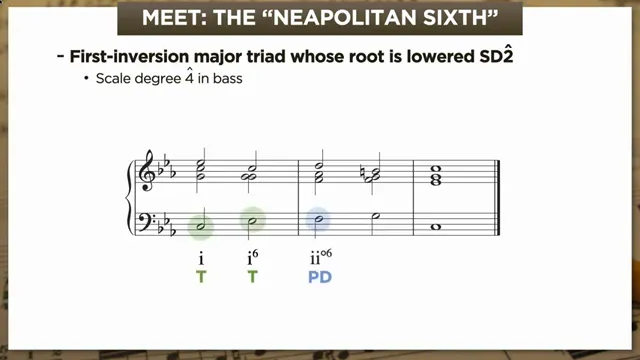
- The Neapolitan sixth (♭II⁶) is a first-inversion major triad built on ♭2̂—typically with 4̂ in the bass—functioning as a predominant before V
- Its signature sound: ♭2̂ in the melody descends by two half-steps to the leading tone over V, often passing through 1̂ (harmonized as cad. 6-4 or vii°7/V)
- Its scale-degree spelling is ♭2̂–4̂–♭6̂ in both modes; in major, ♭2̂ and ♭6̂ are chromatic, while ♭6̂ is already diatonic in natural minor
Definition & Construction ▶ 2:21
- Neapolitan sixth = first-inversion major triad rooted on ♭2̂ → Roman numeral ♭II⁶ (also written N⁶)
- "Sixth" = old-fashioned label for 6-3 chord = first inversion (nothing new)
- Usually 4̂ in the bass; chromatically altered root (♭2̂) is often placed in the melody
Voice Leading ▶ 3:54
- Standard soprano motion: ♭2̂ → 7̂ over V (direct = diminished third, angular)
- Smooth version: insert 1̂ between ♭2̂ and 7̂, harmonized with either:
- cad. 6-4 under 1̂, then V
- vii°7/V under 1̂, then V
- Both chords combined for a longer progression
Repertoire Examples
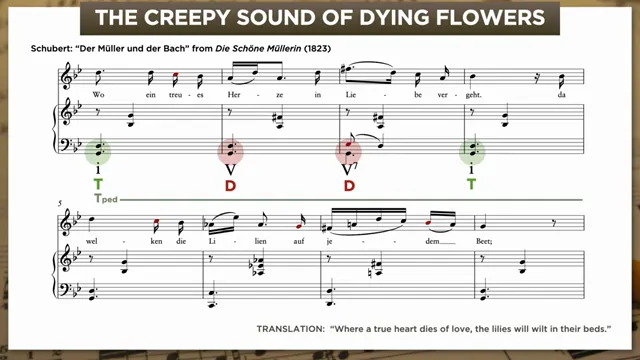
Schubert, Der Müller und der Bach ▶ 0:13
G minor; A♭ major in first inversion at bar 6 as a darkened predominant; ♭2̂ walks down by half-steps to leading tone. ▶ full analysis 1:01
Bach, Agnus Dei (B-minor Mass) ▶ 8:01
♭2̂ arrives as a syncopated anticipation; melody narrows to chromatic half-steps as Neapolitan "pulls" pitch space — classic ♭2̂ → 1̂ → 7̂ descent to half cadence.
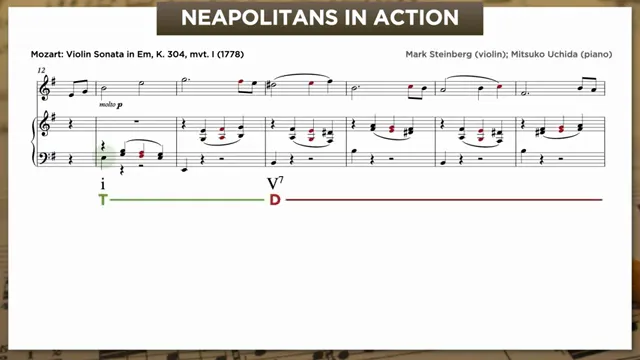
Mozart, Violin Sonata K. 304 (E minor) ▶ 11:59
Neapolitan ends a long predominant region (IV6 → ♭II6); passing 1̂ harmonized with cad. 6-4.
Chopin, Nocturne op. 55 no. 1 (F minor) ▶ 14:27
♭2̂ absent from melody above Neapolitan (4̂ instead) — melodic structure prioritized; Neapolitan in continuation of sentence form.
Beethoven, Appassionata finale (F minor) ▶ 16:50
Sentence: basic idea = pure tonic; Neapolitan opens continuation; dominant prolonged via double neighbor figure in bass. ▶ 17:46
Schubert, Quartettsatz C minor ▶ 18:59
Neapolitan as explosive climax (not gloomy colorist); built up via layered lament bass + stretto entries; arrives as fff three-octave arpeggio.
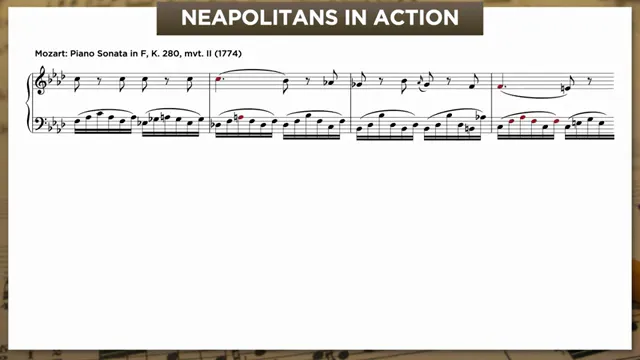
Mozart, Piano Sonata K. 280 (F major) ▶ 21:57
Descending bass walks I → IV6 → ♭II6 (down by thirds); goal is extended predominant region, not early dominant; cadence uses iv–♯iv–V with vii°7/V.
Why "Neapolitan"? ▶ 25:21
- Name traced to Neapolitan school composers (Naples, late 1600s–early 1700s); figurehead = Alessandro Scarlatti
- Earliest written use of the term: William Crotch, 1812
- ♭2̂ as melodic note may derive from Sicilian/Southern Italian folk music (root-position ♭II → I, Phrygian-flavored) — distinct from the classical first-inversion version but acoustically related