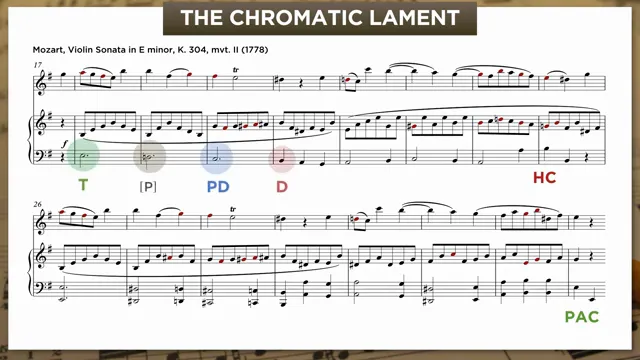
Key Takeaways
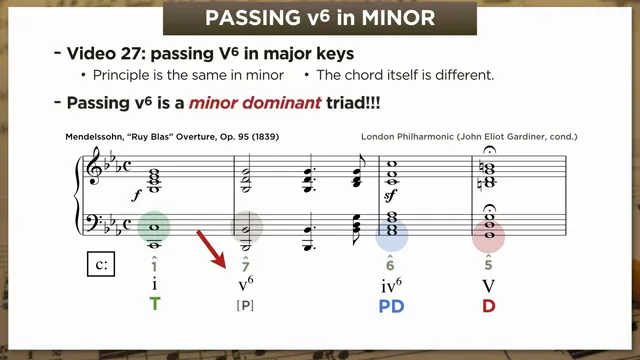
- The lament bass is a stepwise descent from scale degree 1̂ to 5̂ in minor, using passing v⁶ (first-inversion minor dominant), a principal context for that unusual minor-dominant sonority
- Two flavors: diatonic lament (I – v6 – iv6 – V, 4 notes, austere grief) vs. chromatic lament (all half-steps from I down to V, more anguished/intense)
- The progression originated in early Baroque opera (Monteverdi 1638) and persisted 300+ years, appearing in Cavalli, Corelli, Bach, Mozart, and Schumann — often as a looping ostinato bass or as a single phrase-opening gesture
Passing V6 in Minor ▶ 1:12
- Passing v⁶ = first-inversion minor dominant triad (no raised 7̂); here it is non-functional and connects 1̂ to 6̂ by step through 7̂
- The cadential V at the phrase end is still major (with leading tone) — never confuse these two
Diatonic Lament Bass ▶ 2:43
| Position | Chord | Function |
|---|---|---|
| Bass: 1̂ | I | Tonic |
| Bass: 7̂ | v6 | Passing (non-functional) |
| Bass: 6̂ | iv6 | Predominant |
| Bass: 5̂ | V | Dominant / HC |
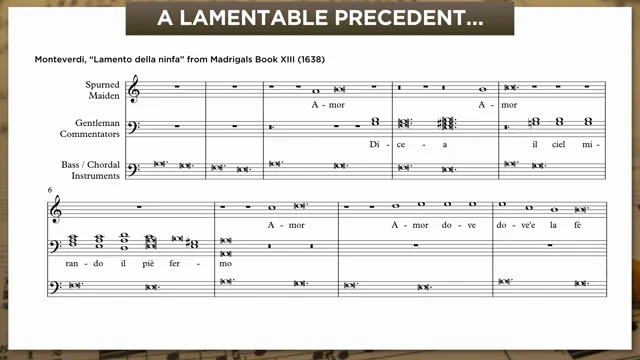
- Looping ostinato version (Monteverdi, Lament of the Nymph, 1638): repeating 4-note bass creates inescapable grief effect
The Cavalli Archetype ▶ 9:08
- Add a voice in parallel 3rds/10ths with bass, then a third voice creating a chain of suspensions: 7–6 resolutions over the inner chords
- Figured bass notation: I (5–6), v6 (7–6), iv6 → V
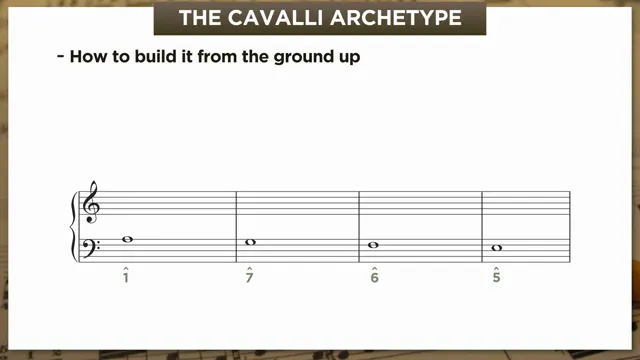
- VI6 pseudo-chord: the non-chord tone on beat 2 of bar 1 creates a fleeting first-inversion VI chord; can occasionally substitute for tonic
Chromatic Lament ▶ 19:19
- Bass descends by half-steps from 1̂ to 5̂ (5 half-steps, 6 notes) — touches raised/lowered forms of 6̂ and 7̂ from melodic minor; avoids only the tritone degree (♭2̂/♯1̂)
- Falling semitone = centuries-old symbol of grief; all half-steps amplifies anguish vs. diatonic version's austerity
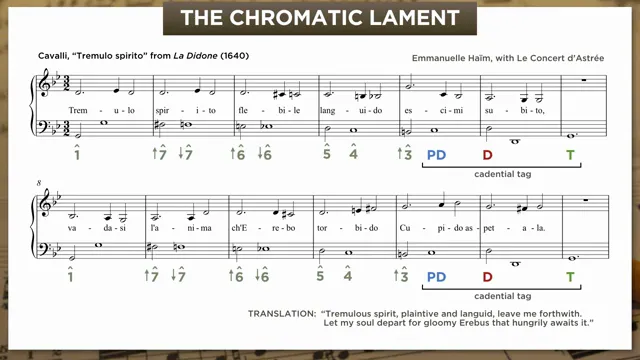
- Harmonization varies widely: Corelli uses diatonic upper voices; Mozart (C minor Concerto) stacks fully diminished seventh chords on every chromatic bass note
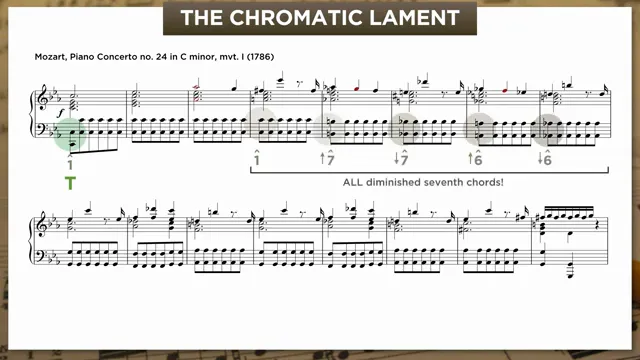
Historical Examples (Show & Tell) ▶ 3:51
Full walkthroughs of Monteverdi, Cavalli, Corelli, Bach, Mozart, and Schumann — see timestamps ▶ 3:51 through ▶ 29:28. Key highlight: Mozart's Don Giovanni overture (chromatic, ethereal) vs. the Commandatore scene (diatonic, brutally simple) — same bass, opposite moods, dramatic foreshadowing.