Key Takeaways
- vi has three main functions: tonic substitute (follows V/V7, stalls closure), predominant (rare; only when it's the sole pre-dominant in a phrase), and bridging chord (connects T → PD with no clear function of its own)
- Deceptive bass motion (V→vi): upper voices resolve much as they would to I—only the bass moves up by step to scale degree 6̂ instead
- The I–vi–ii–V–I progression (bass descends by thirds) is ubiquitous across classical music, doo-wop, pop, and beyond
Use 1: vi as Tonic Substitute ▶ 0:55
- Tonic substitute: root-position vi follows V or V7, replacing I — music flows naturally forward but stalls closure rather than confirming it
- Upper voices resolve normally (leading tone rises, chordal 7th falls); only the bass deviates — this is deceptive bass motion
- A chromatic passing tone (e.g., E♯) between V and vi bass notes is extremely common
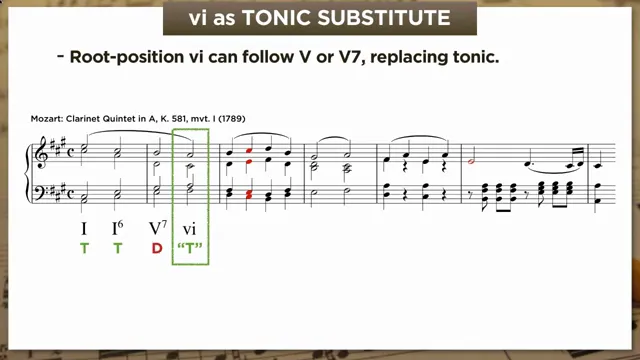
- Deceptive cadence: a cadence evasion where V resolves to vi instead of I — bait-and-switch, not a true cadence (see also Video 13)
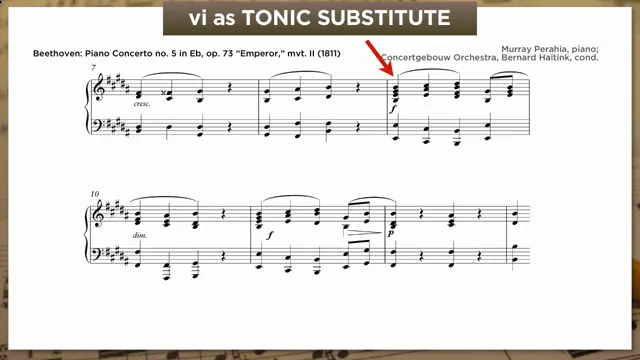
Worked examples (Mozart Clarinet Quintet, Mozart Clarinet Concerto Rondo, Beethoven Piano Concerto No. 5): ▶ 1:06
Use 2: vi as Predominant ▶ 7:27
- vi acts as predominant only when it is the sole predominant in a phrase (T → vi → V → I)
- Hallmark upper-voice pattern: scale degrees 1̂–2̂–3̂ rising against the vi–V–I bass (not universal, but very common)
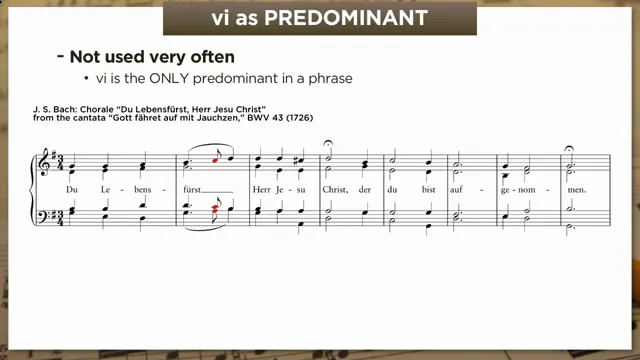
Worked examples (Bach cantata chorale, Schumann "Blondel's Lied," Mozart Hunt Quartet): ▶ 7:56
Use 3: vi as Bridging Chord ▶ 10:37
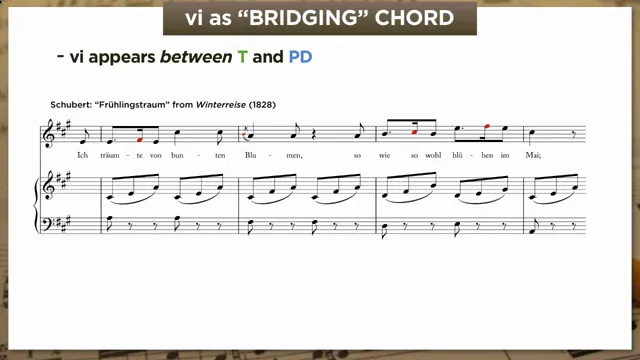
- Bridging chord: vi appears between tonic and predominant — no assigned function (shown with ellipsis "…" in analysis)
- Classic pattern: I → vi → ii6 → V7 → I, bass descends by thirds; also appears as I → vi → ii → V (bass drops a fifth from vi)
- This I–vi–IV–V skeleton is the backbone of doo-wop (1950s) and recurs throughout pop, rock, and R&B to the present
Worked examples (Schubert "Frühlingstraum," Schumann C-major Fantasy, Mozart Magic Flute, Beethoven Spring Sonata): ▶ 10:47
Bonus: Less Common Uses ▶ 17:17
| Pattern | Context |
|---|---|
| I → vi → I6 | Bridging under a rising tonic arpeggio (e.g., Magic Flute Overture) |
| I → vi → I | Two root-position tonics connected by vi; post-1850 Romantic & ubiquitous in modern pop (e.g., "Hallelujah") |