Key Takeaways
- Analyze bass line scale degrees first — most chords are predictable from bass position alone, eliminating the need to tally every note from scratch
- Pattern recognition beats chord-by-chord grinding: recurring bass formulas (i–vii–i, i–ii–iii, iv–V) instantly narrow chord choices
- Accidentals = alarm bells: chromatic notes (or missing leading tones in minor) signal non-Big-18 chords requiring closer analysis
Why Context-First Analysis Works ▶ 1:43
- Context clues narrow options before you analyze — faster to confirm/deny an expectation than start from zero
- Knowing where to look first (bass line) speeds processing dramatically
- Multisensory reinforcement — ear + eye + hands (piano) together accelerates pattern internalization
The Wrong Way vs. The Right Way ▶ 3:21
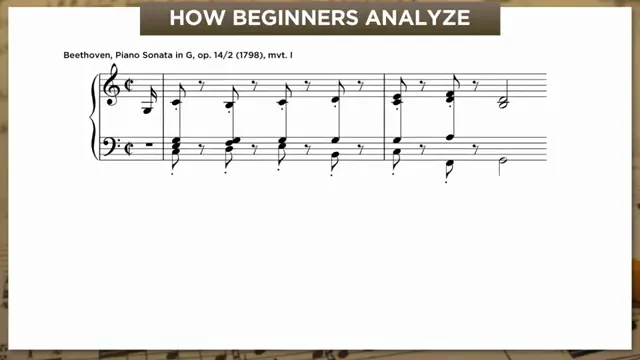
Chord-by-chord grind (wrong): tally all notes → find root → determine inversion, one chord at a time
- Inefficient, unmusical, no big-picture insight, no transferable learning
Bass-first analysis (right): extract bass line as melody of scale degrees → use Big 18 + function to fill in chords
- Brings tools: Big 18 grid + harmonic function knowledge
Bass Line Strategy ▶ 6:18
| Bass Scale Degree | Likely Chord(s) | Shortcut |
|---|---|---|
| 1̂ | I (or rare ii42) | Default to I; ii42 requires bass to descend |
| 3̂ | I6 | Only one common option |
| 7̂ | V6 or V65 | Triad vs. 4-note chord decides |
| 5̂ | V, V7, or I64 | Melody/note-count decides |
| 2̂ | Predominant ii or dominant | Check surrounding chords + leading tone in melody |
| 4̂ | Predominant or V42 | V42 requires bass to descend; rising step = predominant |
Recurring Bass Line Formulas ▶ 13:56
- 1̂–7̂–1̂: dominant (V6 or V65) sandwiched between tonics
- 1̂–2̂–3̂: tonic → [dominant] → I6 (dominant chord in middle varies)
- 4̂–5̂: predominant → dominant (hallmark of cadential approach)
Worked analyses — Beethoven Op. 14 No. 2, Op. 49 No. 1, Piano Concerto No. 1: ▶ 14:21
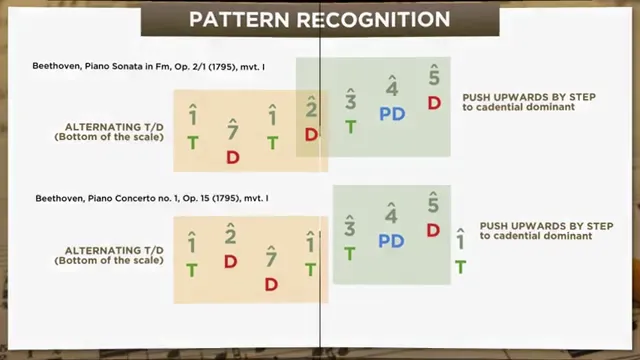
Broader archetype: classical themes often zigzag between 1̂/7̂/2̂ (T–D alternation), then step up to cadential dominant
Handling Complex Textures ▶ 20:53
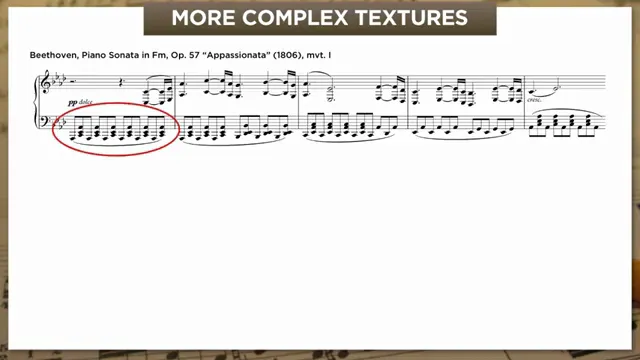
- Filter out arpeggiation/figuration; extract the actual bass line and key melodic notes
- I64 (cadential six-four): sounds over 5̂ in bass, feels unstable — has dominant function, not tonic
- Schubert Impromptu example: thick RH chromatic texture collapses to familiar 1̂–2̂–3̂–7̂ bass — ▶ 23:55
Spotting Non-Big-18 Chords ▶ 26:53
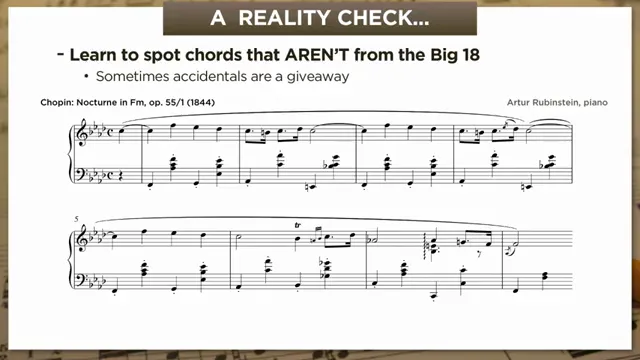
- Alarm trigger 1 — accidentals: chromatic notes outside the key (e.g., G♭ in F minor → Neapolitan ♭II6, not Big 18)
- Alarm trigger 2 — missing leading tone in minor: absence of raised 7̂ signals subtonic (♮VII) chords (e.g., VII or III), which drift toward the relative major — avoid assuming Big 18