Key Takeaways
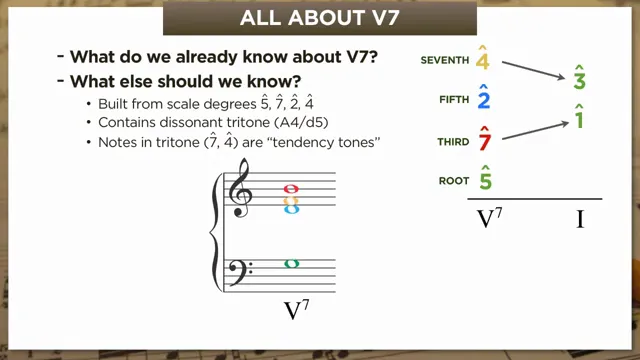
- V7 contains two tendency tones that drive resolution: scale degree 7̂ (leading tone) resolves up to 1̂; scale degree 4̂ (chordal 7th) resolves down to 3̂
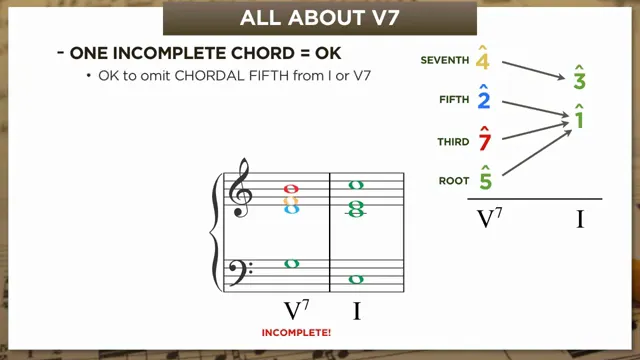
- Three valid ways to resolve V7→I: complete V7→incomplete I, incomplete V7→complete I, or complete→complete with a sprung leading tone
- In minor, raise scale degree 7̂ to preserve the leading tone and dominant quality
V7 Structure ▶ 1:30
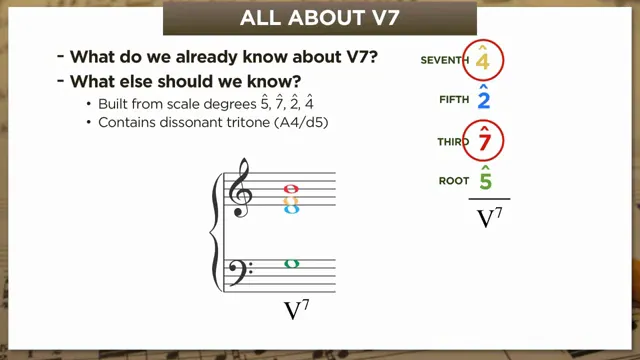
- Built from scale degrees 5̂, 7̂, 2̂, and 4̂ (root, 3rd, 5th, 7th)
- Scale degrees 7̂ and 4̂ form a tritone (augmented 4th or diminished 5th) — source of V7's dissonance and drive to resolve
Tendency Tones ▶ 3:00
- Scale degree 4̂ (chordal 7th) → normally resolves down by step to 3̂
- Scale degree 7̂ (leading tone) → resolves up by step to 1̂, or springs down in the specific root-position exception below
- Scale degree 2̂ (chordal 5th) → flexible; prefer down by step to 1̂
Three Resolution Options ▶ 4:52
| V7 | I | How |
|---|---|---|
| Complete | Incomplete (no 5th) | Follow all tendency tones normally; results in tripled root |
| Incomplete (no 5th, doubled root) | Complete | Omit scale degree 2̂; doubled 5̂ stays as common tone |
| Complete | Complete | Spring the leading tone: 7̂ leaps down to 5̂ (inner voice only) |
- Doubled tendency tones are forbidden — they must move to the same destination, causing parallel octaves/unisons
- Sprung leading tone only valid in root-position V7; not available in inversions
- Sprung leading tone works because another voice moves to the tonic the leading tone "would have" reached — creating a sonic illusion of resolution (▶ 8:50)
Minor Keys
- Same rules apply; raise scale degree 7̂ to create a true leading tone and proper dominant quality