Key Takeaways
- Cadence evasion = the expected cadential tonic doesn't arrive or doesn't stick; cadential extension = the music that follows, pushing toward the next cadence
- Evasion happens three ways: tonic completely absent (deceptive resolution), tonic inverted (I⁶ instead of I), or tonic too weak/fleeting to feel conclusive
- Classical composers weaponize predictability — listeners anticipate cadences from formal structure (sentence/period), so thwarting them creates tension, humor, or drama
Classical Predictability & Cadence Expectation ▶ 0:41
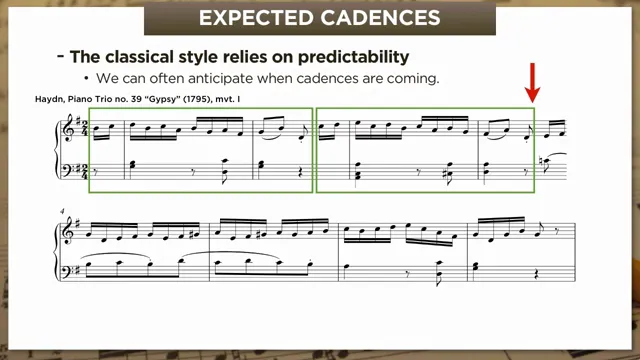
- Pre-Beethoven style prizes accessibility and convention over novelty — cadences are highly predictable
- Knowing formal patterns (e.g., an 8-bar sentence often groups as 2 + 2 + 4) lets listeners anticipate when a cadence is coming, even if not exactly which type
Cadence Evasion & Extension — Core Terms ▶ 4:49
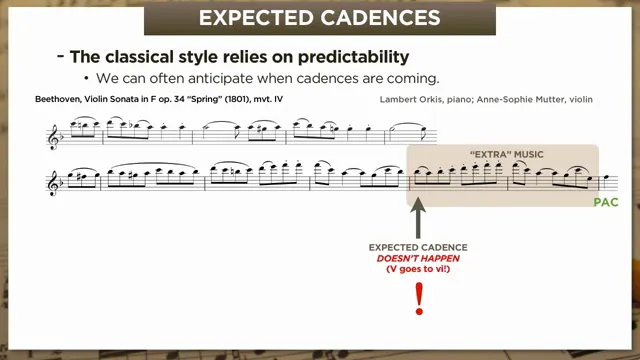
- Cadence evasion: expected tonic triad is withheld or undermined at the cadential moment
- Cadential extension: passage following the evasion that resumes the drive toward closure, eventually landing on a real cadence (sometimes after multiple evasions)
Four Evasion Types ▶ 5:37
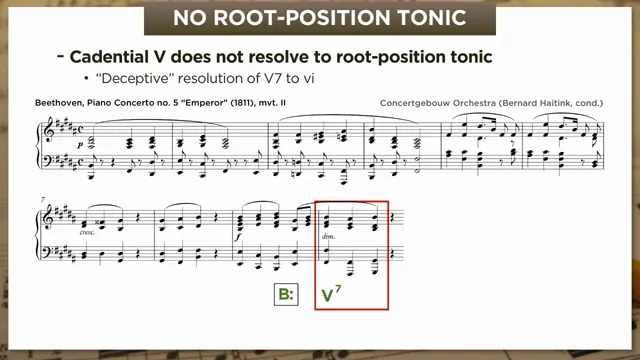
1. Deceptive Resolution of V⁷ ▶ 5:51
- V⁷ resolves to vi (submediant) instead of I — tonic never arrives at all
- Example: Beethoven Piano Concerto No. 5, slow movement (bars 9–10)
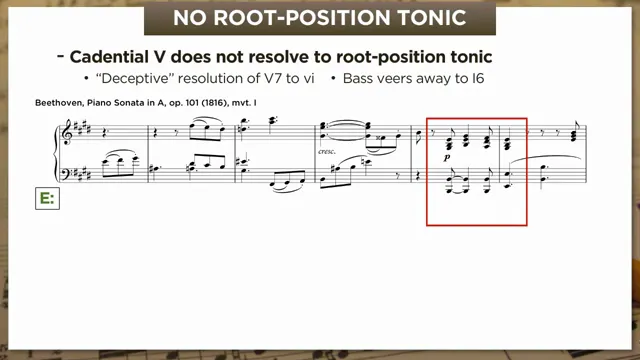
2. Inverted Tonic (I⁶ instead of I) ▶ 8:16
- Bass slips down so cadential V arrives as V⁴₂, which resolves to I⁶ — tonic present but inverted, so no real closure
- Example: Beethoven Op. 101 — evasion repeated three times before root-position tonic finally lands
3. Run-On IAC ▶ 11:19
- Tonic arrives but music charges straight through it — run-on IAC: looks like a cadence on paper, feels like none in performance
- Example: Mozart Jupiter Symphony finale — 8-bar antecedent + 11-bar consequent (asymmetric period); see walkthrough ▶ 12:03
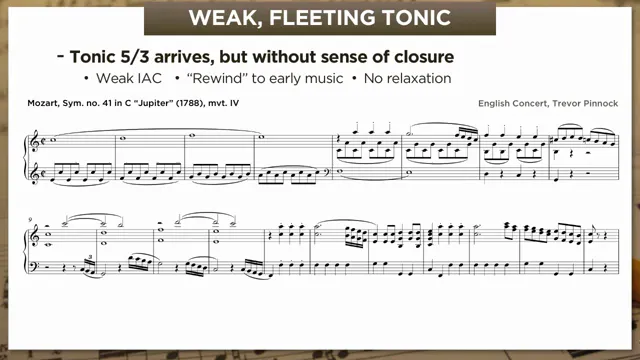
4. Drop-Out Cadence ▶ 12:49
- Tonic arrives but a voice disappears at that moment; busy motion in remaining voices prevents any sense of rest
- Example: Mozart A-minor Sonata (C-major section) — evasion occurs twice before final PAC with "victory fanfares"; see walkthrough ▶ 13:01
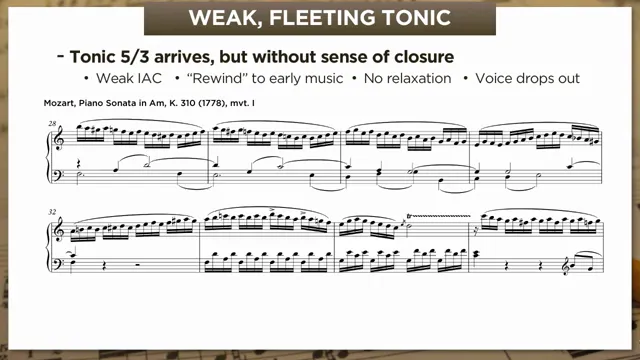
Extended & Elaborate Evasions ▶ 15:21
- Extensions can be long and harmonically disorienting, giving the effect of music "losing its way"
- Haydn's last Piano Trio: 4-bar antecedent + 10-bar consequent (6-bar extension after evasion); see walkthrough ▶ 15:39
- Mozart A-minor Sonata finale: multiple stacked evasions (run-on IAC → rewind → deceptive resolutions × 2 → unexpected HC in E minor); see walkthrough ▶ 17:17