Key Takeaways
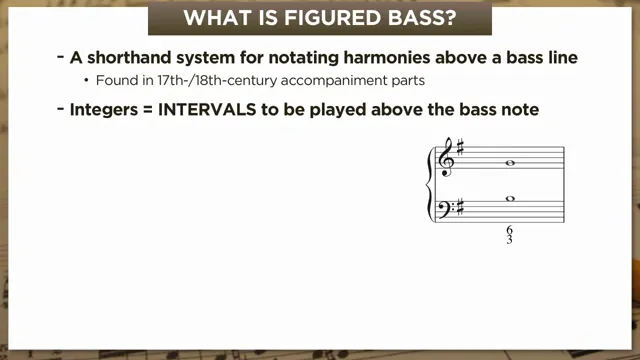
- Figured bass = a shorthand system where numbers below a bass note indicate generic intervals to play above it; voicing and doubling are left to the performer
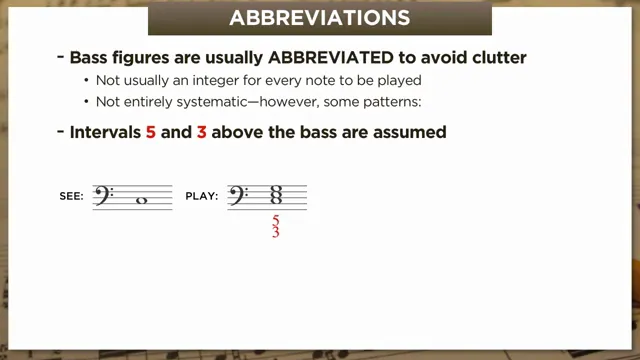
- Intervals of a 5th and 3rd are always assumed unless displaced — so no figures = 5/3 chord; "6" alone = 6/3; "7" alone = 7/5/3
- Figured bass is not harmonic analysis — it gives no info about chord roots, quality, or function; it's purely a performer's instruction
What Is Figured Bass? ▶ 0:45
- Bass figures: numbers/accidentals below a staff telling chordal players what intervals to build above each bass note
- Continuo: not a specific instrument — any combination of players reading the figured bass part (typically keyboard + low string)
- Numbers represent generic intervals (e.g., 6 = some kind of sixth); exact voicing, octave placement, and doubling are performer's choice
Converting Figures → Notes & Notes → Figures ▶ 7:59
- Reading figures: add the named interval(s) above the bass note using pitches from the key signature
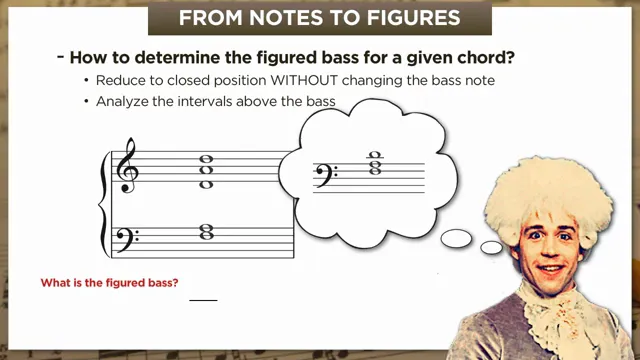
- Writing figures: reduce chord to closed position (keeping bass fixed), then label each interval above the bass
Standard Abbreviations ▶ 9:15
| Figure | Means | Full chord |
|---|---|---|
| (none) | 5 + 3 assumed | 5/3 |
6 |
6 replaces 5 | 6/3 |
7 |
7 added above 5/3 | 7/5/3 |
4 |
4 replaces 3 | 5/4 ("sus") |
Altering Notes Outside the Key ▶ 11:09
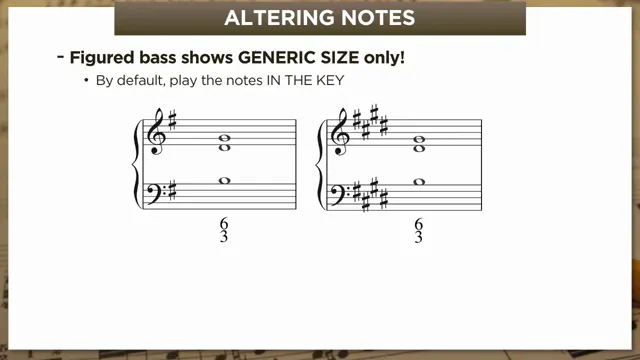
- Figures show generic size only — by default, follow the key signature
- Three notations to raise/alter a note: accidental before number (♯6), slash through number (6̸ = raise 6th a half step), standalone accidental (♯ alone = raise the 3rd)
- Accidentals on the bass note itself do not affect how upper voices are realized
Motion Above a Stationary Bass ▶ 15:25
- Figures can change while the bass holds — indicates stepwise melodic motion in upper voices
- Connected figures (e.g., 7–6 or 5–6–5–4) read as melodic lines, often doubling an instrumental part; modern editors link them with a horizontal line
- Unfigured passing/weak-beat bass notes don't require new chords — performer holds previous harmony
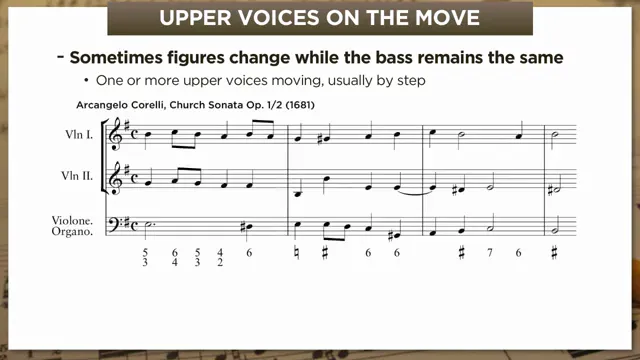
Worked example — Bach Sonata in C & Corelli Op. 1/2: Full decoding of abbreviations, accidentals, and moving figures demonstrated at ▶ 15:55 and ▶ 20:00