Key Takeaways
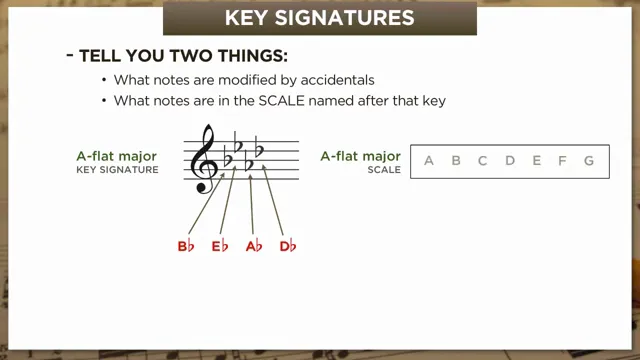
- A key signature tells you (1) which notes are modified by accidentals and (2) which notes belong to that scale — apply the accidentals to A–G in order to instantly build the scale
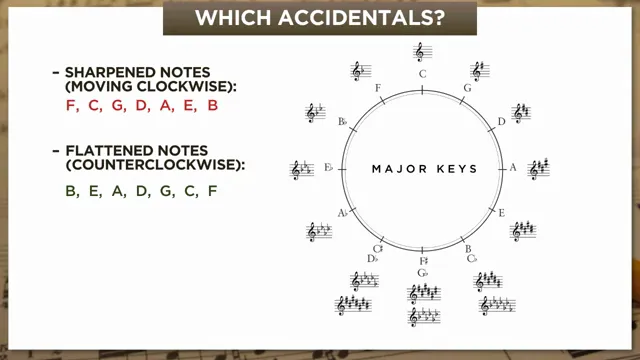
- Circle of fifths: moving clockwise adds one sharp per key (order: F C G D A E B); counterclockwise adds one flat per key (order: B E A D G C F — the reverse)
- Every major key shares its signature with a relative minor (3 semitones below); minor keys add extra accidentals beyond the signature, producing three minor scale variants (covered in Lesson 3)
What a Key Signature Does ▶ 0:24
- Tells you which notes are flatted/sharped throughout a piece — no need to repeat accidentals on every note
- Tells you which notes belong to the named scale — apply the signature's accidentals to the seven letter names (A–G) to build the scale instantly
Circle of Fifths ▶ 1:51
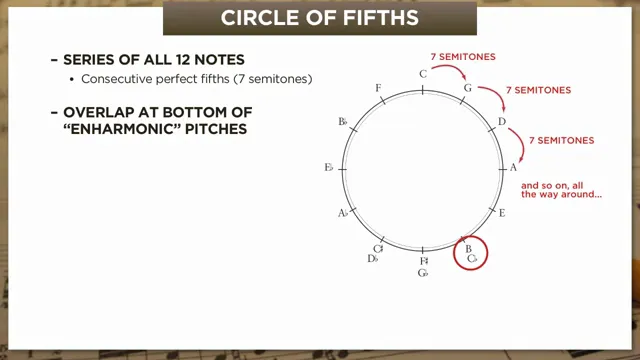
- Circle of fifths: all 12 pitch classes arranged so each is a perfect fifth (7 semitones) apart
- Enharmonic equivalents appear at the bottom (~5–7 o'clock): B/C♭, F♯/G♭, C♯/D♭ — same pitch, different spelling
Sharp & Flat Counts
| Direction | Keys | Accidentals added |
|---|---|---|
| Clockwise | C → G → D → A → E → B → F♯ → C♯ | +1 sharp each step (0 → 7) |
| Counter-clockwise | C → F → B♭ → E♭ → A♭ → D♭ → G♭ → C♭ | +1 flat each step (0 → 7) |
Order of Accidentals
- Sharps: F C G D A E B (a segment of the circle, clockwise)
- Flats: B E A D G C F (exact reverse of sharps)
Relative Minor Keys ▶ 6:31
- Every major key has a relative minor sharing its key signature — distinguished only by context
- Relative minor is always 3 semitones (a minor third) below the major tonic (e.g., C major → A minor)
- Minor keys routinely add accidentals beyond the key signature → three forms of the minor scale (topic of Lesson 3)