Core Idea
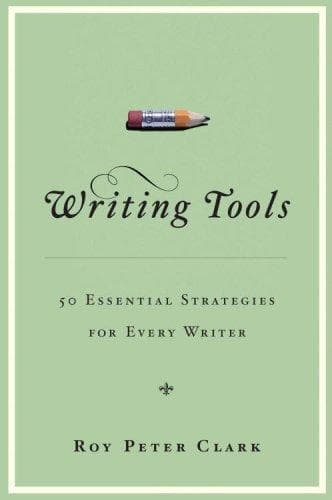
- Writing improves through mastery of discrete, learnable tools--not innate talent
- Tools work across all genres (journalism, fiction, memoir, marketing, online)
- Apply tools intentionally during revision; they're guides, not rules
Sentence-Level Tools (Clarity & Pace)
- Branch right: Start with subject + verb; let modifiers flow rightward
- Use strong verbs: Prefer active voice and simple present/past tense; delete intensifying adverbs
- Vary sentence length: Short sentences create drama; long sentences flow--mix them strategically
- Control punctuation: Commas keep readers moving; semicolons slow; periods stop cold
- Place power at the end: Finish sentences/paragraphs with memorable words where readers pause
- Use parallel structure: Match grammatical forms to build rhythm and persuasion
Word & Image Tools (Specificity & Originality)
- Show, don't label: Use concrete objects and names instead of abstract adjectives ("compassionate")
- Reject cliches: Generate fresh comparisons via free association; skip "first-level creativity"
- Climb the abstraction ladder: Move between specific details (bloody knife) and universal ideas (freedom)
- Notice distinctive names: People and places with memorable names magnetize reader attention
- Create original images: Use sophisticated vocabulary readers understand; surprise them
Story Structure Tools (Engagement & Closure)
- Plant internal cliffhangers: Ask questions before chapter breaks to force page turns
- Name big story parts: Divide into 3-6 sections with clear sub-headlines
- Foreshadow deliberately: Plant clues early that pay off at climax (Chekhov's Gun)
- Reward readers regularly: Scatter scenes, facts, or quotes every few paragraphs
- Build from scenes, not summaries: Witness moments firsthand; sequence strategically
- Write real endings: Use circle-backs, payoffs, quotes, or epilogues--never trail off
Character & Detail Tools (Depth & Authenticity)
- Reveal character through action: Show traits via scenes, dialogue, decisions--not adjectives
- Use odd juxtaposition: Place contrasting elements side-by-side for ironic power
- Master numeric weight: 1 = power; 2 = comparison; 3 = wholeness; 4+ = inventory
- Get the specific detail: Report the exact sensory detail others skip (the dog's name, not "the pet")
Voice & Tone (Authenticity)
- Read aloud: Voice emerges from word choice, sentence rhythm, allusions, metaphor density
- Back off or show off: Understate serious topics; exaggerate trivial ones
- Mix narrative with analysis: Alternate scenes with reporting (the "broken line")
- Use dialogue over quotes: Dialogue puts readers at the scene; quotes explain from distance
Writing Habits (Process)
- Rehearse before drafting: Plan stories mentally; call procrastination "planning"
- Lower standards early: Write freely in drafts; save judgment for revision
- Cut large, then small: Delete weak sections before trimming individual words
- Break projects into parts: Write "bird by bird"--chapters become columns become a series
- Study other writers: Mark techniques in published work; steal methods, not words
Action Plan
- Audit one recent piece: Identify 3 tools that address your weaknesses; revise one section applying one new tool
- Read with a pen: Mark techniques in admired published work; reverse-engineer the method
- Draft freely, edit with intention: Apply tools only during revision, not first drafts
- Build feedback team: Find one reader who praises, one who questions, one who knows your subject
- Save and reuse: Keep thematic files of anecdotes, facts, and language for future projects
Generated with Claude Sonnet 4.6 · prompt legacy-pre-v6 · model inferred from repository history