Core Idea
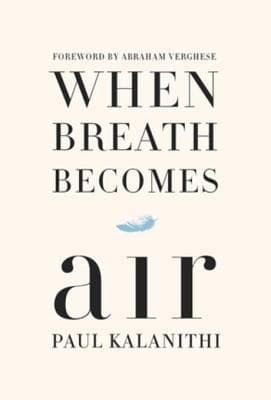
- Paul Kalanithi’s memoir traces the collapse of his future when, at 36 and near the end of neurosurgical training, he is diagnosed with stage IV lung cancer.
- The book’s central tension is that medicine gives him intimate knowledge of death, but illness forces him to experience it from the patient’s side, where certainty, identity, and plans all break down.
- His deepest questions become: what makes a life meaningful, what can medicine actually promise, and how does one keep living when the future has “evaporated”?
Becoming a Doctor, Becoming Mortal
- Raised in Kingman, Arizona, he grows up between his father’s intense medical devotion, his mother’s educational ambition, and a lifelong hunger for books, language, and moral seriousness.
- At Stanford he studies literature, philosophy, biology, and neuroscience, concluding that literature best illuminates human experience while neuroscience offers elegant rules for the brain.
- He is drawn to medicine because he wants moral action rather than abstract speculation, and to neurosurgery because the brain is where language, memory, cognition, and identity converge.
- Cadaver dissection, emergency births, deaths, and brain-injury patients teach him that medicine is a necessary trespass: doctors invade bodies and turn suffering into knowledge.
- He argues that technical skill is not enough; medicine also requires moral judgment, especially when the brain’s fragility threatens personhood itself.
- He rejects the idea that doctors can avoid death; instead, they must pursue an asymptote of excellence even though death ultimately wins.
Cancer, Prognosis, and the Limits of Knowing
- His diagnosis arrives through symptoms he first dismisses as work stress, aging, or a spine problem, until scans reveal lungs matted with tumors, spinal deformation, and liver involvement.
- The memoir dwells on the shock of becoming a patient after years of treating patients, and on Lucy’s immediate recognition that his evasiveness has become dangerous emotional distance.
- Oncologist Emma Hayward becomes a model of compassionate expertise, refusing to reduce him to statistics even when he asks for Kaplan-Meier curves.
- Kalanithi distinguishes between what medicine can measure and what a patient actually needs to hear; exact survival numbers may be scientifically real but existentially misleading.
- His mutation testing matters: an EGFR mutation opens the way to Tarceva, which shrinks the cancer and makes him feel “happier to be uglier and alive.”
- He repeatedly frames prognosis as uncertainty rather than destiny, noting that doctors cannot place an individual precisely on a survival curve.
- The sperm-bank visit, embryo decisions, and questions about ownership after death show how cancer spreads into ethics, marriage, and parenthood.
Returning to Life, Then Letting It Change
- After initial improvement, he tries to rebuild strength through physical therapy, tiny bodily goals, and a return to reading as a way to recover language for mortality.
- Beckett’s “I can’t go on. I’ll go on.” becomes a hinge for him: he decides to return to neurosurgery because he still can, even though the work is no longer naive or joyful.
- Returning to the OR is framed as a moral calling, not a career plan, but his body betrays him with faintness, fatigue, and reduced stamina.
- He comes to see that a doctor’s duty is not to prevent death or restore the old life, but to help patients and families make sense of a shattered one.
- His Christian language returns as a serious framework for meaning, emphasizing mercy, sacrifice, redemption, and forgiveness where pure scientism cannot answer hope or love.
- When cancer worsens again, he chooses to leave neurosurgery and ends his residency on a final operative day, stripping off the white coat and pager for the last time.
- A subsequent medical crisis from chemotherapy and a medication error exposes the chaos of fragmented care, and he experiences relief when Emma resumes clear control.
Fatherhood, Time, and the End of the Beginning
- The birth of Cady transforms the last phase of the memoir: her existence makes the future concrete even as his own future contracts.
- Fatherhood does not erase mortality, but it reorders time so that his life, Lucy’s care, and the child’s growth all coexist with recurrence and decline.
- He sees his days in a strange tense where past, present, and future collapse together, yet Cady remains “all future.”
- The book closes not with triumph but with a hard-won affirmation that life’s value can persist even when the expected future is gone.
What To Take Away
- Identity is unstable under illness: Kalanithi’s memoir shows how quickly the roles of doctor, husband, and future father can be re-written by disease.
- Medicine has limits: it can shrink tumors, map language, and prolong life, but it cannot give precise meaning, certainty, or escape from death.
- Good care is moral as well as technical: honesty, judgment, and presence matter as much as procedure, especially when prognosis is uncertain.
- Meaning survives through relationship and action: Lucy’s fidelity, Emma’s care, his return to work, and Cady’s birth all become ways of living inside mortality rather than outside it.
Generated with GPT-5.4 Mini · prompt 2026-05-11-v6