Core Idea
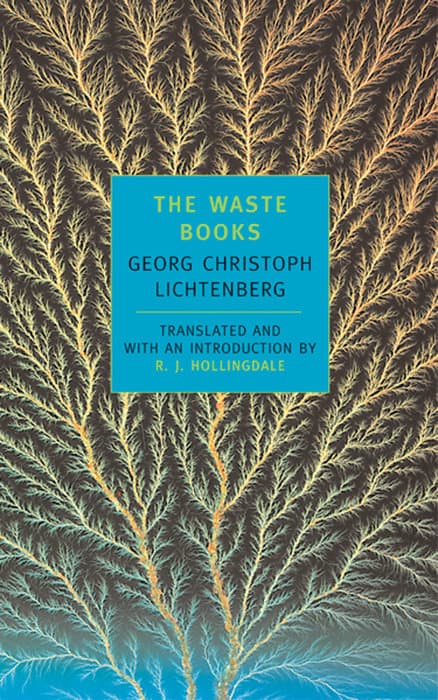
- Lichtenberg appears here as a fragmentary, anti-systematic thinker: an experimental physicist and sharp notebook writer whose Waste Books turn everyday observation into philosophy.
- His central concerns are self-knowledge, language, knowledge of the external world, religion, and science, but he treats each through provisional remarks rather than a closed doctrine.
- Across these topics he repeatedly resists certainty, preferring probability, correction by others, and close attention to ordinary use over abstract system-building.
Self, Mind, and Personhood
- He rejects the Cartesian “I think” as too strong and prefers the impersonal “it thinks,” since introspection never reveals a substantial self.
- The “I” is treated as a practical necessity or useful fiction, though he does not finally explain why it must be posited.
- He extends self-knowledge beyond introspection to the ethical task of resisting borrowed opinions, noticing dreams, and narrating one’s motives and life.
- On identity, he ranges over metempsychosis, pre-birth existence, death, Locke-style continuity, and the replacement of bodily parts.
- He thinks minds are often projected onto others and even onto nature, and that inward self-observation can become hypochondriacal or world-alienating.
- In mind-body questions he jokes at both psychophysical parallelism and physical influx, while also exploring materialist, monist, and Spinozist alternatives.
- Travel and reading exposed him to Hartley and Priestley, encouraging causal accounts of psychology in bodily terms.
- Still, he worries about the “tremendous parallax” between material explanation and the immediacy of inner experience.
Religion, Ethics, and Human Conduct
- His criticism of religion is aimed mainly at theologians, not simple belief: he attacks dogmatism, superstition, false piety, and doctrines stripped of common sense.
- He is ambivalent about God, sometimes reducing “God exists” to a practical moral stance, and elsewhere suggesting the heart can recognize God beyond reason.
- Spinoza and monism matter because they recast humans as parts of one substance, God or nature, a view that could sound atheistic in context.
- The debates of the Pantheismusstreit frame his remarks, but he does not settle the conflict between rationalism, faith, and atheism.
- His ethics is similarly non-systematic: he rejects claims that moral principles are universal in the Kantian sense.
- He criticizes Kantian and Stoic ethics for ignoring sensual nature and doubts that duty can be fully motive-free.
- He tends toward a mixed view in which reason, consequences, appetite, feeling, and habit all matter for action.
- Moral language should remain intelligible in ordinary speech, since philosophy must speak to common life rather than to an abstract moral system.
Knowledge, Science, and Language
- His epistemology begins from inner experience: we know representations and sensations, not things-in-themselves.
- He distinguishes praeter nos from extra nos, and questions whether spatiality itself may be only a form of cognition.
- He is often tempted by idealism, yet not as a simple doctrine, since ordinary language and common sense keep pulling him toward direct realism.
- Truth is social and corrective: philosophy is the thought of one person corrected by others, a kind of “council of mankind.”
- He replaces certainty with probability, with assent determined by the preponderance of evidence and strengthened by coherence and testimony.
- Nature’s apparent “noble simplicity” often reflects the observer’s “noble shortsightedness,” not an intrinsic simplicity in things.
- He defends Kantian space and time as forms for understanding relations, not properties of things in themselves, and says refutations of Kant here are “in vain.”
- Scientific fictions can be useful: one may posit cases not found in nature, as when mathematicians alter laws of gravity to generate insight.
- His scientific method is instrumentalist: theories, hypotheses, and paradigmata are tools if they help prediction, simplicity, and inquiry, even when strictly false.
- He weighs disputes pragmatically, such as attraction vs. impulsion in gravity and atomist vs. dynamist views of matter.
- Memory, language, and science depend on order, analogy, genera/species, and classification, though these structures may be human inventions rather than nature’s own joints.
- Mathematical and physical concepts are valid only when what is said of the mathematical model also holds of the physical case; equations are not nature itself.
Habit, Perception, Wit, and the Limits of Language
- Habit is epistemically corrupting, so he wants to “dis-habituate” himself in order to see, hear, and feel afresh.
- Repeated reading matters because the text stays the same while the reader changes.
- He says truths may seem false because they are “garishly attired,” while the most dangerous falsehoods are truths only slightly distorted.
- Virtue is often better when it arises from feeling or habit than from premeditated calculation.
- Everyone has some degree of personal superstition; positive religions exploit this tendency, and a completely pure deist likely does not exist.
- Wit discovers unseen similarities and relations, and so can become a source of invention rather than mere ornament.
- Writing can awaken latent thoughts, bringing to consciousness what was already present but unclear.
- Dreams may represent the whole person more impartially because they are freed from forced, artificial reflection.
- A teacher can educate only “species,” not individuals, which limits what pedagogy can accomplish.
- He thinks philosophy is inseparable from language, and that ordinary speech already contains a kind of false philosophy.
- True philosophy is the correction of ordinary usage, but it must still work through the imperfect medium of common language.
- Grammar can mislead thought by making us posit substances or agents that may not exist, yet language also clarifies through context, tone, accent, history, and culture.
- He values metaphor when literal language has worn out, and treats style and performative force as philosophically significant.
What To Take Away
- Lichtenberg’s philosophy is a sustained attempt to think without building a system, using probability, correction, and close observation instead of certainty.
- He is most memorable on the fragility of the self, the mediation of experience by language and form, and the usefulness of scientific and linguistic fictions.
- His religious and ethical remarks are not doctrinal but diagnostic: they expose how superstition, theology, habit, and ordinary speech shape belief and conduct.
- The enduring lesson is that philosophy should remain alert to the gap between what we experience, what we say, and what we assume is real.
Generated with GPT-5.4 Mini · prompt 2026-05-11-v6