Core Idea
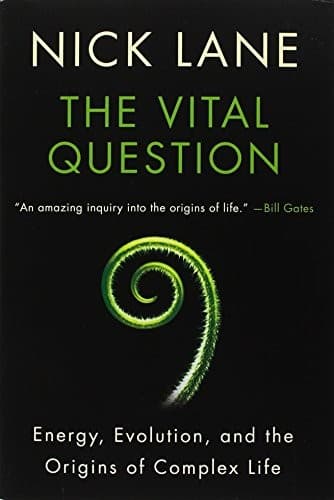
- Lane’s central claim is that the deepest question in biology is not just how life began, but why life became complex only once on Earth.
- He argues that the answer lies less in genes or environment alone than in energy constraints, especially the evolution and exploitation of proton gradients across membranes.
- Complex eukaryotic life, in his view, is the product of one singular event: an archaeon-bacterium endosymbiosis that gave rise to mitochondria and unlocked a new energetic regime.
Why Complex Life Is Singular
- All eukaryotes descend from a single ancestor, LECA, which already had the core toolkit of modern complex cells: nucleus, nuclear pores, histones, introns and splicing, ER, Golgi, cytoskeleton, mitochondria, lysosomes, peroxisomes, mitosis, and sex.
- The supposed “missing links” called archezoa turned out not to be primitive intermediates but reduced descendants of more complex ancestors, all still bearing mitochondrial derivatives.
- Lane calls the unresolved origin of eukaryotes a phylogenetic void or evolutionary black hole: phylogeny can trace descent after LECA, but not explain how prokaryotes became eukaryotes.
- He rejects purely gene-centric or environment-centric stories, including the idea that rising oxygen simply “released the brakes” and let complexity appear repeatedly.
- Bacteria and archaea are metabolically ingenious but morphologically conservative; Lane sees that stasis as evidence of a deep structural/energetic constraint.
Energy, Origin, and the Vent Hypothesis
- Lane reframes origin-of-life thinking away from the classic primordial soup and toward dissipative structures driven by continuous energy flow.
- He argues that life is not primarily a rare accumulation of information, but a system that couples reactive carbon, catalysts, compartmentalization, waste removal, and heredity to ongoing free-energy flux.
- Hydrothermal vents, especially alkaline vents, best fit this because they are natural flow reactors with porous mineral walls, long-lived gradients, and catalytic surfaces.
- The key setting is not black smokers but Lost City–like alkaline vents, which are warm, hydrogen-rich, and microporous rather than hot, acidic, and flushing.
- Lane proposes that a natural proton gradient across FeS walls could have powered early carbon fixation, with H2 + CO2 driving the formation of formate, formaldehyde, and other organics.
- His group’s lab work is cited as support: under vent-like conditions they produced formate, formaldehyde, ribose, and deoxyribose.
- The ancestral metabolism he favors is the acetyl CoA pathway, shared by bacteria and archaea, and strongly suggestive of an origin in vent chemistry; acetyl phosphate may have served as an early energy currency.
- He imagines a three-stage sequence: vent chemistry makes organics, organics self-organize into protocells, and then genes/proteins arise to support true heredity and selection.
The Bioenergetic Origin of Cells
- Lane’s deeper thesis is that the real divide between prokaryotes and eukaryotes is bioenergetic: prokaryotes are membrane-limited, while eukaryotes gained far more energy per gene by internalizing a bacterium.
- Mitochondria transformed the economics of the cell because gene loss in the symbiont could free energy for a larger host and new cellular machinery.
- He argues that endosymbiosis allowed a jump that ordinary bacterial scaling cannot: giant bacteria increase genome copies, but do not escape the energy-per-gene ceiling.
- A major reason mitochondrial genes remain in organelles, in Lane’s view, is local genetic control: respiration requires on-site regulation of membrane potential and electron flow, not just gene transfer to the nucleus.
- The mitochondrial respiratory chain is a mosaic of nuclear and mitochondrial genes, and tiny mismatches can alter electron flow, generate superoxide, collapse membrane potential, and trigger apoptosis.
- Free radicals are treated not merely as toxins but as signals that respiration is failing; antioxidant overuse can suppress that signal rather than solve the underlying problem.
- The need to keep respiration and genome control tightly coupled helps explain why mitochondria, nuclear genomes, and eukaryotic cell architecture evolved together.
Sex, Nuclei, Mitochondria, Ageing, and Disease
- Lane links introns and the nucleus to an early invasion of mobile genetic elements from an endosymbiont, with the nucleus acting as a barrier that gives slow splicing time to occur before translation.
- Sex is framed as a response to genomic conflict and mutation load: unlike bacterial gene exchange, true sex is reciprocal genome-wide recombination via gametes and meiosis.
- He argues that sex helps purge harmful mutations and manage selective interference, which is why it became universal in eukaryotes despite its obvious costs.
- Mitochondria also help explain anisogamy, uniparental inheritance, and the germline–soma split: unequal mitochondrial transmission can improve selection among gametes but also creates developmental trade-offs.
- His broader model ties Haldane’s rule, hybrid breakdown, and species barriers to mitonuclear incompatibility; the copepod Tigriopus californicus is a key example.
- Lane extends the same logic to ageing: species differ in lifespan because selection tunes aerobic capacity, mitochondrial leak, and apoptosis thresholds, not because of a simple accumulation of random oxidative damage.
- He treats ageing and disease as partly consequences of the original two-genome partnership, where maintaining a high-performing respiratory system constantly trades off with fertility, development, and tissue survival.
What To Take Away
- Lane’s book is a sustained argument that energy flow, not information alone, is the missing key to why life took its distinctive form.
- The singular origin of eukaryotes is explained by a rare endosymbiotic escape from the prokaryotic energy ceiling, not by repeated bacterial attempts at complexity.
- Many features once treated as separate puzzles—nucleus, sex, mitochondria, apoptosis, ageing, hybrid sterility—are presented as connected consequences of that same energetic transition.
- The book’s broad challenge is that biology’s central explanatory gap may be not “what genes do,” but what kinds of cellular architectures are energetically possible.
Generated with GPT-5.4 Mini · prompt 2026-05-11-v6