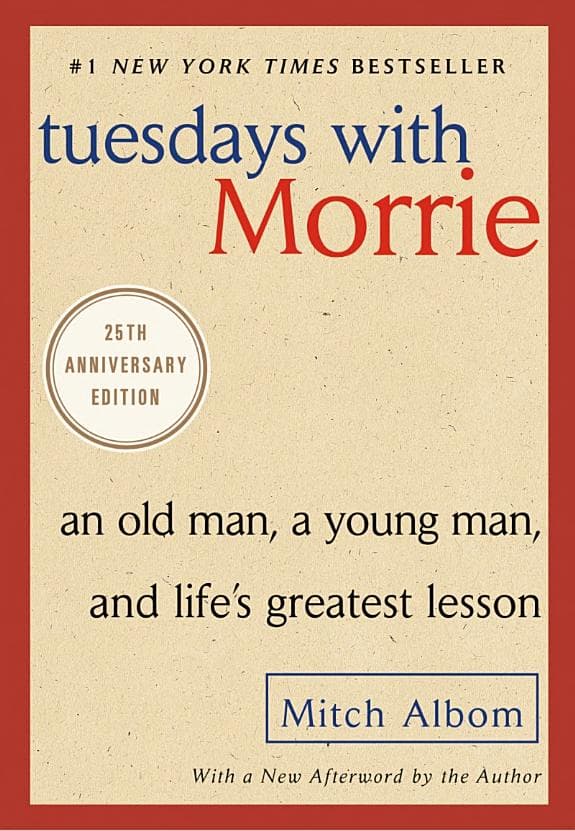
Core Idea
- Morrie Schwartz’s final months become a weekly class on how to live and die, with Mitch Albom as the student and the book itself as the “final thesis.”
- The central claim is simple but demanding: if you learn how to face mortality honestly, you can live with more love, less fear, and less obsession with status, money, and success.
- The story is both a memoir and a record of Morrie’s dying body, but it insists the real subject is meaning: what remains when ambition, youth, and possessions fall away.
Morrie’s Final Lessons
Death, Dignity, and Detachment
- Morrie refuses to hide his ALS; instead, he makes death his last project and teaches from inside the loss of his body.
- He speaks bluntly about the humiliations of illness, including losing his hands, voice, and bodily privacy, yet says his spirit is not being defeated.
- His teaching on detachment is not emotional numbness: feel fear, grief, or love fully, then step back so the feeling does not own you.
- Morrie believes that once you learn how to die, you learn how to live, because mortality strips away trivial concerns.
- He wants to die serenely, not in panic, and treats the disease as a chance to “make things right” before the end.
Culture, Money, and Aging
- Morrie argues that modern culture does not make people feel good about themselves, so people must create their own culture around conversation, music, reading, community, and human contact.
- He rejects the worship of youth as “nonsense” and sees aging as growth, because it brings perspective on life and death.
- He does envy the young for things like dancing, but he treats envy as something to notice and release.
- His critique of money is direct: people confuse wants with needs, then use possessions as substitutes for love, tenderness, and comradeship.
- Status offers no real security, because the rich are resented, the poor are envied, and only an open heart lets you move freely among people.
Human Bonds That Matter
Family, Marriage, Friendship
- Morrie calls family spiritual security, especially when illness makes support constant and unavoidable.
- Mitch’s own estrangement from his brother becomes a warning that relationships should be addressed while there is still time.
- On marriage, Morrie emphasizes respect, compromise, shared values, and open communication; he and Charlotte model a quiet, practical partnership.
- He also says friends and family are not interchangeable once sickness and need become part of life.
- A painful story about his friend Norman shows that failing to forgive can leave lasting regret, especially after death.
Love, Society, and Responsibility
- Morrie’s larger ethic is that people are “only mean when they’re threatened,” so a culture built on competition and money produces selfishness and fear.
- His answer is to build a smaller, humane way of life centered on loving others, serving the community, and creating something meaningful.
- He treats society as a human family across race, religion, and gender, and says dying reveals how alike people really are.
- His final message to Ted Koppel distills the whole philosophy: be compassionate, and take responsibility for each other.
- He believes love continues after death: “Death ends a life, not a relationship.”
The Story’s Shape and Aftermath
- Mitch initially ignores Morrie for years, caught up in career, money, and public success, until a TV interview pulls him back.
- Their Tuesday visits become a public and private exchange: Morrie answers strangers’ letters, then gives Mitch his undivided attention, calling their work a shared “final thesis.”
- The book repeatedly contrasts Mitch’s empty busyness with Morrie’s purposeful decline, showing how little much of modern striving matters next to a dying man’s clarity.
- Morrie’s “perfect day” is deliberately ordinary: exercise, tea, friends, nature, a good meal, and dancing until exhausted.
- The ending at the bedside is the emotional culmination: Morrie says, “This is how we say good-bye,” then “Love you,” and Mitch finally understands how to part in love rather than silence.
- Morrie dies in his bed with family nearby, and the funeral reinforces the book’s quiet insistence that his life was beautiful because it was fully lived.
- Mitch’s concluding realization is that there is no such thing as too late for change, honesty, or saying “I love you.”
What To Take Away
- Morrie’s teaching is not that death is easy, but that facing it honestly makes life less wasteful and more humane.
- The book’s strongest opposition is between advertised values and lived values: money, youth, and success versus love, community, and presence.
- Its most durable lesson is relational: say what matters, repair what you can, and do not wait for a crisis to become honest.
- The memoir’s final claim is that the teacher’s voice survives the body; the teaching goes on.
Generated with GPT-5.4 Mini · prompt 2026-05-11-v6