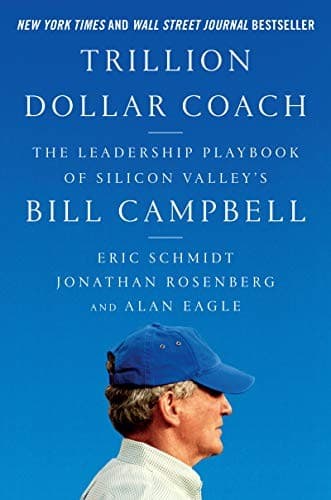
Core Idea
- Bill Campbell’s defining contribution was not as a product visionary but as a coach of teams: he helped Silicon Valley leaders make better collective decisions, reduce internal friction, and perform at a higher level.
- The book argues that great management is inseparable from great coaching, because ambitious, intelligent teams create both excellence and conflict; the coach’s job is to make the team stronger than the sum of its stars.
- Campbell’s style combined blunt candor, deep care, and constant attention to trust, making him a rare behind-the-scenes force on people from Apple to Google to Intuit.
How Bill Campbell Worked
- Campbell’s first move was always the team is paramount: get the right people in the room, work the team, then work the problem.
- He believed management starts with people: support them with tools and information, respect their life choices, and trust them to do their jobs.
- He pushed leaders to run better 1:1s and staff meetings, using them to surface priorities, personal context, peer tensions, and cross-functional issues.
- His communication hierarchy was face-to-face first, then phone, then email, and his emails were expected to be short, clear, and humane.
- Campbell favored open debate over consensus, but once a decision was made, he expected commitment; indecision was often worse than a wrong decision.
- In hard conflicts, he used first principles—immutable truths about the business—to cut through opinion wars and force a grounded choice.
- He was particularly effective in “stinker” situations, where team dynamics mattered more than the spreadsheet and the real issue was often hidden tension or ego.
- His rule of two and private side conversations were ways to resolve conflict before it hardened into politics.
Trust, Candor, and Coachability
- Trust was the foundation of Campbell’s relationships: keep your word, show loyalty, act with integrity, and be discreet; trust made disagreement safer.
- He only coached the coach-able, screening for humility, honesty, hard work, perseverance, and openness to learning.
- Campbell’s listening style was intense and diagnostic: he asked many questions, listened without distraction, and used a Socratic approach to find the actual problem.
- His candor was direct and often brutal in wording, but recipients accepted it because it came with care, humor, and a real desire to help them improve.
- He did not simply issue commands; he told stories and guided people to their own conclusions, which made the lesson stick.
- The book portrays this as relational transparency: toughness on the surface, loyalty underneath, and feedback that improved performance without severing trust.
- He also pushed people toward courage, urging bolder choices when he believed they could do more than they thought.
- His support extended to authenticity: he encouraged people to bring race, accent, background, and style to work instead of conforming to Silicon Valley norms.
Teams, Talent, and Culture
- Campbell treated senior leadership as a team sport and believed executive ego was dangerous unless subordinated to the company’s mission.
- At Google, when the 2004 IPO’s dual-class structure and chairman dispute threatened to split the leadership team, he brokered a compromise that preserved cohesion and later restored Eric Schmidt as chairman.
- He looked for four traits in people: smarts, hard work, integrity, and grit, and he paid attention to whether candidates spoke in terms of “I” or “we.”
- He did not overvalue experience alone; he wanted people who were still learning and who cared more about the cause than personal status.
- He accepted some aberrant geniuses if they delivered enough value and were not unethical or abusive, but he watched for the hidden costs they imposed on the team.
- Campbell believed compensation signaled more than money; it also conveyed recognition, respect, status, and love.
- He gave product and engineering pride of place, arguing that the company exists to bring product vision to life and that nonconforming technical people need stature and protection.
- He actively improved team composition, including pushing to bring more women into the room and into senior roles, since better teams are more emotionally attuned and often more diverse.
- He was relentless about surfacing the elephant in the room early, because politics and ambiguity were more damaging than direct confrontation.
- Even in layoffs and firings, he insisted that people leave with dignity, clarity, and generosity so they could hold their heads high.
Love, Loyalty, and Community
- The book argues that Campbell’s unusual superpower was making work feel like companionate love: hugs, attention, help, and warmth that built loyalty without becoming sentimental.
- He treated the whole person, not just the employee, remembering families, checking in during illness, and showing up in crises.
- His generosity was often small but high-impact, through “five-minute favors” like introductions, recommendations, and practical help.
- He had deep reverence for founders and believed they carried the company’s heart and soul even when someone else was running operations.
- Community-building was not incidental; trips, rituals, the Old Pro, and social gatherings were designed to create social capital that made teams and companies stronger.
- The authors present Bill Campbell as someone who understood that emotionally connected people perform better, stay aligned longer, and recover faster from conflict.
What To Take Away
- Great leadership in the Campbell model is mostly about making teams work better together, not showcasing the manager’s own brilliance.
- Trust, candor, and care are not soft add-ons; they are the operating system that makes hard conversations, fast decisions, and real accountability possible.
- The strongest teams combine high standards with dignity, authenticity, and a willingness to confront the real problem instead of its symptoms.
- Campbell’s legacy is the claim that a coach who consistently improves people, teams, and culture can create value at extraordinary scale.
Generated with GPT-5.4 Mini · prompt 2026-05-11-v6