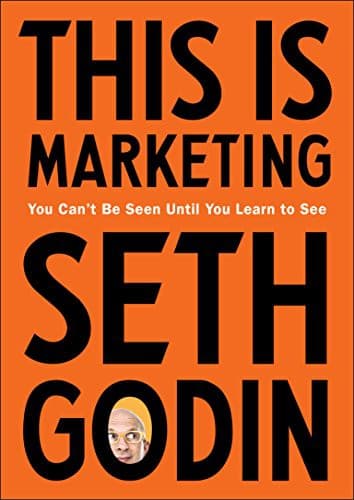
Core Idea
- Marketing is change: it is the generous act of helping a specific group of people move toward a better story, behavior, or outcome.
- The book’s central challenge is to stop thinking in terms of mass shouting and start thinking in terms of empathy, service, and cultural fit.
- You are not done when you have made a thing; you are done when you have changed what someone believes, does, expects, or shares.
How Marketing Works Now
- The internet is “a billion tiny whispers,” so old industrial tactics like spam, interruption, and buying attention are increasingly wasteful and shameful.
- Effective marketing begins by asking “Who can you help?” and then designing for the smallest viable market rather than “everyone.”
- Godin’s five-step process is: invent something worth making, design it for a few who benefit, tell a story for the smallest viable market, spread the word, and show up consistently long enough to build trust.
- Marketing is voluntary education: people enroll because they expect insight, forward motion, belonging, or relief, not because they were forced to pay attention.
- The people most likely to adopt early are the neophiliacs on the left side of the curve, while the far-right defenders of the status quo are usually not worth chasing first.
- “It’s not for them. Not right now.” means a marketer should not waste energy trying to make content, offers, or products appealing to people who do not yet want change.
- Different groups want different things—hope, novelty, safety, status, affiliation, recognition, or bargains—but almost nobody wants to feel stupid.
The Real Mechanics: Story, Culture, Status
- People do not buy the drill bit; they buy the feeling or outcome it represents, such as safety, belonging, respect, or peace of mind.
- The VisionSpring example shows that story changes behavior: glasses sold better when they were handed over as “your new glasses” than when they were framed as a retail choice.
- Godin rejects the idea that people act as purely rational agents; marketers must work with culture, beliefs, status, and social context instead.
- Culture beats strategy: “people like us do things like this” is the engine behind adoption, fundraising, school campaigns, and organizational change.
- The right “us” must be deliberately defined, because exclusivity creates belonging, tension, and a reason for members to keep participating.
- Pattern match and pattern interrupt are key mechanisms: marketing either fits an existing worldview or creates useful tension that invites forward motion.
- Tension is not fear; it is the productive pressure that makes change, learning, and movement possible, and it is often relieved by the next action or commitment.
- Status is a hidden driver of decisions, and shame is powerful because it threatens a person’s narrative of self.
- Modern marketing often runs more on affiliation than dominion: people care who trusts them, who they belong with, and whether they are in sync.
- Symbols, semiotics, and vernacular matter because people scan for “what does this remind me of?” rather than carefully analyzing every detail.
- Logos, fonts, packages, room design, hold music, and interfaces all signal who something is for and whether it can be trusted.
- A brand is shorthand for customer expectations and the promise people think you make; a logo is only a reminder of that promise, not a substitute for it.
Strategy, Pricing, and the Market You Choose
- The book distinguishes marketing-driven from market-driven: marketing-driven is tactical and shiny, while market-driven means understanding the people and culture you serve.
- A smallest viable market is not a small dream; it is a brave choice to serve a specific worldview so well that the work can spread from there.
- Specificity matters because if you cannot succeed small, you should not expect to succeed large.
- Godin repeatedly values the few true fans, the loyal adopters, or the superusers who matter disproportionately more than a broad but indifferent audience.
- Marketers should treat valuable customers differently, since the economics of fixed costs mean some customers effectively subsidize others.
- Brand marketing is about the whole experience—phone answering, packaging, facilities, executive behavior, and every touchpoint—not just ads.
- Frequency and consistency matter because trust is built by repeated exposure, and people often need time for a message to penetrate.
- Price is part of the story: it signals status, trust, audience, and commitment, and lowering price is not the same as increasing confidence.
- “Cheap” often reads as “sameness for less,” while higher price can create margin, better service, and a more coherent market position.
- Free can spread ideas by removing friction, but it also destroys scarcity and cash flow, so Godin favors pairing free ideas with paid experiences that are worth it.
- The USHG no-tipping example shows pricing as a status and story decision: raising prices funded better wages and changed the meaning of the dining experience.
- His suggested business-plan structure is Truth, Assertions, Alternatives, People, and Money, with Assertions as the core place to state the change you expect to create.
What To Take Away
- Good marketing is not louder persuasion; it is the disciplined work of creating real change for a specific group of people.
- The hardest and most useful question is not “How do I get the word out?” but “Who is this for, what change do they want, and what story will they join?”
- Winning usually means choosing a smaller, clearer audience, earning their trust, and building a culture they are proud to signal.
- Marketing succeeds when the thing you make, the story you tell, the price you charge, and the status you confer all point in the same direction.
Generated with GPT-5.4 Mini · prompt 2026-05-11-v6