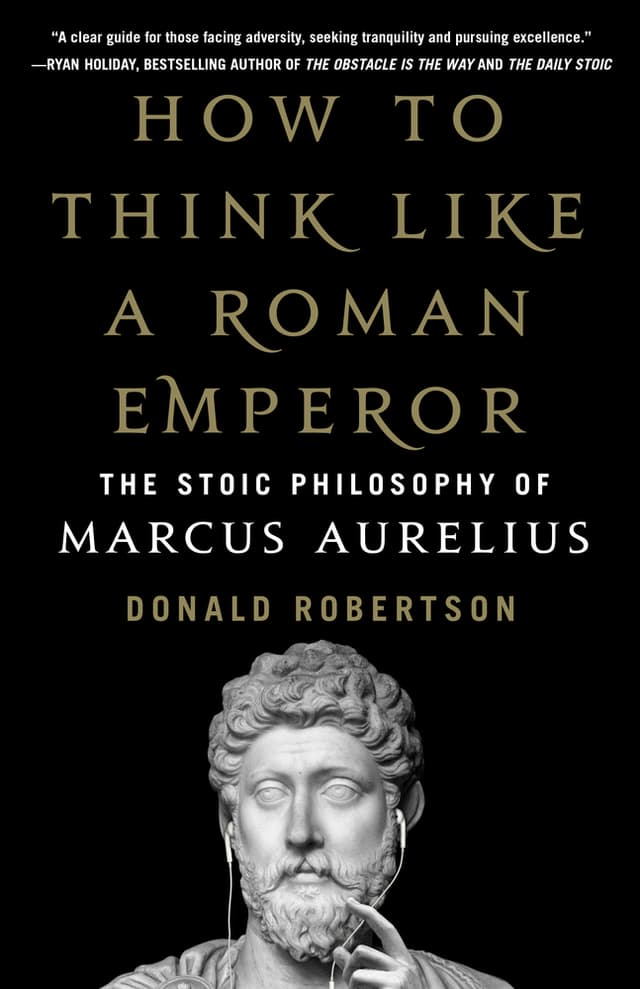
Core Idea
- Stoicism teaches that suffering comes from your judgments about events, not events themselves—change how you think, and you change how you feel
- You control only your thoughts, choices, and effort; everything else is indifferent—focus energy there and accept what you cannot control
Reframe Your Thinking
- Strip emotional language from problems: say "I'm job hunting" instead of "It's a disaster"
- Separate facts from opinions: "I'm having the thought that this is terrible" vs. "This is terrible"
- Practice cognitive distancing—observe your thoughts as separate from reality, not as truth
Master Your Desires & Habits
- Interrupt bad habits early, before cravings fully emerge; don't just white-knuckle through
- Replace unhealthy habits with value-aligned activities (not just abstinence)
- Weigh long-term consequences: moderate behavior yields more lasting pleasure than excess
- View deprivation as temporary; hunger makes food taste better than overeating does
Daily Practice Routine
- Morning: mentally rehearse upcoming challenges and virtues you'll need
- Throughout day: notice your thoughts, choices, and early warning signs of destructive patterns
- Evening: review what went well, what didn't, and what to improve
- Ask "What would my role model do?" when facing difficulties
Handle Difficult People & Conflict
- See difficult people as practice grounds for patience and kindness, not enemies
- Assume others act from ignorance, not malice—they don't know better
- Correct tactfully and indirectly, like adjusting someone's course, not attacking them
- Remember: people are your kin; conflict violates human nature itself
Manage Physical & Emotional Pain
- Accept bodily sensations with indifference; break them into components to reduce their power
- Distinguish physical pain from emotional suffering—only the latter truly harms you
- Chronic pain either kills you (proving you endure worse) or becomes manageable; both are bearable
- Pain is location-specific to the body; it doesn't damage your character
Eliminate Fear & Worry
- Premeditate adversity regularly—visualize feared outcomes until anxiety naturally fades
- Use the "reserve clause": pursue goals fully while accepting you don't control outcomes
- Postpone worry to a scheduled "worry time"; most urges dissolve naturally on their own
- After imagining worst-case scenarios, ask "What next?" to break catastrophic thinking loops
Defuse Anger
- Remember anger harms you more than your target—it violates your own peace
- View wrongdoing as ignorance deserving compassion, not malice deserving punishment
- Accept that bad people will do bad things; expecting otherwise guarantees frustration
- Recognize anger emerges when you deny human nature; restore perspective by acknowledging shared fallibility
Action Plan
- This week: choose one reframing technique (e.g., strip emotional language) and apply it to your next frustration
- Daily morning: spend 2 minutes mentally rehearsing challenges and needed virtues
- Daily evening: spend 2 minutes reviewing three things: what went well, what didn't, what to improve next time
- When struggling: ask "What would my role model do?" before reacting
- Ongoing: use the book's index to drill deeper into whichever Stoic technique matches your current challenge
Generated with Claude Sonnet 4.6 · prompt legacy-pre-v6 · model inferred from repository history