Core Idea
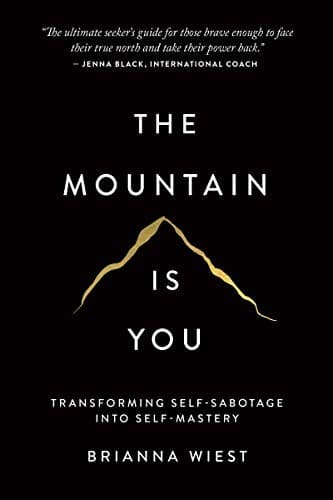
- The “mountain” is the internal conflict that creates recurring life problems, where conscious desires collide with unconscious fears, needs, and self-concepts.
- Self-sabotage is usually not self-hatred but adaptation: behavior that once met a need, reduced fear, or avoided pain now blocks growth.
- The book’s central promise is that self-mastery comes from understanding the function of the sabotage, not just suppressing the symptom.
Self-Sabotage as a Psychological Strategy
- Chronic problems like money stress, relationships, motivation, anxiety, weight, and discontent are framed as expressions of unresolved inner patterns, not merely bad circumstances.
- Sabotaging behaviors often serve an unconscious purpose: relief, protection, control, avoidance, or a substitute for “legitimate suffering.”
- Fear of change is a major driver, including fear of vulnerability, control, criticism, success, failure, or the unfamiliar.
- The subconscious prefers what is known, so even good change can trigger resistance, discomfort, or a return to an old baseline.
- The book uses Gay Hendricks’ “upper limit” idea to explain why people unconsciously cap their happiness when life gets “too good.”
- Many destructive patterns are described as intelligently designed coping mechanisms, including perfectionism, uprooting, disorganization, justification, judging others, pride, guilt about succeeding, downplaying success, and busyness.
- A recurring test is whether a goal is truly yours; if you struggle without obvious skill or fear issues, you may simply be chasing something you do not actually want.
- The remedy is not denial or endless affirmation, but full accountability: name what is wrong, identify the need underneath it, and stop protecting the pattern.
Emotions, Triggers, and the Body
- The book treats triggers as information, because strong emotions usually point to a need, wound, or unresolved fear rather than a defect in the moment.
- Anger is constructive when it clarifies boundaries or justice; sadness is the proper response to loss; guilt should be made specific; embarrassment becomes shame when it hardens into self-condemnation.
- Jealousy is presented as disguised self-dissatisfaction, while resentment is often projected regret over expectations you created.
- Regret is not only pain about the past; it reveals what must be created differently going forward.
- The book distinguishes instinct from fear: instinct is quiet, present, and action-oriented, while fear is loud, future-based, and full of imagined scenarios.
- Anxiety is often treated as a logical lapse—the mind jumps to the climax of a feared story without reasoning through how you would actually cope.
- The text repeatedly warns against psychic thinking and faulty inferences, including assuming others’ intentions, hasty generalization, post hoc reasoning, false dichotomy, and slippery slope thinking.
- Emotional backlog is compared to an overflowing inbox: when emotions are suppressed, they accumulate as bodily tension, compulsive behavior, or eventual breakdown.
- The body is said to “speak” through symptoms and sensations; the book uses examples like stomach fear, chest heartache, shoulder stress, and knee/foot pain tied to moving forward.
- Meditation is reframed not as calming down, but as staying present with rage, fear, sadness, and mental chatter without immediately reacting.
- Release methods emphasized are sweat, move, cry—not as cure-alls, but as ways to let emotions complete their motion.
Letting Go, Trauma, and Rebuilding
- Letting go of the past is not forced forgetting; the book argues that trying to stop thinking about something usually tightens attachment.
- Release begins by building a new life, which eventually makes the old identity and its memories less dominant.
- Unfinished experiences stay active in the body when something deeply wanted was lost or interrupted; the task is to identify the underlying desire, not just “accept” the event.
- A healing practice called memory reentry has you locate the body feeling, return to the root memory, and offer guidance from a wiser future self.
- The text also recommends superimposing a narrative onto the past: tell the younger self that the loss is for the best and describe the next steps.
- Trauma is defined as a fear that never got resolved, leaving the nervous system in sustained fight-or-flight and making the mind hypervigilant.
- Recovery means restoring safety in the same domain where the trauma occurred: relationship wounds need healthy relationships, money trauma needs financial stability, job trauma needs backup plans, and bullying needs new social support.
- The book argues that people can leave places and people, but not themselves, so recurring pain is evidence of unresolved internal impact rather than personal brokenness.
- Social life often gives too little time for grief or trauma processing, which is why many people “move on” externally while remaining internally unfinished.
- The body and mind can become stronger through adversity, but only if the experience is metabolized rather than bypassed.
Growth, Identity, and Future Self
- Healing is described as positive disintegration: the old self-concept must break down so a new one can fit present reality.
- Change is usually microshift-based, not a single breakthrough; small repeated actions create new habits, identity, and tolerance for the unfamiliar.
- The book gives ordinary examples—one fewer phone check, 10 minutes of exercise, one page of reading, 30 seconds of meditation—to show how identity shifts through repetition.
- New money, love, success, or achievement can cause adjustment shock, because the nervous system may treat positive change as destabilizing until it becomes familiar.
- Real transformation is framed as internal, not performative; the goal is contentment, self-respect, and emotional freedom, not proving the past wrong.
- The future-self exercises ask you to imagine your highest potential self, receive guidance or “keys” from them, and use that vision to anchor present action.
- The book argues that principles matter more than inspiration because durable outcomes come from consistent cause-and-effect, not mood.
- Its practical principles for money and life stress include living beneath your means, keeping overhead low, getting out of debt, and maintaining a rainy-day buffer.
- Purpose is broader than career: your main task is to become the kindest, most gracious, happiest version of yourself, with work purpose emerging where skill, interest, and market need intersect.
What To Take Away
- Self-sabotage is a signal, not just a bad habit; it usually points to an unmet need or unresolved fear.
- Feelings are data, not directives: validate them, but do not confuse discomfort with incapacity or danger.
- Change requires replacement, not suppression: build a new structure, identity, and set of principles before the old pattern loosens.
- The book’s deepest claim is that the mountain is not external resistance but the self’s unfinished work.
Generated with GPT-5.4 Mini · prompt 2026-05-11-v6