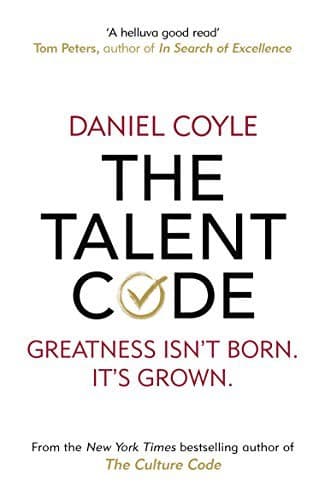
Core Idea
- Talent is built, not born—through myelin (neural insulation that grows with deliberate practice), not genetics
- Three mechanisms create world-class skill: deep practice (targeted, error-focused work), ignition (motivation triggers), and master coaching (precise feedback)
- These principles apply universally across music, sports, academics, and business because they operate on identical neurology
Deep Practice: Build Skill Through Strategic Struggle
- Work at your sweet spot: operate where you fail 10-20% of the time—the edge of your current ability where myelin grows fastest
- Chunk ruthlessly: break skills into smallest possible pieces, master each in isolation, then link together
- Practice slowly: move deliberately enough to notice and correct errors; speed develops naturally later
- Embrace struggle: discomfort signals learning; treat mistakes as data, not failures
- Stay within limits: 3-5 focused hours daily is the maximum for effective deep practice; quality beats quantity
Ignition: Fuel Sustained Motivation
- Identify primal cues: role models, visible success signals, or breakthrough moments spark effort (e.g., Se Ri Pak's golf win ignited Korean golf culture)
- Build signal-rich environments: surround yourself with images, communities, and language reinforcing your identity ("I am a musician," "We go to college")
- Use effort-based praise: reward hard work ("You worked really hard") over talent ("You're naturally gifted")—it connects to the reality of skill-building
- Design belonging: group identity and selection ("you're chosen") fuel the sustained energy needed for months of deep practice
Master Coaching: Deliver Precision Feedback
- Perceive individually: read each person's learning style; customize feedback rather than teaching one way for all
- Give GPS-style directions: short, vivid, targeted bursts ("Use your diaphragm, not your face") beat lengthy lectures
- Apply theatrical honesty: deliver truth with empathy; point out errors clearly without softening for comfort
- Match the skill type: flexible skills (writing, soccer) need free exploration; consistent skills (violin, golf) need structured guidance
Real-World Patterns
- Education: phonics AND immersion both work—different mechanisms (circuit-building + motivation)
- Aging: myelin continues building through deep practice until death; "use it or lose it" understates potential
- Business: Toyota's kaizen (continuous improvement) is deep practice at organizational scale
- Psychology: anxiety, PTSD, shyness are skills to unlearn—same deep-practice principles apply
Action Plan
- Identify your skill and sweet spot: find where you fail 10-20% of attempts—that's where myelin grows fastest
- Chunk and isolate: break your goal into smallest teachable pieces; master each before combining
- Spark ignition: find role models, join a community, adopt the identity of who you're becoming
- Secure targeted coaching: find someone who spots errors you can't see; invest in precision over cheerleading
- Commit 3-5 focused hours daily: expect 5-10 years of deep practice; talent = deliberate effort + right signals applied relentlessly
Generated with Claude Sonnet 4.6 · prompt legacy-pre-v6 · model inferred from repository history