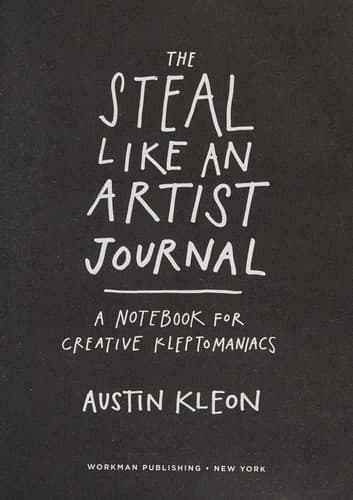
Core Idea
- Copy the work you love — imitation is the foundation of all creative development, not a shortcut around it
- Your unique perspective emerges from your influences — remix what inspires you into something distinctly yours
- Done is better than perfect — ship your work, then iterate based on feedback
The Copy-Paste Creative Process
- Study artists/creators you admire obsessively; absorb their techniques, style, and approach
- Don't plagiarize—transform what you consume by filtering it through your own sensibility
- Your "taste" (what you admire) will always exceed your current execution ability; this gap fuels growth
- Collect inspiration systematically: save images, quotes, techniques, ideas in a swipe file
- Trace influences back through history; understand the lineage of what you love
Build Your Creative Identity
- You are a remix of your influences—not a blank slate inventing from nothing
- Share your influences openly; authenticity means crediting where you learned
- Your unique voice develops after mastery of existing techniques, not before
- Develop a personal system/workflow that works for you (ignore "should")
- Side projects and constraints spark innovation—limit your tools, palette, or scope intentionally
Protect & Share Your Work
- Keep a logbook—document daily progress, failed experiments, and small wins
- Write/create in public occasionally; vulnerability builds audience and accountability
- Don't wait for permission or perfect conditions—begin with what you have now
- Share work early and often; feedback shapes better work than isolation does
- Ignore critics who steal your energy; invest attention only in people who move your work forward
Practical Output Habits
- Make something every day—quantity compounds into quality over time
- Set specific creative constraints (format, time limit, materials) to unlock ideas
- Study your medium's history and masters; skill accelerates with good models
- Steal techniques openly; transform methods, not final work
- Use "good theft" as a learning tool, then move beyond it
Action Plan
- This week: Identify 3-5 artists/creators whose work you genuinely admire; document what specifically resonates
- This month: Create a swipe file (digital or physical) of inspirational work, organized by theme or medium
- This week: Start a daily creative logbook—record what you made, what you noticed, what didn't work
- Today: Make something small using a technique from your favorite creator; document how you adapted it
- Ongoing: Share your work-in-progress monthly; seek feedback from people invested in your growth, ignore everything else
Generated with Claude Sonnet 4.6 · prompt legacy-pre-v6 · model inferred from repository history