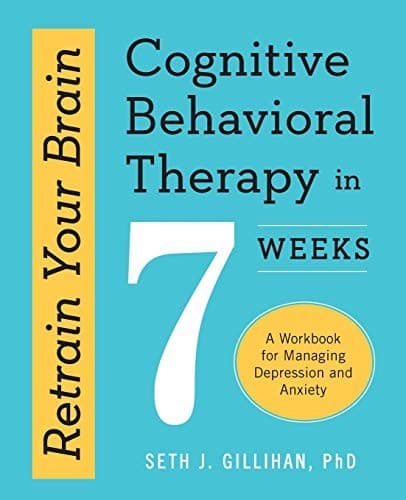
Core Idea
- CBT is presented as a structured, collaborative, time-limited, evidence-based way to manage depression and anxiety by learning to be your own therapist.
- Its central premise is that thoughts, feelings, and behaviors are linked, so changing one can shift the others; the workbook combines cognitive and behavioral methods rather than treating them separately.
- The book’s stakes are practical: reduce suffering now, build skills that outlast treatment, and lower relapse risk compared with approaches that only help while they are being used.
How CBT Explains Depression and Anxiety
- The workbook contrasts CBT with psychoanalysis by focusing on present-day thinking and behavior instead of long childhood explorations or unconscious causes.
- The history of CBT runs through Pavlov, Skinner, Wolpe, Ellis, and Beck, who together shaped the behavioral and cognitive traditions the book integrates.
- Anxiety is described as useful in moderation but disordered when it becomes overblown, persistent, distressing, and impairing; the book names specific phobia, social anxiety disorder, panic disorder, agoraphobia, and GAD.
- Panic is framed as a surge of sympathetic “fight or flight” symptoms, while agoraphobia centers on avoiding places where escape or embarrassment would feel difficult.
- GAD is persistent hard-to-control worry across domains, often with sleep, concentration, fatigue, irritability, and restlessness; social anxiety is fear of embarrassment and negative judgment, often based on guessed thoughts rather than clear danger.
- Depression is portrayed as a whole-body condition, not just sadness, with changes in sleep, appetite, energy, slowing, agitation, healing, and physical health.
- The book highlights major depressive disorder, persistent depressive disorder, and PMDD, and notes that depression can last months and recur.
- A recurring message is that depression and anxiety often trap people in self-reinforcing loops of avoidance, reduced reward, and harsh self-judgment.
The 7-Week CBT Process
- Week 1 focuses on clarifying goals, strengths, and life areas that matter, such as relationships, work, faith/meaning, physical health, recreation, and domestic responsibilities.
- The book emphasizes basic psychological needs of autonomy, relatedness, and competence, and asks for goals that are personally valued rather than driven by other people’s expectations.
- The Daily Activities form tracks what you do each hour, along with enjoyment, importance, and mood, because noticing patterns is the starting point for change.
- Week 2 introduces behavioral activation: start with action because behavior is concrete, powerful, and can jump-start thinking changes.
- Values are treated as directions, not endpoints, and activities are the specific steps that express them; the point is to schedule manageable, rewarding actions rather than wait to feel motivated.
- The book repeatedly warns against short-term avoidance that feels good now but undermines long-term aims, and uses “binding yourself to the mast” as a metaphor for pre-commitment.
- Exercise is treated as a useful intervention for both depression and anxiety, with benefits comparable in size to antidepressant medication while the exercise continues.
- Week 3 begins thought monitoring, teaching that emotions often come from interpretations rather than events themselves, and that thoughts may show up as words, images, or future-oriented predictions.
- Common thought themes are mapped by disorder: danger in phobia, imminent catastrophe in panic, embarrassment in social anxiety, “what if” uncertainty in GAD, and “less than” or hopelessness in depression.
- The book also names the fear of fear, where people avoid situations not because the situation is dangerous but because they fear their own bodily anxiety or loss of control.
- Week 4 teaches challenging thoughts with evidence for and against them; the aim is not positive thinking but more accurate thinking.
- The workbook warns about should statements, overgeneralization, personalizing setbacks, and discounting positive evidence, and it recommends asking, “What would you tell someone you love?”
- Week 5 expands into time/task management: identify tasks, prioritize them, schedule them, break them into smaller steps, and use reminders, accountability, and realistic planning.
- This week also applies CBT ideas to insomnia, including consistent sleep/wake times, less time in bed awake, getting out of bed if unable to sleep, and not catastrophizing a bad night.
- The book stresses that acceptance matters: important work and fear-facing will be uncomfortable, and the goal is to tolerate discomfort while doing what matters.
Facing Fear and Staying Well
- Week 6 is the major exposure week, built on the idea that the most effective way to overcome fear is to face feared situations instead of avoiding them.
- Exposure works by teaching the brain new information: anxiety can rise and then fall, and feared outcomes usually do not happen.
- Exposures should be safe, progressive, intentional, and repeated; one successful encounter is courage, but repeated practice is what changes fear.
- The book advises dropping safety behaviors or “magic feathers” such as scripts, props, over-rehearsal, alcohol, or other crutches that prevent learning real coping.
- Specific phobia exposure can be especially direct, sometimes even in a single extended session; the text cites a study reporting lasting improvement for 90% after about two hours.
- For panic disorder, the book uses slow breathing, interoceptive exposure to bodily sensations, and “bring it on” willingness to test the belief that panic itself is dangerous.
- For social anxiety, exposure is used to test beliefs about other people’s reactions while shifting attention outward instead of monitoring oneself.
- For GAD, the book treats worry as a kind of cognitive avoidance and recommends deliberately facing feared possibilities, accepting uncertainty, and then returning to the present through sensory attention.
- The closing integration chapter shows CBT as a package: behavioral activation, thought work, time management, and exposure all support one another.
- A wellness plan helps keep the gains visible, because helpful routines can quietly slip away and setbacks are expected, not exceptional.
- Mindfulness is presented as nonjudgmental present-focused awareness and as a relapse-protective companion to CBT, especially for recurrent depression.
- The final message is that there is no permanent peace without ongoing practice; progress must be won again and again, and vigilance against avoidance remains essential.
What To Take Away
- CBT in this book is not a slogan but a set of skills: behavioral activation, thought checking, time management, and exposure.
- The workbook’s core distinction is between what feels true immediately and what is actually supported by evidence and repeated experience.
- Its biggest caution is that avoidance is highly seductive: it reduces distress short-term while preserving fear, depression, and inertia long-term.
- The author’s practical hope is durable self-management: learn the tools, keep reviewing them, and reuse them whenever mood or anxiety starts to return.
Generated with GPT-5.4 Mini · prompt 2026-05-11-v6