Core Idea
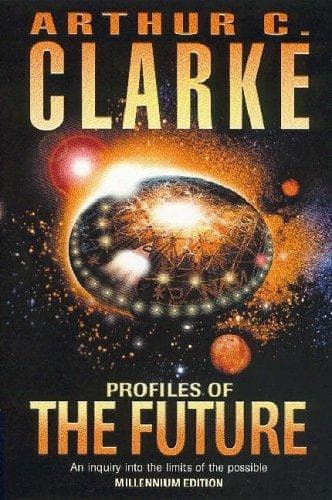
- Clarke’s central project is not to predict exact futures, but to map the limits of the possible: what technology can and cannot do, and how often “impossible” turns out to mean only “not yet.”
- He argues that the main failures of prediction come from Failure of Nerve, when experts reject a real possibility, and Failure of Imagination, when they miss the crucial new fact that makes something work.
- His deeper claim is that technological change outruns social intuition: science, machines, and spaceflight will reshape civilization far more profoundly than most politics or economics.
How Prophecy Goes Wrong
- In Failure of Nerve, Clarke piles up famous examples of experts dismissing locomotives, electric light, aviation, and rocketry because they could not accept the practical conclusion of available facts.
- He uses the same pattern to mock confident rejections of space travel before Sputnik, and treats Soviet rocket development after the V-2 threat as history’s great example of refusing to be intimidated by impossibility.
- In Failure of Imagination, the facts are correct but incomplete: Comte could not imagine spectroscopy transforming astronomy, and Rutherford missed the self-sustaining chain reaction that made nuclear energy inevitable.
- From this he distills Clarke’s Law: when a distinguished elderly scientist says something is possible, he is probably right; when he says it is impossible, he is very probably wrong.
- He also argues that overknowledge can narrow vision, while rare figures like Roger Bacon and Babbage saw far beyond their eras.
Transport, Space, and the Reach of Technology
- Clarke organizes transport by distance and insists that the future belongs to systems that optimize not just speed, but also safety, comfort, and economics.
- For very short distances, he imagines moving pavements and conveyor-city systems, and even speculates about future intelligent animals or upgraded beasts of burden for local transport.
- For cities and highways, the car is both absurd and indispensable: if it had appeared before 1900, no sane society would tolerate it, yet future cars will be lighter, electric, self-driving, and embedded in automatic road systems.
- He predicts aviation will absorb most passenger travel beyond a few hundred miles, while railroads decline except where special conditions favor them, such as the Moon.
- For freight and ocean transport, he sees competition from submarines, flexible towed containers like the Dracone, air freight, and especially Ground Effect Machines (GEMs) or hovercraft.
- GEMs matter because they ignore the land-sea divide, can skim over ice, swamps, water, sand, and rough terrain, and may eventually turn roads into mere obstacle-free corridors.
- He treats gravity as the great unsolved force: not because it is strong, but because it is so weak and so hard to control.
- A major recurring distinction is between weightlessness and absence of gravity: astronauts are weightless because they are in free fall, not because gravity vanishes.
- Clarke is deeply skeptical of true anti-gravity, but thinks gravity control would be transformative, enabling Space Drive, inertialess propulsion, personal levitation, and perhaps even gravity-based freight systems.
- He imagines a future in which people live with wearable gravity control, moving freely through space, or even in mobile houses that follow climate and season.
- For high-speed travel, he argues chemical rockets are too propellant-hungry for routine transport; only cleaner, safer propulsion—possibly nuclear fusion or some future field-based system—could make ultra-fast flight practical.
- Yet the ultimate barrier is the speed of light: at orbital and interplanetary scales, time delays are manageable, but interstellar space becomes a prison of distance.
- He rejects the idea of a galactic empire because no conversation can cross light-years in real time; star colonies would inevitably become independent.
Time, Mind, and the Posthuman Future
- Clarke treats time as another frontier: humans want to see the past, reconstruct it, change it, travel into it, and perhaps accelerate or decelerate it.
- He largely dismisses changing the past as paradox-ridden fantasy, but takes seriously the possibility of limited time dilation, which relativistic travel already guarantees.
- Interstellar travel, if it ever happens, is also a form of one-way travel into the future, because the traveler returns to a later Earth.
- He is more open to seeing or reconstructing the past through better instruments, archaeology of traces, or perhaps future methods that recover information from physical residues.
- In the most concrete sense of “time travel,” he is most interested in memory: electrical stimulation and hypnosis already show that old memories can be revived, suggesting a future of deliberate memory retrieval.
- He thinks direct teaching of knowledge to the brain, via a Mechanical Educator, may be necessary because civilization’s information load is growing too fast for conventional schooling.
- Clarke sees the brain as underused but also highly trainable: sensory channels can be extended, pain can be controlled, and new perceptions may be learned or even borrowed from animals and machines.
- He explores sleep, suspended animation, and life extension as ways to manage time, but concludes that immortality would be socially dangerous unless paired with some form of renewal or recycling.
- The human future, he suggests, may involve a gradual separation of mind from body: machine bodies, remote sensors, and cybernetic extensions are more adaptable than flesh.
- He coins Cyborg as the human-machine hybrid of the future, and expects machine intelligence to become indispensable rather than merely useful.
- His Turing-test-style view is practical rather than sentimental: if a machine can think and converse indistinguishably, objections that it is “only a machine” are beside the point.
- He expects machines to grow smaller, denser, more autonomous, and eventually self-improving; at that point, they may outstrip biological intelligence in space and in complexity.
- Space is the decisive selection pressure here: only machines can survive the extremes of vacuum, radiation, pressure, gravity, and time that flesh cannot endure.
What To Take Away
- The book’s deepest message is that the future is bounded less by fantasy than by physics, engineering, and imagination—and that the surest way to miss it is to confuse current inconvenience with permanent impossibility.
- Clarke consistently favors specific mechanisms over vague wonder: free fall, orbital motion, propulsion limits, pressure, heat, memory stimulation, and information density are the real constraints.
- His long-term vision is not just rockets and gadgets, but a transition from human-centered biology to a world of cybernetic, machine, and space-adapted intelligence.
- The book’s optimism is disciplined: many beloved ideas are rejected, but only because Clarke wants the reader to distinguish what is merely hard from what is truly beyond the possible.
Generated with GPT-5.4 Mini · prompt 2026-05-11-v6