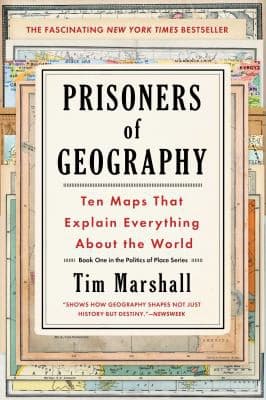
Core Idea
- Geography is the primary constraint on national power---terrain, coastlines, and natural resources determine what strategies are feasible, not ideology or willpower
- Leaders operate within geographic "prisons": they can optimize within constraints, but cannot transcend them
Why Geography Matters: Five Decisive Factors
Strategic Depth & Borders
- Flat, exposed borders force military spending or expansion (Russia's western plains, Pakistan's India proximity)
- Mountains > rivers as natural barriers---Himalayas prevent India-China war; flat plains invite invasion
- Landlocked nations remain economically dependent despite resource wealth (DRC, Bolivia, Afghanistan)
Coastlines & Naval Power
- Deep-water harbors = trading power; no coastline = economic constraint (Russia, Bolivia remain weak despite resources)
- Island nations must dominate seas to survive (Japan, UK, Philippines require expensive blue-water navies)
Chokepoints Control Global Trade
- Narrow passages (Strait of Malacca, Panama Canal, Bosporus, Hormuz) are strategic choke-holds---whoever controls them shapes regional power
- Control chokepoints -> control allies, competitors, and commerce
Artificial Borders Create Perpetual Conflict
- Colonial borders ignore ethnic, religious, geographic realities (Africa, Middle East, South Asia)
- Result: ongoing territorial disputes, failed states, civil wars with no clean resolution
Water & Climate Vulnerabilities
- River systems crossing borders are future war flashpoints (Nile, Euphrates, Indus)
- Climate change + population density in vulnerable areas = existential risk (Bangladesh flood plains, Egypt Nile-dependent, coastal megacities)
Strategic Application
For Policy Makers
- Invest in naval capability if you lack natural barriers or have coastlines to defend
- Secure control of water sources and chokepoints before competitors
- Redraw or reinforce borders to match geographic and ethnic reality, not colonial lines
For Investors & Business Leaders
- Avoid landlocked regions with resource wealth but no market access---dependency breeds instability
- Prioritize infrastructure in nations with natural trade advantages (deep harbors, coastal access)
For Understanding Global Conflict
- Most geopolitical tensions are geographic, not ideological---territorial disputes persist because terrain matters
- Water scarcity will drive conflicts more than terrorism or ideology in next 30 years
Action Plan
- Map your nation/region's geographic constraints---identify borders, coastlines, resources, and chokepoints
- Assess vulnerability: landlocked? Exposed border? Water-dependent? Climate-threatened?
- Design strategy within constraints, not against them---strengthen navy if isolated; secure borders if exposed; control water/chokepoints if available
- Monitor chokepoint control and trade routes---these determine power shifts before military action
- Plan for climate-driven resource wars (water, arable land) in next 20-50 years, especially in Middle East, South Asia, North Africa
Generated with Claude Sonnet 4.6 · prompt legacy-pre-v6 · model inferred from repository history