Core Idea
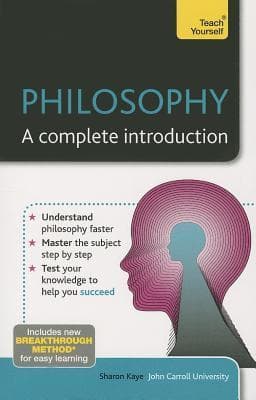
- The book is a chronological guided tour through 14 major philosophers, using vivid thought experiments to introduce each thinker’s central problem before laying out their arguments and objections.
- Its main claim is that philosophy is not abstract trivia but the discipline that asks the deepest questions about justice, God, the soul, freedom, knowledge, causality, duty, happiness, meaning, language, existence, and truth.
- Across the book, philosophy is shown as a practice of challenging authority, testing assumptions in the mind, and refusing to treat any major answer as finally settled.
The Big Recurring Debates
- The book repeatedly stages the clash between idealism and realism, rationalism and empiricism, and freedom and determinism.
- Plato argues that the material world is only a shadow of eternal Forms, and the Ring of Gyges and Allegory of the Cave probe whether justice and truth matter beyond fear, habit, and social control.
- Plato’s ideal city is ruled by philosopher-kings, divided into producers, soldiers, and rulers, and stabilized by a controversial noble lie; his tripartite soul requires reason to govern passion, but the book warns that the resulting vision can look beautiful and potentially totalitarian.
- Aristotle rejects transcendent Forms for realism and empiricism, explaining things through the four causes and treating human flourishing as eudaimonia achieved by functioning well as a rational animal.
- Aristotle’s golden mean locates virtue between excess and defect, and his account of friendship distinguishes ties of utility, pleasure, and the highest form, virtue, where friends value each other for their own sake.
- His contribution to logic is the syllogism and deductive validity, which set a standard for rigorous argument even though his observational claims can still be wrong.
God, Mind, Knowledge, and Self
- In medieval philosophy, Anselm offers the ontological proof: God must exist because the greatest conceivable being would be greater if it existed in reality than only in the mind.
- Gaunilo counters with the Lost Island parody, and the text also questions whether Anselm’s contrast between existence in the mind and in reality is stable.
- The problem of evil challenges monotheism by asking why suffering exists if God is all-knowing, all-powerful, and all-loving; Augustine’s theodicy answers that evil is the absence of good and that contrasts make goodness intelligible.
- Aquinas shifts to a posteriori arguments from experience, including the cosmological proof from motion to an unmoved mover and the teleological proof from purposive order to intelligence.
- The book notes that the cosmological argument raises questions about whether the universe could be everlasting, while the design argument is challenged by evolution by natural selection and weakened further by the anthropic principle.
- Descartes uses the method of doubt and the malignant demon to strip away uncertainty until only the cogito remains, then tries to rebuild knowledge through God and clear and distinct ideas.
- The text flags the Cartesian circle, since Descartes seems to need God to certify clear and distinct ideas while also using those ideas to prove God.
- Descartes’s dualism divides mind/soul and body, and the book contrasts this with later materialist skepticism about the soul and with the appeal to qualia in the mind–body problem.
- Locke makes personal identity depend on memory and consciousness rather than body or soul-substance, while his tabula rasa empiricism treats the mind as initially empty.
- Berkeley pushes empiricism into idealism, arguing that if secondary qualities are mind-dependent, primary qualities are too.
- Hume radicalizes empiricism into skepticism: causation is only constant conjunction, the problem of induction undercuts our confidence in future regularities, and the self dissolves into a bundle of perceptions.
- Kant answers by arguing that the mind actively structures experience through a priori synthetic forms, especially time and space, so we know the phenomenal world but not the noumenal.
- In ethics, Kant defends deontology: the categorical imperative requires universalizable maxims and treating persons as ends in themselves, with morality grounded in good will rather than happiness.
- Mill rejects that rigidity with utilitarianism, holding that right action maximizes happiness for the greatest number and distinguishing higher from lower pleasures.
- Mill’s version is also rule utilitarian and liberal: free speech, equality, and individuality matter because they support better long-run human flourishing.
- Nietzsche attacks modern morality as slave morality, driven by resentment and safety-seeking, and replaces it with will to power, perspectivalism, and the challenge of the Übermensch.
- Wittgenstein moves from picture theory to language games, making meaning a matter of use and family resemblances rather than hidden essences, which also fuels suspicion of private inner entities.
- Sartre insists that human beings have no fixed essence, only facticity and freedom; we are “condemned” to choose, and bad faith is the attempt to hide from that responsibility.
- Existentialism thus treats existence precedes essence as a demand to define oneself through projects, relationships, politics, or art, even though no final stable identity is guaranteed.
- Dewey ends by recasting truth, art, and education in pragmatic terms: truth is what works, knowledge solves problems, and education should form a community of inquirers rather than reward memorization.
What To Take Away
- The book’s signature method is to turn philosophy into a sequence of live disputes tested by thought experiments, then to ask what each theory explains and what it cannot.
- Many classic positions are presented as powerful but costly: Plato risks totalitarianism, Kant can feel rigid, utilitarianism can threaten rights, and empiricism can slide into skepticism or idealism.
- The deepest recurring questions are whether reality is fundamentally mind-independent or mind-structured, whether knowledge starts in reason or experience, and whether human beings are free or determined.
- The closing message is that philosophy matters because it keeps reopening the questions that shape how we live, even when no final consensus exists.
Generated with GPT-5.4 Mini · prompt 2026-05-11-v6