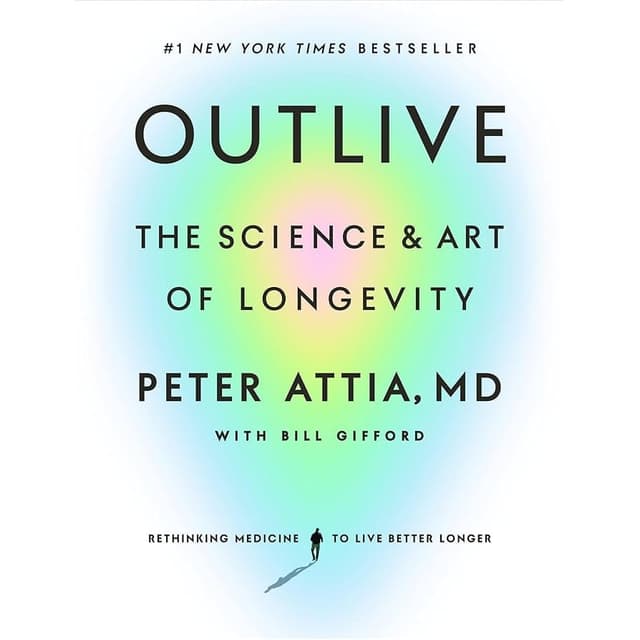
Core Premise
Modern medicine excels at treating acute illnesses (fast death) but fails at preventing chronic diseases (slow death). Attia argues for a shift from reactive, symptom-driven care to proactive, prevention-focused health strategies that prioritize both lifespan and healthspan—the quality of life during those years.
Book Structure and Key Ideas
Part I: Rethinking Medicine
Introduction & Chapter 1 – The Long Game
Attia uses a dream of catching falling eggs to illustrate the futility of reacting to disease late in its course. He advocates moving upstream: identifying and mitigating risks decades before symptoms emerge.
Chapter 2 – Medicine 3.0
Medicine 1.0: trial-and-error guesswork.
Medicine 2.0: modern, evidence-based but still reactive.
Medicine 3.0: personalized, data-driven, focused on prevention.
Standard health care is too late and too generic. New tools like continuous glucose monitors, CAC scans, and advanced lipid panels can guide early intervention.
Chapter 3 – Objective, Strategy, Tactics
- Objective: Maximize healthspan.
- Strategy: Delay the onset of chronic diseases ("The Four Horsemen").
- Tactics: Nutrition, exercise, sleep, emotional health, and tailored medical interventions.
Part II: The Four Horsemen of Chronic Disease
1. Atherosclerotic Cardiovascular Disease (ASCVD)
- The leading cause of death; progresses silently over decades.
- Standard cholesterol panels are insufficient.
- More predictive markers: ApoB, Lp(a), calcium scoring (CAC).
- Example: Someone with “normal” LDL but high ApoB is still at high risk.
2. Cancer
- Driven by accumulated mutations and immune system failures.
- Prevention is limited, but early detection is critical.
- Tools include full-body MRI, multi-cancer early detection (MCED) blood tests.
- Cancer is often stochastic—mitigation is about stacking odds in your favor.
3. Neurodegenerative Disease (Alzheimer’s, Parkinson’s, etc.)
- Often develops 20–30 years before diagnosis.
- Strong links to insulin resistance, inflammation, poor sleep, and inactivity.
- Early intervention with exercise, glucose control, and cognitive engagement matters.
4. Metabolic Dysfunction
- Underlies the other three.
- Insulin resistance is widespread—even among people with “normal” weight.
- Key signs: high fasting insulin, high triglycerides, central obesity, low HDL.
Part III: Tools and Tactics for Longevity
Exercise
- The single most important intervention.
- Four components:
- Zone 2 aerobic training (low-intensity, fat-burning).
- VO2 max intervals (high-intensity, improve cardiac capacity).
- Strength training (preserves muscle mass and mobility).
- Stability work (reduces injury and maintains function).
- Metrics like grip strength, walking speed, and leg power predict longevity.
Nutrition
- There is no universal perfect diet.
- Focus on:
- Protein adequacy to prevent sarcopenia.
- Blood sugar stability.
- Caloric balance for body composition.
- Avoid dogma (e.g., keto vs. vegan). Choose sustainability and adherence.
Sleep
- Essential for metabolic health, brain function, and mood.
- Sleep deprivation worsens insulin resistance, inflammation, and cognitive decline.
- Fixing sleep is often more impactful than changing diet or supplements.
Emotional Health
- Often neglected but deeply influential.
- Chronic stress, trauma, unresolved psychological issues shorten lives.
- Attia discusses his personal therapy journey and how emotional health transformed his life and relationships.
Key Takeaways
- You won’t see the disease coming unless you look. Early testing and biomarkers are essential.
- What you do in your 30s–50s sets the trajectory for your 60s–80s.
- Exercise is the most powerful intervention across all domains.
- You can’t separate physical and emotional health. Longevity requires both.
- There is no one-size-fits-all. Personalized medicine—based on your goals, risks, and preferences—is the future.