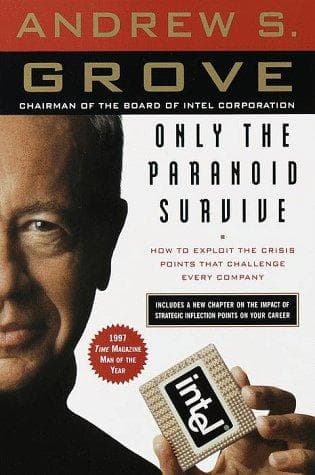
Core Idea
- Strategic Inflection Points are 10X shifts in competition, technology, customers, or regulation that make existing strategies obsolete overnight—not gradual trends, but earthquakes
- Companies that recognize these moments early and act decisively survive; those that deny reality or wait for collapse typically die
- Paranoia about threats—especially during periods of success—is a competitive advantage
Recognizing the Inflection Point
Warning Signs to Monitor
- Track the Six Competitive Forces: competitors, suppliers, customers, new entrants, substitutes, complementors
- Watch for: customers behaving differently, ignored competitors suddenly mattering, your best people saying "I don't get it," gap between stated and actual priorities
- Listen to Cassandras—front-line staff (sales, operations) who see trouble first and are usually dismissed but right
- Avoid dismissing early versions of disruptive technology because they're imperfect (early internet, Newton, first Macs)
Intel's Lesson
- Dominated memory chips until Japanese competitors posed a 10X threat; executives denied reality for years
- Breakthrough: private conversation—"If fired tomorrow, our replacement would exit memory. Why shouldn't we?"
- Act during success, not after collapse begins; waiting nearly destroyed the company
Moving Through the Crisis
The Valley of Death
- Transition period where old identity dies but new one isn't clear yet; expect internal chaos
- Three emotions block action: negation (won't happen), escape (distraction projects), paralysis (can't admit change)
- Breakthrough: admit reality, experiment with new directions, tolerate chaos briefly, then impose clear strategy
Breaking Through
- Define explicitly what you will and will not pursue—fuzzy vision kills momentum
- Actions, not plans, transform organizations—reassign talent, kill products, fund new areas, visibly spend time on new priorities
- Your calendar is your strategy; people watch where you spend time more than listen to speeches
- Communicate the same message 20+ times; repetition feels excessive until understanding clicks
Career Application
- Treat your career as your own business; you're the CEO
- Career inflection points parallel corporate ones—industry shifts, technology, burnout, or market changes trigger them
- Be paranoid about your own environment: read widely, attend conferences, listen to worried peers, run mental fire drills
- Experiment while employed (side projects, new skills, roles) before crisis forces change
- Early moves while stable create leverage and options later
Action Plan
- Audit your industry now—identify the 10X threats, even small ones; don't wait for obvious crisis
- Find your Cassandras—identify who sees danger first; start listening actively to their concerns
- Debate hard, decide fast—vigorous discussion then full commitment; fuzzy consensus kills execution
- Reallocate resources early—eliminate sacred cows while profitable; the cost of delay is far higher
- Overcommunicate the new reality—repeat the message until people actually shift behavior, not just nod
Generated with Claude Sonnet 4.6 · prompt legacy-pre-v6 · model inferred from repository history