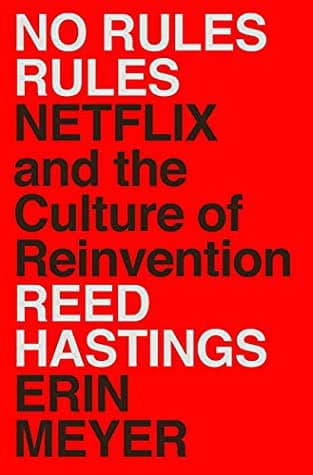
Core Idea
- Netflix’s operating model is built on a Freedom and Responsibility loop: raise talent density, increase candor, then remove controls, which in turn makes people act with more ownership.
- Hastings argues Netflix beat Blockbuster less through strategy than through culture: fewer rules, more direct feedback, and a stronger concentration of exceptional colleagues.
- The book’s central wager is that in creative work, context + talent + candor outperform detailed process and tight supervision.
Talent Density and Pay
- Talent density means mostly “stunning” colleagues, because a few merely adequate performers can lower a team’s standards, energy, and judgment.
- Hastings treats performance as contagious, citing research showing how slackers, jerks, and pessimists can distort group output.
- Netflix’s 2001 layoffs are presented as a turning point: removing weaker performers improved morale and raised the bar for everyone left.
- For creative roles, Netflix follows a rock-star principle: pay the top of an individual’s market for one exceptional person rather than spread the same money across several average ones.
- Netflix distinguishes creative from operational work: creative jobs justify top-of-market pay, while operational roles have a clearer ceiling.
- The company rejects bonuses for creative work because bonuses can narrow attention, reward the wrong target, and become obsolete when strategy changes.
- Instead, Netflix pays high base salaries, then keeps employees near or slightly above their top of market as that market changes.
- Managers are expected to research market value continuously, openly discuss recruiter calls, and raise pay proactively rather than wait for outside offers.
- The point is not just retention; it is to make employment a choice, not a trap, while keeping compensation aligned with the outside market.
Candor, Feedback, and Transparency
- Netflix’s candor norm is “say what you really think, with positive intent” and “only say about someone what you will say to their face.”
- Feedback is expected up, down, and across the company, and leaders must signal that candor will not damage belonging.
- The teaching tool is the 4A model: Aim to Assist, Actionable, Appreciate, and Accept or Discard.
- Feedback can be given anywhere, even publicly, if it is specific, useful, and intended to help, as in the Bianca-Rose presentation example.
- Netflix explicitly rejects the idea that brilliance excuses rudeness; “brilliant jerks” are not acceptable.
- Annual performance reviews are not the main feedback system because they are one-way, tied to ratings and raises, and too disconnected from Netflix’s day-to-day candor culture.
- Instead, Netflix uses signed 360s and live 360 dinners so feedback is direct, attributable, and conversation-based rather than anonymous and vague.
- Signed 360s improved quality because people could ask follow-up questions, and anonymous comments often became snide or unhelpful.
- Live 360s work best in small groups over dinner with Start/Stop/Continue-style comments and a strong moderator enforcing the 4A rules.
- These sessions are uncomfortable but, for many employees, career-defining because they surface blind spots peers can see but managers may miss.
- Netflix also practices sunshining: sharing as much information as possible, including bad news, because secrecy creates stress and distrust.
- Reed argues that secrets are psychologically costly and that disclosure builds trust; he therefore pushes broad internal transparency on finances and business context.
- The main exception is personal-life privacy: personal struggles are not automatically company business.
Context, Decision-Making, and Innovation
- Once talent density and candor are high, managers should give context, not control: explain goals and constraints, then let the informed captain decide.
- Netflix’s line is “Don’t seek to please your boss. Seek to do what is best for the company.”
- The company wants employees to build “decision-making muscles,” not wait for approval on every meaningful choice.
- This works best in loosely coupled parts of the business, where local decisions do not require centralized coordination.
- Netflix’s preferred operating style is “Highly aligned, loosely coupled”: leaders set the North Star, then teams act independently within that context.
- The Innovation Cycle depends on farming for dissent, testing big ideas, placing the bet, and sunshining failures afterward.
- The Qwikster debacle taught Reed that silence can be more dangerous than disagreement, because employees may assume leadership already knows best.
- In practice, leaders should proactively solicit objections, use shared memos and comment threads, and stress-test major ideas before committing.
- The company tolerates failed bets but not concealed failures; the right response is to explain what happened, what was learned, and move on.
- Netflix rejects team-as-family thinking and prefers a sports-team metaphor, because teams should continuously upgrade roles rather than preserve people regardless of fit.
- The Keeper Test asks managers whether they would fight to keep a person if that person were leaving; it is a recurring fit test, not a firing quota.
- The related Keeper Test Prompt gives employees a way to ask how hard their boss would work to retain them, which can produce reassurance, feedback, or a signal that the fit is off.
- Netflix says turnover is not the goal; rather, the goal is to avoid carrying people who are no longer the best use of that role.
What To Take Away
- Netflix’s culture is not “no rules” in the sense of chaos; it is fewer rules backed by stronger people, stronger candor, and clearer context.
- The company’s model only works because trust, transparency, and talent density make freedom safer and more productive.
- Hastings’s core claim is that creative organizations should optimize for speed, learning, and innovation, even if that means more discomfort, more directness, and less managerial control.
- The book’s recurring test is simple: when the business is changing fast, would a rule help more than a judgment from a well-informed, highly responsible employee?
Generated with GPT-5.4 Mini · prompt 2026-05-11-v6