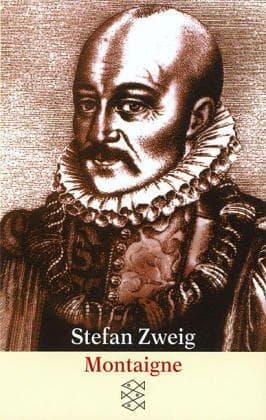
Core Idea
- Stefan Zweig presents Montaigne as the great model of inner freedom: a man who survives a violent age by preserving his own essence against state, church, custom, and fanaticism.
- Montaigne’s enduring answer to crisis is not action for its own sake but the question “What do I know?”, a skeptical discipline that resists dogma and protects the self from surrendering to absolute claims.
- The biography is also Zweig’s late, personal act of recognition, since Montaigne’s inward withdrawal and tolerance become a mirror for Zweig’s own exile and despair in the face of Nazism.
Montaigne’s Formation: Gentleness, Skepticism, and Self-Observation
- Montaigne’s father deliberately raised him through gentleness, liberty, and contact with ordinary life, even waking him with music and teaching him Latin from infancy.
- Zweig treats this unusual education as the root of Montaigne’s openness, lack of prejudice, and refusal to become a rigid “top brass” intellect.
- At school Montaigne rebels against rote learning, memorization, and dead scholarship, insisting that to know by heart is not to know.
- He distrusts bookish authority and believes knowledge must be digested, transformed, and tested in living experience rather than merely repeated.
- His bad memory becomes productive because it prevents fixed mental possession and keeps him searching, revising, and renewing himself.
- Montaigne turns his own life into his subject, making self-observation the basis of thought rather than abstract system-building.
Books, the Tower, and the Making of the Essais
- Montaigne’s tower library is the material image of his inward kingdom, a citadel where books are consulted freely rather than obeyed.
- He reads for pleasure, stimulation, and comparison, preferring historians, biographers, poets, and especially Plutarch over dry system-makers.
- He annotates and excerpts books, but the Essais begin as provisional reflections and jottings rather than a preplanned treatise.
- Publishing the first two volumes changes his position: he becomes a public writer even though he continues to present himself as someone simply thinking aloud.
- Zweig sees the later revisions and additions as signs that public existence increasingly enters the work, yet the first edition remains the freest and most sincere version.
- The tower room, with its inscriptions and books, symbolizes a protected inner space where Montaigne can think, walk, and remain partially inaccessible to the world’s demands.
History, Travel, and Public Duty
- Zweig places Montaigne in the French Wars of Religion, where civilization repeatedly collapses into cruelty, sectarianism, torture, and massacre.
- Montaigne’s tolerance is therefore historical and earned, not abstract or sentimental; he has seen what fanaticism does to human beings.
- Zweig repeatedly links this world to his own century, especially the destruction of European humanism by Nazism, making Montaigne a companion for modern catastrophe.
- Montaigne’s travels are exercises in freedom rather than monument-hunting, since he wants to meet people, observe customs, and learn how widely human life varies.
- Travel becomes a school of judgment because it teaches him to compare without prejudice and to distrust the arrogance of local custom.
- Even when ill, he prefers movement to confinement, as if outward motion helps preserve inward independence.
Withdrawal, Office, and Final Renunciation
- Montaigne’s life moves between retirement and return, since he withdraws from public life yet later serves as mayor of Bordeaux and as mediator between Henri III and Henri de Navarre.
- Zweig emphasizes that he is a reluctant official who can still act usefully, but only by refusing party spirit and preserving his independence.
- His public service shows that inner freedom does not mean passivity; he can do practical work without surrendering to ambition or faction.
- The plague episode reveals his limits, since he is not a romantic hero and flees when health and life are threatened.
- The final irony is that high office comes to him only after he has learned not to desire it, as though the world grants what he no longer needs.
- Marie de Gournay appears as a late reward: a young admirer who loves both the books and the man and receives his posthumous legacy.
What To Take Away
- For Zweig, freedom means inner sovereignty, not triumph, publicity, or doctrinal consistency.
- Montaigne’s greatness lies in making self-knowledge a practical defense against the violence of systems and slogans.
- His skepticism, tolerance, and essayistic openness matter because they resist fanatic ages that demand total certainty.
- The book is also Zweig’s own farewell to Europe, using Montaigne to make exile, solitude, and mortality intelligible.
Generated with GPT-5.4 Mini · prompt 2026-05-11-v6