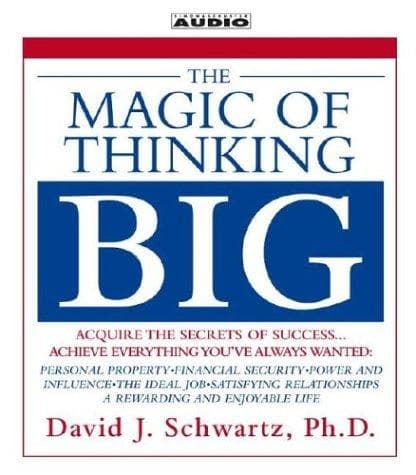
Core Idea
- Your success is determined by the size of your thinking, not your intelligence, luck, or circumstances
- Belief triggers solutions: when you genuinely believe you can do something, your mind automatically finds the way
- Action cures hesitation—start immediately; perfect conditions never arrive
Eliminate Mental Roadblocks
- Fire "Mr. Defeat" from your mind; replace with "Mr. Triumph" manufacturing positive thoughts
- Stop excuses: health complaints, low IQ claims, age limits, and luck-blaming are failure diseases
- Replace limiting language: "problem" → "challenge," "failed" → "new approach," "impossible" → deleted
- Manage your memory bank: deposit only positive thoughts; withdraw only positive memories
Build Unshakeable Confidence
- Look important (quality clothes, grooming) to think important—appearance drives self-image
- Practice micro-confidence habits: sit in front rows, make eye contact, walk faster, speak up, smile big
- Give yourself daily pep talks; build a personal "sell yourself to yourself" commercial
- Think of your work as important—subordinates will mirror this attitude back
Think and Act Bigger
- Use big vocabulary and see what can be, not just what is—visualization adds real value
- Avoid petty thinking about trivial matters; keep eyes on big objectives
- Compete with the best, not the average; surround yourself with people who think big
- Set 10-year goals in three areas (work, home, social); visualize your future self as automatic pilot
Lead Through Service
- Trade minds before decisions: ask "What would I think if I were in their position?" before ads, speeches, orders, criticism
- Criticize privately only: praise strengths, point one improvement with help, praise again
- Make others feel important: use names, give genuine appreciation, share praise with your boss
- Go beyond minimum expectations; help dismissed employees, remember personal details
Activate Creative Solutions
- Believe it can be done first—belief opens creative pathways
- Ask daily: "How can I do this better?" and listen more than you talk to spark ideas
- Write down ideas immediately; file and regularly review them
- Fight traditional thinking; be receptive to new approaches; try new solutions when one fails
Decision-Making Through Solitude
- Block 30+ minutes daily (early morning or evening) for uninterrupted thinking
- Use directed thinking for specific problems; undirected thinking for self-evaluation
- Avoid filling silence with distractions (TV, radio)—train yourself to think independently
- This is where leaders actually solve problems and make sound decisions
Handle Setbacks Constructively
- Salvage something from every failure: analyze what went wrong, learn the lesson, extract one insight
- Never blame luck or others—be your own constructive critic like professionals do
- Blend persistence with experimentation; there's always another approach to try
- Find the good side in every situation; detours don't change your destination, just the route
Action Plan
- This week: Replace three excuse patterns (health, age, luck) with action-focused language
- Daily habit: 10-minute morning solitude for thinking + one micro-confidence practice (eye contact, sit forward, speak up)
- Set now: One 10-year goal per life area (work, home, social); write it down and visualize weekly
- Immediately: Write down one "how can I do this better?" question from your biggest current challenge
- Always: When someone criticizes, ask "Is this worth arguing about?"—answer is never
Generated with Claude Sonnet 4.6 · prompt legacy-pre-v6 · model inferred from repository history