Core Idea
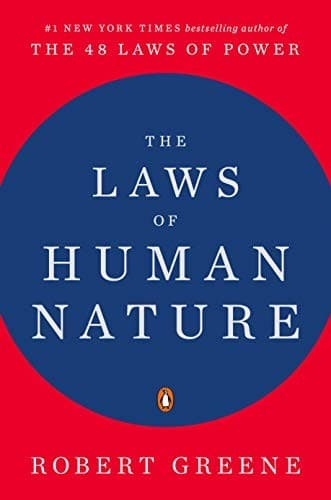
- Greene argues that human beings are far less rational, stable, or self-transparent than they believe, and that behavior is usually driven by hidden emotions, status needs, tribal instincts, envy, aggression, and repression.
- The book’s purpose is to help you see these forces clearly in others and yourself so you can judge character better, avoid manipulation, reduce conflict, and move toward a more self-aware “higher self.”
The Book’s Main Model of Human Nature
- Human nature is treated as rooted in evolution: we are social animals with layered brains, emotional permeability, masking behavior, and a Shadow of repressed impulses that leaks out under stress.
- Greene says modern life and social media have not civilized these instincts away; they have often intensified comparison, mob behavior, grandiosity, envy, and performative identity.
- The book repeatedly contrasts the lower self—reactive, defensive, pleasure-seeking, group-following—with the higher self, which is thoughtful, disciplined, and reality-bound.
The Laws: How Human Nature Actually Works
- Law of Irrationality: emotion routinely contaminates thought, so rationality means noticing bias, delaying reaction, and thinking longer before acting; Pericles models this with calm, long-horizon judgment, while factional Athens and the Sicilian disaster show what happens when ambition and wishful thinking win.
- Greene breaks irrationality into low-grade everyday bias and high-grade explosive states, then names common distortions such as confirmation bias, conviction bias, appearance bias, group bias, blame bias, and superiority bias.
- He argues that “inflaming factors” like childhood trigger points, sudden gains or losses, charismatic provocateurs, and crowd dynamics can push people from mild bias into crisis behavior.
- Law of Narcissism: everyone is somewhere on a narcissistic spectrum, and empathy is the antidote; deep narcissists lack a stable inner self, crave attention, and turn other people into extensions of themselves.
- Greene distinguishes deep narcissists from merely functional or healthy narcissists, then uses figures like Stalin, Jeanne des Anges, Tolstoy/Sonya, and Shackleton to show charm, control, theatricality, and mood-reading in action.
- The empathy chapter stresses four skills: empathic attitude (assume you do not already know the person), visceral empathy (read tone, posture, and facial leakage), analytic empathy (infer structure from biography and patterns), and practiced social skill.
- Erickson’s “second language” of nonverbal cues becomes a major method: yes can mean no, walking style and posture reveal personality, and mixed signals usually matter more than words.
- Nonverbal decoding is organized around three categories: dislike/hostility, dominance/submission, and deception; Greene emphasizes baseline behavior, microexpressions, voice, synchrony, and the danger of mistaking anxiety for guilt.
- Impression management is treated as unavoidable: public life is theatrical, authenticity is partly a performed role, and strategic absence, mystery, and audience adaptation can increase influence.
- Law of Compulsive Behavior: character is formed early and repeats itself; repeated actions under stress reveal the real person better than charm, reputation, or ideology.
- This leads into attachment patterns and a warning that many admired people are actually compulsive, brittle, or controlling when responsibility and pressure expose them.
- Greene catalogs toxic types—hyperperfectionist, relentless rebel, personalizer, drama magnet, big talker, sexualizer, pampered prince/princess, pleaser, savior, and easy moralizer—to show how compensations become predictable social traps.
Character, Desire, and the Social World
- Greene’s positive counterpoint is character alchemy: flaws can be redirected into strengths if you understand your stamp, use stress inoculation, associate with strong people, and turn weaknesses into productive habits.
- Covetousness explains why desire depends on distance, absence, and rivalry; Coco Chanel is the model of turning herself and her work into objects of desire through mystery, controlled access, and transgressive style.
- The South Sea Bubble is Greene’s warning about momentary madness: conviction, social proof, and shrinking time horizons can make absurd schemes feel real until the crash.
- He argues that humans are naturally short-term and easily seduced by ticker-tape urgency, trivia, and tactical battles, so wisdom requires farsighted perspective and resistance to emotional contagion.
- Attitude is treated as a master force: an expansive attitude keeps curiosity alive, turns adversity into training, prevents self-pity, and shapes how reality is experienced.
- The Shadow law says repression creates dangerous leakage—projection, overidealization, slips, fanaticism, and moral posturing—so the task is to integrate the darker side rather than deny it.
- Envy is one of the most socially corrosive forces: it usually appears first as friendship, praise, or concern, then turns into backbiting, sabotage, or subtle hostility; the antidotes are gratitude, mitigation of display, and Mitfreude.
- Success delusion shows how achievement can distort judgment; Michael Eisner’s rise at Disney illustrates how success can shrink the link between action and consequence and invite overreach.
- Grandiosity is framed as a common disease of proportion, fueled by childhood omnipotence, pampering, social media, and public attention; it becomes dangerous in leaders who see themselves as destined, invulnerable, or uniquely gifted.
- Greene’s answer is to keep ambition tied to reality, seek feedback, and convert grandiose energy into focused, measurable work rather than spectacle.
- Gender rigidity and love are treated as inner conflict: people overidentify with masculine or feminine roles, then project unresolved opposite-sex material into relationships.
- Emotional and sexual attraction often reflect anima/animus projections, so Greene urges noticing one’s own exaggerations, withdrawing projections over time, and integrating the repressed side of the self.
What To Take Away
- Greene’s deepest claim is that self-knowledge is social knowledge: if you can read your own triggers, projections, and compensations, you can read other people more accurately too.
- The practical posture throughout the book is to slow down, observe behavior over time, and treat words, reputations, and group consensus as unreliable without nonverbal and pattern evidence.
- Healthy power comes from combining empathy, distance, patience, and reality-testing rather than from charm, intensity, or moral certainty.
- The book’s final orientation is existential: by facing death, suffering, and finitude directly, you gain urgency, perspective, and a more liberated relationship to life.
Generated with GPT-5.4 Mini · prompt 2026-05-11-v6