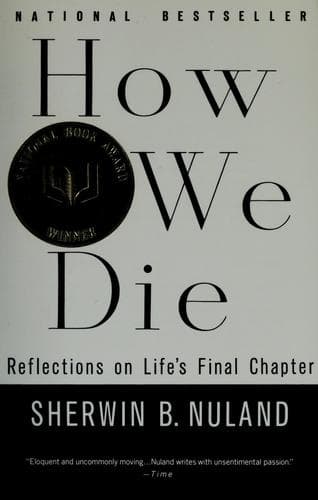
Core Idea
- Death is typically preceded by days or weeks of physical/mental distress, not peaceful decline—understanding disease progressions reduces fear and enables better decisions
- Most deaths result from cardiac failure, stroke, sepsis, cancer, organ failure, or Alzheimer's; aging itself is the underlying cause
- Your role: demand realistic prognoses, establish clear end-of-life wishes before crisis, and reject aggressive interventions that prolong suffering without recovery
What Doctors Won't Tell You (And Why)
- Physicians are driven to solve "The Riddle"—diagnosis and cure—not patient comfort; they default to "do more" when uncertain
- Vague terms like "promising" and "reasonable" hide actual survival stats; demand concrete numbers: exact remission %, duration, toxicity costs to daily living
- Specialists don't know your values; you must explicitly state priorities repeatedly and establish continuity with one trusted primary physician
End-of-Life Decision-Making
- Discuss advance directives (living wills, DNR orders) while mentally competent—vague wishes get overridden by medical defaults
- Question aggressive interventions: ICU, intubation, resuscitation often only extend suffering; request hospice early, not after all medical options exhausted
- Define "good death" specifically: pain-free? family present? spiritual closure? Communicate in writing; family permission matters psychologically to dying patients
Navigating Common Diseases
- AIDS/Modern plagues: Expect opportunistic infections in sequence and multiple organ failure; focus on quality of remaining life, not prolonging it
- Cancer: Push oncologists on quality-of-life outcomes, not just remission percentages; verify experimental treatment is truly your choice, not subtle pressure
- Terminal illness: Accept that "fighting to the end" extends suffering without extending meaningful life; cachexia and pain worsen dramatically in final months regardless
Pain, Dignity, and Rational Choice
- Demand adequate pain medication and sedation—suffering is not noble and body's natural endorphins provide trauma relief
- Physician-assisted death may be rational in terminal illness with unendurable suffering; distinguish from treatable depression (common in elderly)
- Any assisted death requires long-standing doctor relationship, multiple consultations, explicit patient request—never rushed
Action Plan
- Meet with your doctor now (not in crisis): ask for realistic prognosis, disease trajectory, and pain management specifics for any condition affecting you
- Create written advance directives specifying exact conditions for refusing aggressive intervention; share with family and physician explicitly
- Redefine hope from cure to: dignity, meaningful time with loved ones, spiritual resolution, lasting memories
- Establish continuity care with one trusted primary physician who knows your values, not just specialist consultations
- For serious diagnosis: demand concrete survival stats, quality-of-life data, and toxicity costs; verify your treatment choice is truly informed
Generated with Claude Sonnet 4.6 · prompt legacy-pre-v6 · model inferred from repository history