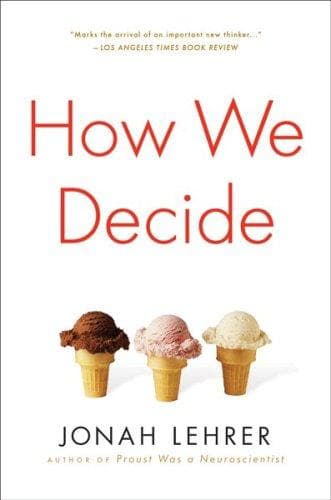
Core Idea
- Your brain has two decision systems: emotional (fast, pattern-based) and rational (slow, logical)---both essential, each best at different tasks
- Match the system to the problem: gut feelings for familiar decisions, deliberate thinking for novel situations; using the wrong system guarantees poor choices
When to Trust Your Gut
- Expertise = trained intuition: Pilots, poker players, and experienced professionals succeed by listening to refined emotional instincts built through deliberate practice
- Stop overthinking routine decisions: Analyzing jam preferences or poster choices actually makes decisions worse---let your dopamine neurons do the work
- Learn from mistakes during practice: Negative feedback builds expertise faster than success; debrief errors to train pattern recognition
When to Engage Your Rational Brain
- Use logic only for genuinely novel problems: Unprecedented situations (emergency landings, escape routes) require deliberate thought; emotions have no training data
- Recognize information overload: Prefrontal cortex capacity = ~7 items; more data beyond that point actually degrades decisions
- Stop at ~4 variables: If a decision can be accurately summarized in numbers, use math; if not, trust instinct
Protect Against Bias & Traps
- Fight certainty bias: When decisions feel obvious, you've missed something---force yourself to consider alternative hypotheses
- Actively seek disagreement: Solicit opposing viewpoints and debate them; forced consensus ignores crucial contradictions
- Avoid chasing patterns in randomness: Stock markets and slot machines feel predictable but aren't; stop looking for patterns where none exist
- Use cash, not credit cards: Plastic anesthetizes your pain response; physical money triggers better spending discipline
- Reframe losses as gains: Loss aversion makes you risk-seeking when afraid; rephrase decisions positively to bypass this trap
Moral Decisions Need Emotion
- Trust your sympathy circuits: Fairness and morality are hardwired through mirror neurons and emotional centers, not logic
- Personal violations matter more: Direct harm feels worse than indirect harm with identical outcomes---this distinction is valid; trust it
Action Plan
- Audit your decisions: Before choosing, ask "Is this familiar or novel?" then select gut instinct or rational analysis accordingly
- Practice "self-overhearing": Listen to internal mental debates; spend 5 seconds rationally evaluating strong emotions before acting
- Debrief important decisions: After choosing, analyze why you chose it---this trains your brain for future situations
- Actively remember unknowns: Write down what you DON'T know about the decision; blind spots invite disasters
- Build expertise intentionally: In your domain of work, focus on mistakes during practice, not successes, to refine your intuition
Generated with Claude Sonnet 4.6 · prompt legacy-pre-v6 · model inferred from repository history