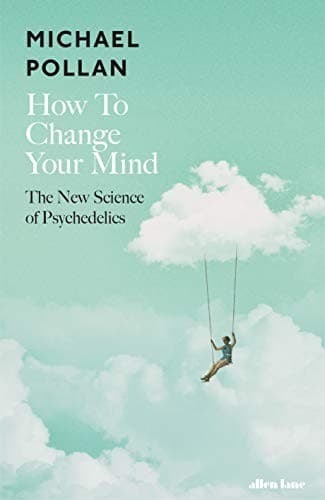
Core Idea
- Pollan argues that psychedelics are not just drugs but tools that can temporarily reconfigure consciousness, revealing how much ordinary perception is shaped by habit, prediction, and ego.
- Their renewed scientific interest rests on a simple paradox: a molecule can produce experiences that feel spiritually or psychologically transformative, yet those effects remain deeply tied to set and setting, guidance, and the meaning the experience takes on.
- The book traces the psychedelic renaissance from the revival of research in the 1990s and 2000s to Pollan’s own journeys, asking whether these states can help explain mind, ease suffering, and reduce fear of death.
The Rise, Fall, and Return of Psychedelic Science
- The modern story begins with LSD and psilocybin, the latter long used in Indigenous ritual before its “rediscovery” by R. Gordon Wasson and later isolation by Albert Hofmann.
- Early psychedelic psychiatry in the 1950s and 1960s was more substantial than many remember: hundreds of papers, thousands of patients, and serious attempts to treat alcoholism, cancer anxiety, and other conditions.
- The first research wave was split between the psychotomimetic model, which treated LSD as a model of psychosis, and later psychedelic and psycholytic models that emphasized insight, mystical experience, and ego loosening.
- Pollan stresses that the collapse of the first wave owed less to scientific failure than to politics, publicity, scandal, and the drugs’ escape from controlled settings.
- Figures like Humphry Osmond, Bill Richards, Bob Jesse, Rick Doblin, and Roland Griffiths helped revive the field by linking rigorous science to mystical and therapeutic questions.
- Griffiths’s Johns Hopkins work was pivotal because it showed that psilocybin could reliably occasion mystical-type experiences in healthy volunteers and that those experiences could remain meaningful months later.
How Psychedelics Work, Psychologically and Neurologically
- Pollan repeatedly returns to set and setting: psychedelics amplify the user’s internal state and environment, so they can heal, terrify, or transform depending on context.
- The core therapeutic claim is that psychedelics can loosen the ego, reducing rigid self-reference and allowing emotions, memories, and perceptions to reorganize.
- At Hopkins, preparation, eyeshades, music, and guiding mantras like “Trust, Let Go, Be Open” were designed to support surrender rather than resistance.
- Pollan’s own experiences show different modes of the drug: one psilocybin journey produced family-centered compassion and grief; another, with 5-MeO-DMT from the Sonoran toad, produced near-total ego dissolution and rebirth.
- He uses the Mystical Experience Questionnaire to show that psilocybin tends to fit classical mystical criteria more cleanly than faster, more catastrophic states like 5-MeO-DMT.
- On the neuroscience side, psychedelics act mainly through the serotonin 5-HT2A receptor, especially in the cortex, but Pollan insists that receptor binding is only the beginning of the explanation.
- The major brain finding is reduced activity in the default mode network (DMN), a system associated with self-reflection, autobiographical memory, and mental time travel.
- Pollan and Robin Carhart-Harris interpret DMN quieting as one correlate of ego dissolution; similar patterns appear in meditation, suggesting overlap between psychedelics and contemplative practice.
- Carhart-Harris’s entropic brain and predictive-coding ideas frame psychedelic states as less constrained, more flexible, and more open to surprise, creativity, and pathology alike.
- Pollan presents consciousness as a genuine scientific mystery: psychedelics are useful because they alter conscious experience while leaving people awake enough to report on it.
Mushrooms, Nature, and the Question of Mind
- Pollan’s mushroom chapter uses Paul Stamets to show how fungi sit at the boundary of science, ecology, folklore, and spiritual interpretation.
- Stamets’s work on mycoremediation, bee health, and fungal networks makes mushrooms look less like curiosities than like a hidden ecological infrastructure.
- The image of mycelium as Earth’s natural Internet captures Pollan’s recurring idea that nature may be far more interconnected and communicative than modern materialism assumes.
- The history of mushrooms is also cultural: Wasson’s fame, the Mazatec sacrament of María Sabina, and the loss caused by tourism and exploitation all show the costs of turning sacred practice into spectacle.
- Pollan is skeptical of sweeping origin myths like McKenna’s stoned ape theory, but he treats them as provocative ways of imagining that mushrooms may have shaped human consciousness and evolution.
- His own mushroom experience led him to feel plant subjectivity and kinship with nature, though he remains divided between a projection theory and the possibility that psychedelics disclose real aspects of the world.
- Across the book, Pollan’s metaphysical stance stays agnostic: he does not claim psychedelics prove spiritual reality, but he argues they make it harder to dismiss it.
What To Take Away
- Psychedelics are presented as tools for exploring consciousness, not just recreational intoxicants or miracle medicines.
- Their effects depend heavily on context, preparation, and guidance, which explains both their therapeutic promise and their dangers.
- The strongest scientific bridge in the book is between psychedelic experience and changes in the default mode network, predictive processing, and ego-related cognition.
- Pollan’s larger conclusion is deliberately modest but striking: psychedelics may not answer the deepest metaphysical questions, but they can reveal that the ordinary self is less fixed, less central, and less complete than it seems.
Generated with GPT-5.4 Mini · prompt 2026-05-11-v6