Core Idea
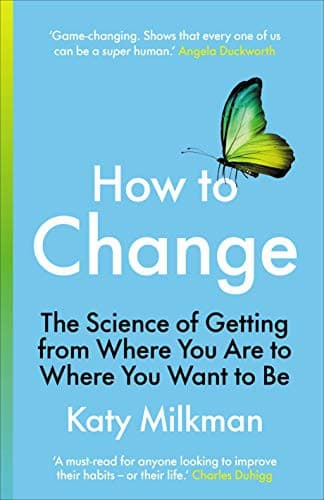
- Katy Milkman’s central claim is that behavior change works best when you match the strategy to the obstacle, rather than relying on willpower or one-size-fits-all advice.
- Her book is built around the idea that people fail for different reasons—temptation, forgetfulness, laziness, self-doubt, and bad timing—and each barrier calls for a different tool.
- Change is often easier at fresh starts, when people feel separated from past failures and more open to a new identity.
Fresh Starts, Motivation, and Instant Gratification
- The fresh start effect shows up around New Year’s, birthdays, Mondays, semesters, seasons, and major life transitions like moves, promotions, or parenthood.
- Fresh starts help because they create a sense of a do-over, making old failures feel less relevant and future success feel more possible.
- But fresh starts can also disrupt people who are already doing well, because resets can break momentum and weaken good routines.
- Milkman uses sports and workplace evidence to show that these timing effects are real: people are more likely to act on goals when they feel a symbolic reset.
- A major obstacle to change is present bias, the tendency to choose immediate comfort over larger future benefits.
- One solution is to make the desired behavior more immediately rewarding, as in Stockholm’s piano stairs, where stairs became more popular when they were made fun.
- Milkman’s temptation bundling pairs something people want with something they should do, such as listening to audiobooks only at the gym.
- The key is that the indulgence must be genuinely restricted to the target activity; bundling works best when the pairing feels real and exclusive.
- Gamification uses points, stars, and symbolic rewards to add immediacy, as in the Wikipedia editing experiment where symbolic recognition improved retention.
- But gamification can backfire when people do not buy into the “magic circle,” especially if it feels imposed rather than chosen.
Commitment, Planning, and Reminders
- When procrastination is the problem, Milkman often recommends commitment devices that block future temptation instead of asking for more self-control later.
- Examples include locked savings accounts, self-imposed deadlines, smaller plates, app-based limits, and self-exclusion lists.
- Cash commitment devices are especially strong because they put money at risk if the goal is missed, though they can feel strange and many people refuse them.
- Soft commitments create a social or psychological cost instead of a financial one; doctors, for example, reduced unnecessary antibiotic prescribing after signing and posting pledges.
- Milkman distinguishes sophisticates who know they need constraints from naïfs who overestimate their own willpower, which helps explain low uptake of commitment tools.
- Another common failure is forgetfulness, which is often easier to solve than laziness.
- Reminders work best when they arrive at the exact moment action is possible, not hours too early.
- Implementation intentions—plans in the form “When X happens, I’ll do Y”—turn vague goals into cue-based action.
- In studies, cue-based planning improved outcomes for Christmas goals, voting turnout, flu shots, and colonoscopy completion because it made behavior more concrete and easier to remember.
- Milkman warns that too many plans at once can become demoralizing, and that for complex goals checklists can outperform memory alone.
- Distinctive cues matter: unusual prompts are more memorable than generic ones.
Defaults, Habits, and Long-Term Maintenance
- Milkman’s Chapter 5 argument is that laziness is often just a preference for the path of least resistance, which can be harmful or useful depending on how systems are designed.
- Defaults harness that tendency by making the beneficial option happen automatically unless people opt out.
- At Penn Medicine, switching prescriptions to generic by default raised generic prescribing from 75% to 98%; similar defaults also reduced opioid prescribing and increased cardiac rehab referrals.
- Defaults are powerful when the decision can be made once, but they do not solve problems that require repeated action, like exercise or healthy eating.
- For repeated behavior, the brain’s default settings are habits: repeated actions in stable contexts become automatic.
- Good habits form through repetition, consistent cues, and rewards, and they are often what disciplined people rely on instead of raw self-control.
- Milkman stresses that too much rigidity is the enemy: a habit that only works in one exact setting is fragile.
- More flexible habits are stickier because they survive schedule changes and real-world disruption.
- New habits can be built by piggybacking them onto existing ones, such as flossing right after brushing teeth.
- Tracking streaks, like Ben Franklin’s virtue charts or Jerry Seinfeld’s “Don’t break the streak,” helps because it reduces forgetting and makes lapses visible.
- Habits are strongly tied to context: the movie-theater popcorn study showed that cues can trigger behavior even when judgment would suggest otherwise.
- Milkman’s broader point is that change is often like managing a chronic disease: it requires ongoing maintenance, not a one-time fix.
- In large studies, many interventions boosted gym visits while active, but only a portion of the gains persisted after support ended.
- The same pattern appeared in home-energy conservation, where gains faded when feedback stopped.
- Karen Herrera’s story captures the book’s end state: lasting change depends on a customized system of accountability, planning, tracking, and temptation management that can be adjusted as obstacles change.
What To Take Away
- The book’s main lesson is diagnostic: first identify why change is failing, then choose the right mechanism rather than trying harder.
- If the problem is timing, use fresh starts; if it is temptation, use bundling or commitment devices; if it is forgetfulness, use implementation intentions and reminders.
- If the goal is repeated behavior, build habits and design for flexibility, not brittle perfection.
- Lasting change usually comes from systems that anticipate human weakness, not from a single burst of motivation.
Generated with GPT-5.4 Mini · prompt 2026-05-11-v6