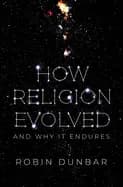
Core Idea
- Dunbar’s central claim is that religion is a human evolutionary adaptation rooted in ancient psychology, not a cultural accident or a set of arbitrary doctrines.
- The deepest, oldest layer is the mystical stance: trance susceptibility, belief in a transcendental world, and confidence that hidden powers or spirit agents can help or harm us.
- Religion persists because it helps humans solve recurring problems of bonding, cooperation, healing, and uncertainty, especially in groups larger than ordinary grooming can hold together.
How Religion Works
- Dunbar treats religion as combining two separable dimensions: belief/worldview and ritual/community, which can be strong or weak independently.
- He proposes a minimalist definition: religion involves belief in a transcendental world inhabited by spirits or forces that can affect the physical world.
- Mentalizing is crucial: religion becomes possible when humans can represent not just one mind, but nested beliefs about what others think God thinks.
- His ladder of intentionality distinguishes private belief from communal religion: at higher orders, people can share that God exists and intends something toward the group.
- The brain systems for social cognition and religion overlap, especially the default mode network, prefrontal cortex, temporo-parietal junction, temporal lobe, and amygdala.
- Dunbar contrasts two styles: reactive religion, linked to visionary or schizotypal experience, and reflective religion, which depends on higher-order mentalizing and doctrinal sharing.
- He argues that some people are less drawn to religion because of weaker mentalizing, as seen in findings on autism; women’s stronger average mentalizing is offered as one reason for higher religiosity.
- The mystical core is reinforced by altered states: trance, possession, glossolalia, ecstatic dancing, fasting, pain, psychoactive plants, and other ritual technologies.
Why Religion Persists
- Religion has several possible functions, but Dunbar thinks the strongest case is community bonding: ritual and shared belief produce durable groups with higher trust and commitment.
- He also allows secondary functions such as primitive science for managing uncertainty, medicine through placebo and healing rituals, and elite control, though he treats these as less fundamental.
- The best evidence for bonding comes from studies of costly ritual, synchrony, and service attendance, which raise pain thresholds and increase generosity, trust, and belonging.
- Endorphins are a central mechanism: grooming originally bonded primates, but humans extended this through grooming-at-a-distance such as singing, dancing, laughter, storytelling, and ritual.
- Religious services and synchronized movement seem to trigger this same endorphin-based system, helping explain why people feel closer after worship.
- Religion also scales socially because it gives strangers shared cues of trustworthiness; Dunbar’s Seven Pillars of Friendship are language, place of origin, education, interests, worldview, music, and humour.
- Religion is especially powerful because it can function as one of those pillars for people who do not know each other personally.
- The book argues that larger groups create stress and freeriding problems, so religion helps by strengthening cohesion and making cooperation feel morally and emotionally real.
- Dunbar is skeptical that moralizing gods or supernatural punishment alone explain religion’s origin; those ideas may help stabilize larger societies, but they appear later and inconsistently.
Religion’s History and Forms
- Prehistoric burial evidence, such as Sunghir, is used to infer afterlife beliefs, but Dunbar stresses that archaeology can only give indirect clues because behaviour does not fossilize.
- His historical reconstruction places early religion in stages: immersive hunter-gatherer trance religion, then specialist shamanic/divinatory traditions, then Neolithic local gods and temples, and finally city-state and imperial religions with priests and bureaucracy.
- He argues that animism is the oldest and most widespread trait in hunter-gatherer religion, with afterlife belief, ancestor worship, and shamanism clustering around it.
- Moralizing High Gods and full doctrinal systems emerge late, associated with agriculture, pastoralism, expanding populations, and political complexity.
- Religion fragments because human minds are tuned to small-scale trust networks: sects, cults, and schisms repeatedly arise when charismatic leaders, ritual disputes, or doctrinal disagreements split communities.
- Historical examples include Christianity’s many early schisms, Islamic Sunni/Shia and later sectarian splits, Jewish messianic divisions, and modern movements such as Mormon offshoots, Shakers, and New Age groups.
- Dunbar treats sectarian multiplication as normal and expected, not exceptional, because religions are always vulnerable to local charismatic innovation and succession disputes.
Social Scale, Ritual, and Limits
- The book repeatedly returns to a human social limit of about 150, linked to brain size, stable personal networks, hunter-gatherer communities, military units, and church size.
- Congregations around this scale tend to maximize participation, retention, and intimacy; much larger ones need formal organization or subgroups.
- Smaller, costly, highly committed religious communities last longer than secular communes because ritual, shared identity, and reproductive continuity reinforce solidarity.
- Dunbar emphasizes that religious commitment is culturally transmitted, especially through childhood socialization and birth into the group, rather than by force alone.
- He is skeptical that secular replacements can fully substitute for religion, because nationalism, ideological movements, and “humanistic religions” have usually lacked the same depth, resilience, and bonding power.
- The book’s final warning is that the same mechanisms that make religion socially powerful also intensify us-versus-them conflict, helping explain why religion has been so often tied to militancy and violence.
What To Take Away
- Religion is not treated as a single thing but as a bundle of trance, belief, ritual, and group identity that can appear in different combinations.
- The most distinctive claim is that endorphin-based bonding plus mentalizing make religion scalable beyond the limits of ordinary friendship and grooming.
- Dunbar’s historical story is evolutionary and gradual: religion begins in mystical, shamanic, and communal forms long before formal doctrines and gods.
- His bottom line is pessimistic about disappearance: religion changes shape, fragments repeatedly, and remains a durable feature of human social life.
Generated with GPT-5.4 Mini · prompt 2026-05-11-v6