Core Idea
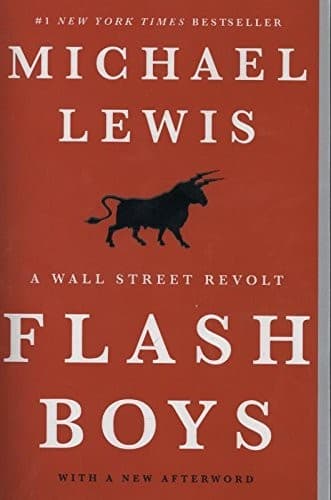
- Flash Boys argues that U.S. stock markets have been quietly restructured into a machine where speed, location, and order-routing rules let intermediaries extract tiny advantages from ordinary investors.
- The book’s central claim is not that markets are always “fake,” but that the modern market’s fragmentation, microsecond timing, and opaque routing create systematic opportunities for high-frequency traders (HFT) and brokers to profit at customers’ expense.
- Michael Lewis follows a small group of traders and technologists who discover the problem, prove it with tools like Thor, and then try to build a fairer exchange, IEX.
How the Market Was Raced and Split Apart
- The story begins with the 1987 crash and the shift toward computerized trading, which helped push the market away from human intermediaries and into hidden systems of servers and matching engines.
- A key enabling technology is the Chicago-to-New Jersey fiber line built by Spread Networks along the straightest legal route, because milliseconds had become monetizable.
- Spread’s line shows the logic of the new market: enormous sums were being spent to gain fractions of a millisecond, even when many buyers did not fully understand why they wanted the speed.
- By the late 2000s the market had become fragmented across many exchanges, each with its own rules, fees, rebates, and matching engine, making order-routing itself a source of advantage.
- The maker-taker model and the SIP/NBBO structure turned routing into a game: the public quote could be stale, while faster firms used private data feeds and co-location to see and act sooner.
- Reg NMS, meant to protect investors by requiring routing to the best displayed price, instead created more complexity and more chances for front-running and rebate games.
- The book emphasizes that this is a systems problem: the market can appear active while actually imposing a hidden tax on capital through middlemen who do not take real market risk.
Brad Katsuyama, Thor, and the Discovery of Predation
- Brad Katsuyama at RBC starts as someone who thinks he works outside Wall Street’s worst behavior, but he notices that displayed prices no longer match executable reality.
- A simple trade convinces him that the screen market is an illusion: when he tries to buy at one price, the market moves away instantly, as if something saw his intent first.
- With technologists like Rob Park and telecom expert Ronan Ryan, Brad discovers that orders sent to multiple venues arrive at different times, letting HFT firms react before the whole market sees the order.
- Their fix, Thor, adds delay so orders hit exchanges simultaneously and removes the microsecond timing gap that predators exploit.
- Thor reveals a hidden cost: what looks like normal trading can be a market-wide transfer of money from investors to faster intermediaries, amounting to a massive invisible fee.
- Brad and Ronan extend the lesson beyond one routing bug: brokers, dark pools, and exchanges can all be configured to favor speed buyers, fee chasers, or hidden access over customer best execution.
- Their outreach to big investors shows how little even sophisticated institutions understood about how their orders were being handled.
IEX: Building a Market That Could Not Be Gamed
- Brad’s work evolves from diagnosis to construction of a new exchange, IEX, designed to strip away unfair speed advantages without banning HFT outright.
- The team’s technical and moral goal is to eliminate electronic front-running, rebate arbitrage, and slow market arbitrage by making predation harder or unprofitable.
- IEX’s design choices are intentionally plain: no co-location, no maker-taker rebates, only a few order types, a flat fee, and a fixed 350-microsecond speed bump created by fiber length rather than random delay.
- The point of the speed bump is not to slow ordinary investors, but to prevent HFT firms from monetizing tiny arrival differences and order-response chains.
- The team treats order types as a major attack surface, because many of them were built to help exchanges or HFT firms game queue position, rebates, or hidden intent.
- IEX also tries to reverse the normal incentive structure by making its owners aligned with investors rather than direct participants in the market’s predation.
- The book presents IEX as a proof of concept: if a venue is designed transparently and with the investor in mind, some of the market’s worst behavior can be removed.
Dark Pools, Order Flow, and the Hidden Business Model
- The book repeatedly returns to dark pools as a place where opacity benefits brokers and HFT more than customers.
- Dark pools are sold as protection from public-market predation, but the text shows they can be used to sell access to customer order flow or to create the appearance of good execution while leaking information.
- Investors like Rich Gates test dark pools and find they can be “ripped off” through cross-venue predation, showing that hidden venues are not automatically safer.
- The real prize is often the customer’s order itself: brokers treat it as an informational asset, monetize it through routing and access deals, and bury the economics in off-the-record arrangements.
- The book’s most repeated distinction is that activity is not liquidity; HFT can increase trade counts and volume while still extracting value rather than supplying capital or risk-bearing.
- The 2010 flash crash reinforces the argument that regulators were behind the technology and lacked the microsecond-level records needed to explain what had happened.
- By the end, the book suggests that the market’s dysfunction is not a single scandal but a durable structure built from speed races, fragmented venues, and hidden payments.
What To Take Away
- The book’s core warning is that modern markets can be formally legal and still structurally rigged against the people who think they are simply buying or selling stock.
- The decisive battleground is often not price in the abstract, but timing, routing, and who gets to see an order first.
- Thor and IEX matter because they show that market design itself can either amplify predation or suppress it.
- Lewis’s larger point is moral as much as technical: if investors understood how their orders were being used, they would not confuse speed games with a healthy market.
Generated with GPT-5.4 Mini · prompt 2026-05-11-v6