Core Idea
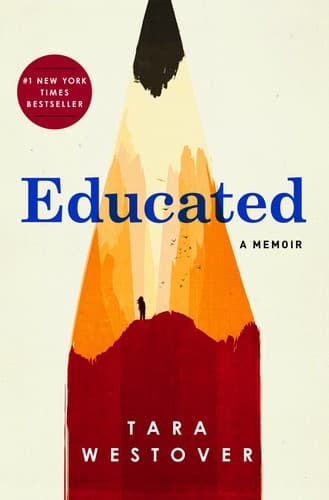
- Tara Westover’s memoir is about growing up in a fiercely isolated, survivalist family in Idaho and slowly becoming educated enough to name what happened to her, even when that education fractures her family.
- The book is less a simple “escape through schooling” story than a study of competing realities: home loyalty, fear, religion, memory, trauma, and institutional learning all claim authority over what is true.
- Education matters here not just as school credentials, but as the gradual ability to read the world differently, test inherited stories, and survive the pain of doing so.
Childhood on Buck’s Peak
- Tara grows up legally and socially invisible: no school, shaky birth records, little medical care, and a family life organized around the mountain, the junkyard, and Buck’s Peak’s seasonal rhythms.
- Her father’s worldview is built on apocalypse and government distrust, fueled by stories like Ruby Ridge/Weaver and by constant preparation for the “Days of Abomination.”
- He treats revelation as practical policy: no dairy after a scripture passage, stockpiled food and weapons, buried supplies, and later anti-doctor and anti-school convictions.
- Tara’s mother is not simply a follower; she becomes a midwife, earns money, learns herbal and alternative treatments, and gradually gains some independence, though she remains entangled in Dad’s authority.
- Tara and her siblings receive a patchwork education from books, scraps of math, library material, and self-teaching; Tyler stands out as the most intellectually separate and school-oriented child.
- The family’s dependence on labor is dangerous and normalized: the junkyard injures Tara repeatedly, and even severe accidents are absorbed into the household’s logic of resilience and providence.
Family Power, Abuse, and the Meaning of School
- School becomes a symbol of betrayal in Dad’s mind, while for Tara it increasingly represents another possible life, especially after Tyler leaves for college and the home’s certainties begin to crack.
- Tara’s first attempts at self-expression come through sanctioned outlets like voice lessons, theater, and dance, which briefly let her feel competence and joy before family suspicion turns them into moral tests.
- Y2K revives Dad’s apocalyptic certainty, but when nothing happens, his deflation shows how much the family’s emotional weather depends on his prophetic narratives.
- The car accident in Arizona badly injures Mother and leaves Tara with lasting pain and a deepening sense that “healing” in the family depends on stories as much as medicine.
- Shawn, one of the older brothers, becomes a central force of violence and control: he is both protector and abuser, and Tara learns to dissociate, minimize, and rewrite her own experience to keep living inside the family.
- Physical abuse is repeatedly framed as correction or discipline, especially around Tara’s body, clothing, and behavior; the memoir shows how shame becomes internalized and self-enforcing.
Education, College, and the Break with Home
- BYU is Tara’s first real encounter with formal education, and it exposes how much she does not know: course numbering, basic historical context, academic reading, and normal social life.
- Early college is humiliating and disorienting, but it also opens the world: better roommates, professors, libraries, algebra, history, philosophy, and the possibility that she can learn what she was never taught.
- Her relationship with Charles gives her a glimpse of a more ordinary adulthood; his kindness, medicine, and social ease contrast sharply with the family’s fear-based worldview.
- Tara’s academic progress is real but costly: she works menial jobs, gets sick, nearly loses scholarships, and must repeatedly decide whether to stay loyal to home or to the self college is helping create.
- Cambridge widens the frame further through historians, philosophers, and feminists; ideas from Isaiah Berlin, John Stuart Mill, Mary Wollstonecraft, and others help her think about liberty, self-mastery, and womanhood outside family doctrine.
- She begins studying Mormonism not as family truth or family enemy, but as an intellectual and historical system, which helps her separate analysis from inherited allegiance.
Memory, Testimony, and Leaving
- The memoir’s deepest conflict is not just with her father’s beliefs, but with the instability of memory itself: Tara repeatedly revises scenes, doubts herself, and learns that family members hold incompatible versions of the same events.
- Shawn’s threats against Tara and Audrey force an explicit confrontation, but the family demands proof and treats her testimony as betrayal rather than warning.
- Mother’s eventual partial acknowledgment that “it is painful to face reality” matters because it briefly suggests another version of the family could have existed, one in which protection replaced denial.
- Tara’s academic life gives her tools to interpret her past—especially the role of bipolar disorder, the family’s conspiracy thinking, and the way stories authorize abuse—but it does not make the emotional costs disappear.
- The final break is painful and incomplete: Tara leaves not because she has solved everything, but because staying would require surrendering reality itself.
- In the end, the memoir insists that families are made of roles and narratives, and that changing one’s life may require betraying the story the family needs to keep telling.
What To Take Away
- Education in the memoir is both liberation and loss: it creates language for truth, but it also severs the illusion of a unified family.
- Tara’s parents are not simple caricatures; the book shows how love, protection, control, delusion, and brutality can coexist in the same household.
- The memoir’s real achievement is its refusal to make memory easy: it treats testimony as hard-won, revisable, and still morally necessary.
- Westover’s final claim is not that the past can be neatly resolved, but that a person can leave, learn, and still carry love, grief, and doubt at once.
Generated with GPT-5.4 Mini · prompt 2026-05-11-v6