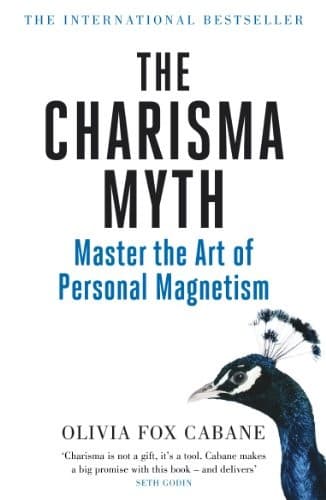
Core Idea
- Charisma is not an inborn gift; it is a learnable set of behaviors and internal states that can be practiced and increased.
- The book’s central framework is presence + power + warmth: charisma rises when people sense you are fully there, capable of affecting outcomes, and benevolent toward them.
- Charisma matters because it changes how others rate, trust, follow, and remember you, across leadership, sales, interviews, medicine, parenting, and other high-stakes interactions.
What Charisma Is Made Of
- Presence is the foundation: full moment-to-moment attention, not mentally being elsewhere.
- People detect absence quickly through delayed reactions, eye behavior, and facial shifts, so even small lapses can undermine charisma.
- Presence can be trained with simple mindfulness-style exercises such as focusing for one minute on breath, sound, or bodily sensation.
- Power is the sense that you can affect the world through status, authority, intelligence, expertise, money, or strength.
- Warmth is the signal of goodwill: people read you as caring, benevolent, and likely to use your power for their benefit.
- The mix matters: power without warmth can look cold or arrogant, while warmth without power can look eager or subservient.
- A recurring nonverbal point is that charisma is largely communicated through body language, so it is read before it is consciously analyzed.
- Because body language reflects internal state, the book insists charisma must start in the mind, not in conscious “micromanagement” of gestures.
How the Book Says to Create It
- A major obstacle is discomfort—physical or mental—because it distorts body language, attention, and confidence.
- For physical discomfort, the book recommends a three-step routine: prevent, recognize, and remedy or explain.
- Prevention means planning for comfort in clothing, temperature, hunger, fatigue, noise, and breathing, so your body is not fighting you.
- For mental discomfort, the book focuses on anxiety, self-criticism, self-doubt, dissatisfaction, and uncertainty.
- The responsibility transfer technique imagines handing the outcome to God, Fate, or the Universe, not to remove uncertainty but to make it less painful.
- The book argues suppression backfires, so negative thoughts should be neutralized by labeling, depersonalizing, or imagining them differently.
- The rewrite reality exercise replaces a distressing interpretation with a more useful one; the traffic example reframes a reckless driver as someone rushing a choking baby.
- Writing the revised story by hand is presented as especially effective because it makes the new interpretation feel more real.
- Another technique is a resentment exercise: write an unsent letter, then write the response you wish you had received, to release attention tied up in anger.
- Getting comfortable with discomfort means staying with sensations directly instead of resisting them; the book calls this “delving into sensations.”
- Visualization is treated as one of the strongest tools because imagined scenes can produce real emotional and physical responses.
- The author recommends vivid, sensory-rich rehearsal of a successful presentation or meeting, sometimes in the actual setting and with music or movement.
- Warmth is built through gratitude, goodwill, compassion, and self-compassion.
- Gratitude counters resentment and neediness by bringing attention back to present-moment abundance; the most intense version is imagining your own funeral.
- Goodwill means wishing others well, and compassion is empathy plus goodwill; the book suggests imagining another person’s past or suffering to strengthen it.
- Self-compassion is distinguished from self-esteem: it is warmth toward yourself during difficulty, and the book treats it as more resilient than evaluative self-regard.
- Metta loving-kindness practice is presented as a way to cultivate compassion, using benevolent imagery and phrases of unconditional acceptance.
- The body also feeds the mind: adopting confident posture, voice, and gestures can make you feel more powerful, not just appear that way.
- The book warns that charisma training takes willpower, which is finite, so it should be spent strategically and preceded by “warming up” with confidence- or warmth-boosting inputs.
The Four Charisma Styles
- The book identifies four useful styles: focus, visionary, kindness, and authority.
- Focus charisma is presence made visible; people feel heard, attended to, and safe enough to reveal information.
- Visionary charisma inspires belief in a cause or future, often through conviction rather than likability.
- Steve Jobs is the emblematic example: even detractors recognized his forceful sense of direction and certainty.
- The book notes that visionary charisma can also become dangerous if it slips into fanatical certainty, as with Jim Jones.
- Kindness charisma is warmth made visible; it makes people feel welcomed, accepted, and cherished.
- The Dalai Lama is the model example, and the face and eyes are emphasized as the clearest carriers of this style.
- Authority charisma leverages instinctive deference to status and competence; it is the most powerful style when you want obedience or rapid trust.
- Authority charisma is judged through body language, appearance, title, and others’ reactions, with clothing and visible status cues playing a strong role.
- The book argues style choice should match your personality, your goals, and the situation, and warns against forcing a style that feels alien or fake.
- In crisis, people become “charisma hungry” and respond to calm decisiveness, high expectations, and a compelling vision of a better future.
- Introverts are advised to use introversion breaks rather than force nonstop sociability, then return recharged.
Risks, Costs, and Moral Limits
- Charisma can provoke envy and resentment as praise accumulates, so the book offers three ways to manage credit: refuse the glory, reflect the glory, or transfer the glory.
- Reflecting and transferring the glory are preferred because they highlight others’ contributions and make them feel ownership of the success.
- The JALIR sequence—Justification, Appreciation, Lay it all out, Impact, Responsibility—is a structured way to do this sincerely.
- Strong charisma can cause people to overshare or reveal more than they later feel comfortable with, so the leader or coach should not take them deeper than they are ready to go.
- High charisma also creates a spotlight effect: people expect more, judge harder, and may become disappointed when a charismatic person performs normally.
- The antidote is selective vulnerability, which makes charismatic people more human and relatable rather than untouchable.
- Vulnerability should be introduced carefully, in low-stakes ways, and paired with the same internal regulation used elsewhere in the book.
- The book also warns that charisma can create isolation, reduce honest feedback, and make the charismatic person overestimate their own judgment.
- Its final moral point is that charisma is a power tool: it can inspire, persuade, and comfort, but it can also manipulate, distort, and mislead.
What To Take Away
- Charisma is trainable because it depends on internal state, nonverbal expression, and deliberate practice, not just personality.
- The most reliable model in the book is presence + power + warmth, with different situations calling for different blends.
- The book’s most distinctive tools are mental ones—responsibility transfer, rewrite reality, visualization, gratitude, and Metta—because inner state drives outer signals.
- Charisma works best when used with restraint: it should make others feel seen and strengthened, not overwhelmed, dependent, or fooled.
Generated with GPT-5.4 Mini · prompt 2026-05-11-v6