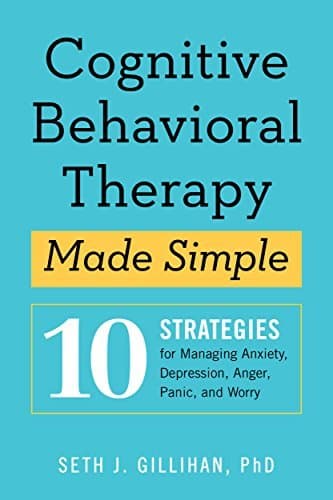
Core Idea
- CBT is presented as a best-tested, practical psychotherapy for anxiety, depression, anger, panic, and worry that combines Think, Act, Be: changing thoughts, changing behavior, and using mindfulness/acceptance.
- The method is collaborative, structured, present-focused, and time-limited, with the goal that readers become their own therapist through repeated practice.
- The book’s central claim is that emotional suffering is not just a matter of willpower; thoughts, actions, and habits can be trained to interrupt downward spirals and create more workable “virtuous circles.”
How CBT Works
- CBT starts by breaking large problems into smaller, manageable parts and testing what actually changes mood and behavior.
- Behavioral activation is a core depression strategy: do rewarding or values-based activities before you feel like it, because interest often follows action rather than preceding it.
- The book’s six-step activation plan is clarify values, identify life-giving activities, rate difficulty, order activities, schedule them, and complete them.
- Activity scheduling works best when it is specific, calendared in advance, and paired with full presence so the activity yields more reward.
- Behavioral activation commonly fails when tasks are not truly rewarding, are too big, are not scheduled, lack accountability, or are derailed by thoughts; the fix is to shrink tasks, choose better substitutes, and track enjoyment/importance/mood.
- Goal setting is treated as foundational: good goals are specific, moderately challenging, personally meaningful, realistic, compassionate, and sustainable.
- The book uses examples like Jeff’s renewed hope, showing that symptoms can change when goals across relationships, health, work, leisure, and home life become concrete.
Think: Thoughts, Beliefs, and Anxiety
- Automatic thoughts are spontaneous interpretations that strongly shape emotion and behavior; the first step is noticing sudden mood shifts and the thinking attached to them.
- Common cognitive distortions include catastrophizing, mind reading, fortune telling, emotional reasoning, black-and-white thinking, discounting the positive, shoulding, and personalization.
- The thought-testing method is to gather evidence for and against a thought, identify distortions, generate a more accurate alternative, and notice the emotional effect.
- Core beliefs are deeper, rigid themes such as “I am inadequate” or “I am helpless,” often formed through life experience and then repeatedly cued by automatic thoughts.
- The book recommends using the downward arrow technique, reviewing past and current evidence, and replacing rigid beliefs with plausible, factual alternatives rather than fake positivity.
- Repeatedly bringing corrective evidence to mind is likened to “cycling the puck” until the brain’s default response changes; coping cards and daily “three things that went well” logs support this.
- Anxiety is distinguished from fear and worry: fear is present danger, anxiety is imagined threat, and worry is repetitive thinking about uncertain outcomes.
- Anxiety treatment emphasizes reassessing likelihood and severity, dropping safety behaviors, testing predictions, and using exposure, breathing, present focus, and acceptance of uncertainty.
- Exposure is intentionally progressive, prolonged, repetitive, and hierarchical; Jason’s driving fear illustrates moving from a parked car to highways in graded steps.
- The book also frames panic as a body-and-brain fire alarm, not actual danger, and treats OCD with exposure and response prevention as the best-tested intervention.
Act and Be: Anger, Mindfulness, and Self-Care
- Anger is valid when it helps defend boundaries or repair wrongs, but harmful when it becomes retaliatory, chronic, or relationship-damaging.
- Anger grows from interpretations of being wronged, and its intensity is shaped by selective attention, biased thinking, and rumination.
- The book separates the feeling of anger from its expression; one can feel angry without acting abusively or violently.
- Useful anger work includes identifying triggers, challenging should and have to beliefs, remembering the costs of anger, and questioning whether retaliation actually helps.
- Practical prevention matters: sleep loss, hunger, pain, overheating, and being rushed all lower frustration tolerance and raise aggression risk.
- Mindfulness is the “third wave” element of CBT: presence plus acceptance of experience as it unfolds, without surrendering goals.
- Mindfulness is described as changing one’s relationship to thoughts and feelings, reducing reactivity, rumination, and the need to fight reality.
- Formal practices include sitting meditation, body scan, loving-kindness, yoga, and tai chi; the main instruction is to start small, expect wandering, and return without self-criticism.
- Self-care is broadened beyond comfort to include sleep, nutrition, exercise, stress management, technology limits, nature, service, and gratitude.
- Sleep is treated as nonnegotiable: most adults need 7–9 hours, and CBT-I principles are recommended for insomnia, including a regular sleep/wake time and getting out of bed when unable to sleep.
- Nutrition guidance favors a Mediterranean-style, minimally processed diet, while exercise is portrayed as one of the strongest supports for mood, especially depression.
- Chronic stress is managed, not eliminated; tools include breathing, relaxation, saying no, simplifying standards, breaks, exercise, progressive muscle relaxation, meditation, and vacation.
- Technology is flagged as a mood and sleep disruptor; nature, helping others, and gratitude are presented as genuine supports for wellbeing rather than luxuries.
What To Take Away
- CBT here is less about insight alone than about structured practice that changes automatic emotional responses over time.
- The book’s recurring message is to work on what you can shape: thoughts, actions, attention, and habits.
- Progress depends on repetition, honest self-monitoring, and keeping a written plan that fits your life and values.
- The goal is not to eliminate distress, but to reduce suffering, prevent relapse, and build a steadier life that can withstand setbacks.
Generated with GPT-5.4 Mini · prompt 2026-05-11-v6