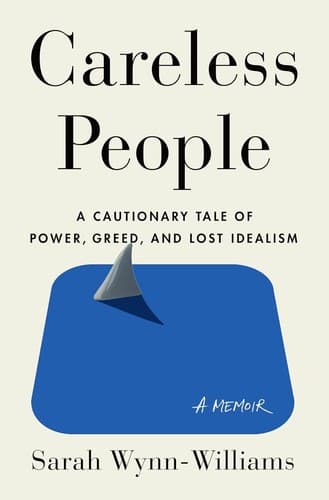
Core Idea
- Careless People is a first-person insider account of how Facebook grew from idealistic “move fast” optimism into a company that, in Wynn-Williams’s view, repeatedly chose growth, leverage, and optics over human consequences.
- The book’s core claim is that Facebook’s leadership—especially Mark Zuckerberg, Sheryl Sandberg, Joel Kaplan, and Elliot Schrage—understood the harms well enough to act, but usually responded only when blocked by regulation, arrest risk, or public scandal.
- Wynn-Williams argues that Facebook did not merely fail accidentally; it developed a culture in which engineers outranked policy, executives treated countries as markets or obstacles, and “connecting the world” became a justification for surveillance, manipulation, and denial.
How Facebook Worked: Power, Culture, and Denial
- Facebook’s internal world is portrayed as a hierarchy of engineers first, with policy staff constantly trying to translate governments, elections, and human-rights risks into something leadership would care about.
- The company’s mission rhetoric—open and connected, force for good, human right to internet access—coexisted with a brutally extractive business model built on data, engagement, and growth.
- Wynn-Williams repeatedly shows the gap between image and reality: elite jets, luxury compounds, curated women’s events, and “authenticity” language alongside invisible nannies, punishing hours, and fear-driven management.
- Sheryl Sandberg emerges as both a charismatic public feminist icon and a destabilizing boss whose temper, favoritism, and self-mythology shaped behavior through compliance and anxiety.
- Mark Zuckerberg is depicted as brilliant, socially awkward, and increasingly unbounded: uninterested in diplomacy, fascinated by scale and power, and willing to override policy when it suited Facebook’s interests.
- The book treats internal “values” as slippery; when challenged, leadership often reduced difficult questions to either growth or blocking, rather than law, ethics, or accountability.
The Global Playbook: From Policy to Manipulation
- Wynn-Williams’s job in global public policy becomes a tour through Facebook’s effort to manage foreign governments while expanding into their markets, with repeated lessons that local law mattered less than Facebook’s leverage.
- In country after country—Germany, Korea, Brazil, India, Russia, Myanmar, Turkey, Indonesia, Colombia, Japan, South Korea—Facebook’s response to scrutiny was to bargain, stall, rename products, or threaten withdrawal.
- The book’s recurring mechanism is simple: if Facebook feared being blocked, employees being arrested, or revenue being lost, it would engage; otherwise it often ignored rights, safety, or local concerns.
- Community Standards are presented as a patch over a more basic problem: Facebook did not initially want to police speech, and later moderation rules were often shaped by crisis management rather than principle.
- The company’s political advertising and targeting tools become a central anxiety, because Facebook could help politicians win, microtarget voters, and optimize outrage while claiming neutrality.
- Wynn-Williams describes the company’s growth logic as increasingly dependent on mobile platforms, Samsung, Google, and Apple, which made Facebook obsessed with access, app distribution, and strategic partnerships.
The Harmful Bargains: Free Basics, Elections, China, and Myanmar
- Internet.org / Free Basics is a major example of Facebook’s public-good branding masking power: it promised free access, but delivered a stripped-down Facebook-centered internet that critics saw as anti–net neutrality and censorship-friendly.
- The project repeatedly collided with governments in Chile, Brazil, and India, where regulators saw through the branding or rejected zero-rating schemes, culminating in India’s ban on Free Basics.
- Facebook’s election operations become more explicit over time, especially after the 2016 U.S. election, when the book shows how campaigns used Facebook ads, custom audiences, and dark posts to suppress, persuade, and mobilize.
- Mark and leadership were not horrified by the technical sophistication of these tools; at key moments they admired it, minimized it, or re-framed it as political marketing rather than manipulation.
- Myanmar is the book’s clearest case of catastrophic negligence: Facebook effectively functioned as the internet for many users, yet Burmese-language support, moderation tools, and reporting systems were grossly inadequate.
- Wynn-Williams argues the anti-Rohingya violence was worsened not by intentional single-cause malice but by indifference—the company knew hate speech and incitement were spreading and still did not prioritize the fixes needed.
- The China chapter shows a different but related pattern: Facebook was willing to build censorship, surveillance, and data-access tools to gain entry, including plans that would make the company complicit in repression.
- The book emphasizes the stark moral contradiction that Facebook would engineer for CCP-compatible control while claiming elsewhere it could not meaningfully moderate violence or protect vulnerable users.
Breaking Point and Aftermath
- The author’s personal arc mirrors the company’s: she begins as an idealist who believes global engagement can shape Facebook, but repeated experiences—arrest risks, sexism, pregnancy, childbirth trauma, and leadership indifference—break that belief.
- Her maternity and health crises are not side stories; they show how Facebook’s culture treated bodies, caregiving, and medical reality as interruptions to work, not reasons to adjust work.
- Reporting Joel Kaplan’s behavior and the wider culture of harassment leads not to accountability but to retaliation, narrowing her role and then a perfunctory firing.
- The final sections broaden the indictment: Facebook’s response to criticism—on hate speech, elections, vulnerable users, and government manipulation—was repeatedly to deny, delay, or selectively concede while keeping the core machine intact.
- The epilogue reinforces the title’s meaning: even after rebranding as Meta, the same people and habits remain, and the author’s warning extends to AI and other systems where enormous power is paired with low accountability.
What To Take Away
- Facebook is portrayed not as a neutral platform that occasionally failed, but as a company whose core incentives made harmful outcomes predictable and often tolerable.
- The book’s central distinction is between public mission language and private operational logic; Wynn-Williams argues the latter usually won.
- A repeated pattern governs the memoir: Facebook became responsive only when governments could block it, arrest staff, or inflict real business pain.
- The enduring warning is that when a company with global infrastructure is run by people who are, in the author’s phrase, careless, the damage is not incidental—it is structural.
Generated with GPT-5.4 Mini · prompt 2026-05-11-v6