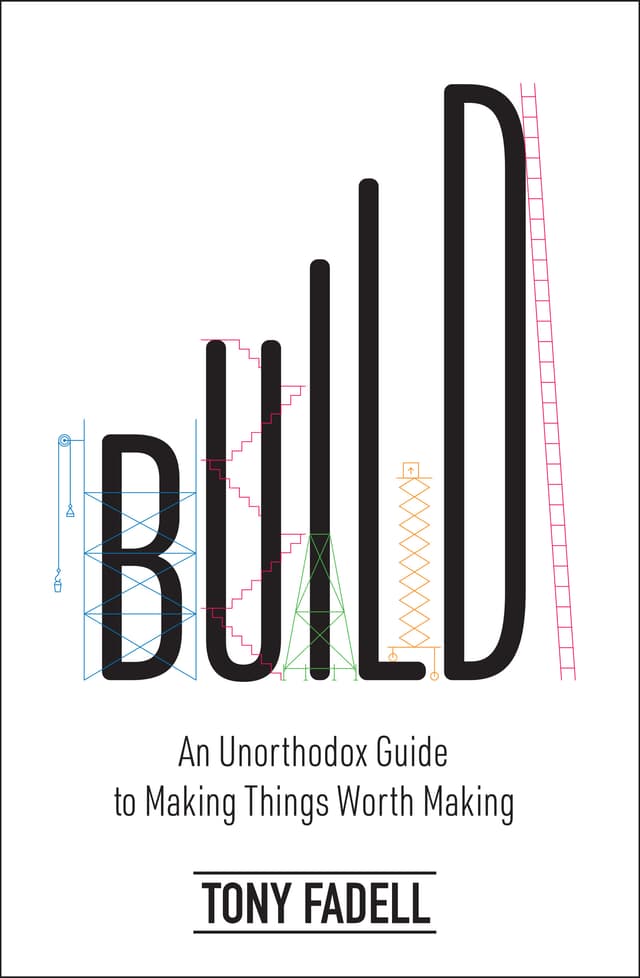
Core Idea
- Fadell presents the book as a “mentor in a box”: a hard-won field guide for building products, companies, and careers from 30+ years of mistakes, mentors, and team wins.
- His core claim is that human nature does not change, so durable lessons about product, management, hiring, and leadership still matter even in a culture obsessed with disruption.
- The book’s emotional center is that great things are almost never built alone; products are team efforts, and the real challenge is aligning people, timing, technology, and mission.
Build Products That Solve Real Pain
- Fadell’s first major warning is that cool technology is not enough; General Magic had genius, ambition, and funding, but failed because it started from technology rather than a real customer need.
- He contrasts that failure with Palm, Uber, and later Nest decisions that began with a concrete pain point and the right timing, not with novelty for its own sake.
- His recurring distinction is disruption vs. evolution: V1 should change the status quo in a meaningful way, while V2 is usually the place to refine, simplify, and improve execution.
- A product can fail by undershooting into bland evolution or by overshooting and becoming a gimmick; the product still has to fit the user’s mental model, even when it is radically better.
- He uses the first iPod and iPhone to show this balance: each was disruptive, but Apple withheld pieces like the iTunes store or some ambitious features until the market could absorb them.
- Good products also need system-level change: marketing, manufacturing, channels, and business model often have to change alongside the device.
- He argues that many successful products take three generations to become truly profitable: V1 finds product/market fit, V2 improves margins, and V3 can optimize the business.
- Constant self-disruption matters; companies like Kodak and Nokia failed when they protected the thing that once made them great instead of cannibalizing it.
Decisions, Story, and Timing
- Fadell repeatedly separates data-driven decisions from opinion-driven ones; when enough data exists, use it, but first-generation products often require judgment because there is nothing to compare them against.
- He criticizes leaders who demand fake certainty to avoid blame, delay action, or outsource responsibility to consultants.
- When a key decision is opinion-driven, the leader must still decide, explain the reasoning, and invite dissent without pretending consensus is always possible.
- His favorite tool for moving people without complete data is story: a short, sticky narrative that explains the problem, the “why,” and the promised transformation.
- Great product stories create a “virus of doubt” about the current experience before introducing the new one; they should simplify complexity and be repeatable by customers, not just executives.
- He treats analogies as a product tool, not a sales trick: phrases like “1,000 songs in your pocket” or “Rush Hour Rewards” make complicated ideas memorable and shareable.
- He also advises a practical discipline: write the press release at the beginning, because if the product cannot mostly live up to that story, it is probably not ready.
Lead People, Not Just Work
- A major thread of the book is that management is a learned discipline, not an innate gift, and many strong contributors should stay individual contributors rather than force themselves into management.
- Once you manage, your job changes from doing the craft to doing hiring, feedback, conflict resolution, alignment, budgets, and communication.
- He rejects micromanagement as process control, but not as insistence on quality; managers should be exacting about outcomes while avoiding control freak behavior.
- The best managers make the team better than themselves, train successors, and are proud when others outgrow them.
- He stresses practical management habits: structured 1:1s, regular team meetings, immediate feedback, and honest conversations before problems harden into reviews.
- His advice to first-time managers is simple and humble: say you are learning, ask for help, and pay attention to your own fears so they do not leak into the team.
- He also argues that good management needs the right incentives and explanation of why; people need mission, but sometimes they also need raises, recognition, or celebration.
Hiring, Culture, and Growth Breakpoints
- Hiring is treated as a central leadership job, not an HR afterthought, because the team’s quality and culture determine whether the company can scale without breaking.
- He favors multigenerational teams: young hires bring energy, unfamiliarity with “impossible,” and fast learning; experienced people provide pattern recognition and mentoring.
- Diversity is framed as a business necessity, not a moral decoration, because different backgrounds improve customer understanding and expose blind spots.
- At Nest, he used a structured hiring model called the Three Crowns: the hiring manager plus the managers of the candidate’s internal customers, with top leaders intervening only rarely.
- He looked for mission fit, customer focus, speed, and low ego, and he preferred work-simulation interviews over polished talk.
- Growth requires changing the company’s operating rhythm at specific breakpoints; what works at 15 people breaks at 50, and what works at 50 breaks again at 120+.
- As companies scale, they need more formal titles, managers, HR, communication layers, and culture codification, or else silos, confusion, and turnover take over.
- He warns that culture decays unless it is deliberately transmitted through onboarding, rituals, and daily leadership behavior.
- Product organization also has to change as the company grows: teams must become more specialized, and product-specific structures often work better than purely functional ones.
What To Take Away
- The book’s deepest message is that building well is a human problem as much as a technical one: timing, culture, story, and management matter as much as invention.
- Fadell’s standard for good leadership is not personal heroism but whether you can create a team, a product, and a company that outlasts you.
- He repeatedly returns to a simple test: does this choice help the customer, help the team, and make the product real in the world?
- In the end, the book argues that the best builders keep learning, keep adapting, and keep pushing others past their own assumed limits.
Generated with GPT-5.4 Mini · prompt 2026-05-11-v6