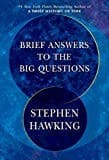
Core Idea
- Hawking’s central claim is that science can answer the biggest questions about the universe, life, intelligence, and the future in clear language, without equations, and that these answers matter because humanity faces urgent planetary risks.
- He rejects a personal creator-god, an afterlife, and the idea that “what came before” the Big Bang is a meaningful question in his cosmology; instead, he argues that the universe, and our place in it, are explainable by physical law.
- The book balances cosmic optimism with warning: human civilization may survive only if it manages nuclear weapons, climate change, AI, and technological self-destruction wisely.
How Hawking Explains the Universe
- Hawking presents the universe as a “cosmic cookbook” of matter, energy, and space, emphasizing that (E=mc^2) makes matter and energy two forms of the same thing.
- He argues that the universe can arise from “nothing” because positive energy can be balanced by negative gravitational energy, so the total energy may sum to zero.
- Quantum mechanics strengthens this picture: tiny particles can appear and vanish spontaneously, so a universe that once fit inside a subatomic scale could emerge without violating known laws.
- In his view, there was no time before the Big Bang, so asking what caused it is like asking what is south of the South Pole.
- His cosmology is tied to black holes: he uses them as examples of how time can effectively stop and why the earliest universe can be treated as a boundaryless physical system rather than a created event.
- The no-boundary proposal with Jim Hartle is one of his key ideas: in imaginary time, the universe has no edge or initial boundary, reducing the need for special starting conditions.
- The Anthropic Principle appears as a filter on possible universes: only histories with galaxies, stars, and stable laws can produce observers who ask why the universe is this way.
- He uses M-theory and inflationary cosmology to suggest that many possible universes or histories may exist, but most would be sterile, short-lived, or too extreme for life.
- He argues that the universe has exactly three large spatial dimensions because more would not permit stable planetary or atomic orbits, while fewer would not support complex life.
Black Holes, Information, and the Limits of Determinism
- Hawking’s signature scientific legacy is his work on black holes: singularity theorems, the area theorem, Hawking radiation, black-hole entropy, and the unresolved information-loss paradox.
- The area theorem says that, assuming general relativity and positive energy density, a black hole’s event-horizon area never decreases, which led Hawking to link horizon area with entropy.
- His entropy formula, engraved on his memorial stone, ties black-hole area to fundamental constants and made black holes part of thermodynamics rather than mere gravitational curiosities.
- Hawking radiation emerged from quantum field theory near the horizon: black holes are not perfectly black, but emit thermal radiation with temperature inversely proportional to mass.
- He explains the radiation with virtual particle pairs near the horizon, where one particle can fall in and the other escape.
- Small black holes would radiate intensely; a mountain-mass black hole could in principle emit huge power, though mini black holes have not been found.
- Black holes are “bald” outside the horizon: they are characterized only by mass, electric charge, and angular momentum.
- The information paradox is central: if Hawking radiation is purely thermal, information about what fell into a black hole seems lost, threatening determinism and even confidence in the past.
- He notes possible newer approaches involving supertranslations and superrotations, suggesting black holes may have more “hair” than previously thought and that information may be stored on the horizon instead of destroyed.
- Hawking treats this as one of the deepest unsolved problems in theoretical physics and a test of whether quantum mechanics survives intact in black-hole environments.
Life, Intelligence, and the Future of Humanity
- Hawking argues that life is an ordered process that resists entropy by turning ordered energy into heat; it needs both instructions and a mechanism.
- He treats computer viruses as life-like because they self-replicate and hijack host systems, even though they are parasitic and destructive.
- He traces life from early chemistry to DNA, noting the double helix and complementary base pairing, but says the origin of DNA remains unknown; RNA may have been an earlier, simpler precursor.
- He emphasizes that life appeared on Earth relatively quickly after conditions stabilized, which suggests spontaneous life may not be extremely improbable.
- Evolution is presented as a long process from single cells to multicellular life, with humans representing a later stage in biological complexity.
- He describes language and writing as a new “external transmission” phase of evolution, allowing information to accumulate outside DNA and vastly exceed genetic storage.
- Hawking warns that human knowledge is expanding faster than human brains evolved to manage, producing specialization and making mastery increasingly limited.
- He sees future evolution as partly self-designed through genetic engineering, beginning with disease correction and potentially extending to intelligence and aggression.
- This raises political dangers: engineered “superhumans” could outcompete the unimproved, creating social instability and new inequalities.
- He also warns that AI may surpass human intelligence within a century; the danger is not malice but competence if goals are misaligned with ours.
- Autonomous weapons are a particular concern because they could trigger a destabilizing arms race; he treats stopping that race as urgent.
- At the same time, he sees AI as capable of enormous benefits in translation, healthcare, robotics, and disease eradication if it is developed safely.
Earth, Space, and Survival
- The book’s practical urgency comes from Hawking’s view that Earth faces climate change, population growth, disease, war, famine, water scarcity, deforestation, and species loss at once.
- He treats global warming as human-caused and potentially self-reinforcing through ice melt, rainforest loss, and greenhouse feedbacks; in the worst case, Earth could become Venus-like.
- He says nuclear war remains the greatest immediate danger because existing arsenals can still destroy civilization many times over.
- His response is not retreat into pessimism but space expansion: humanity should not keep “all its eggs in one basket, or on one planet.”
- He favors a Moon base, Mars missions, and eventually deeper exploration; the Moon is easiest, while Mars is the obvious next target, though still harsh and uninhabited.
- He thinks long-term colonies should be on planetary surfaces rather than in orbit because zero gravity harms human bodies and underground habitats offer radiation protection.
- For interstellar travel, he sees chemical rockets as inadequate; his answer is Breakthrough Starshot, which uses laser-driven light sails to send tiny probes toward Alpha Centauri at a fraction of light speed.
- He also considers machine life more plausible than human bodies for deep-space travel, since self-replicating machines could mine resources and spread further.
- He is skeptical of UFO claims and says genuine alien visitation would likely be obvious; the absence of such evidence may reflect rarity of life, rarity of intelligence, self-destruction, or civilization collapse.
What To Take Away
- Hawking’s worldview combines cosmology, quantum theory, and black-hole physics into a single story about origins, structure, and information.
- His scientific outlook is deliberately anti-mystical: many “ultimate” questions are, in his view, answerable by laws of nature rather than divine purpose.
- The book’s strongest warning is that humanity’s technical power now exceeds its wisdom, so climate, war, AI, and genetics must be handled with much greater care.
- His final note is hopeful: curiosity, imagination, and ambitious projects in science and space may still let humanity shape its future rather than be overwhelmed by it.
Generated with GPT-5.4 Mini · prompt 2026-05-11-v6