Core Idea
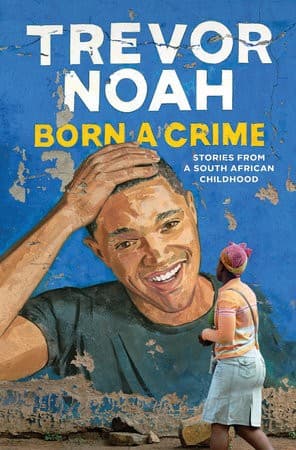
- Born a Crime uses Trevor Noah’s childhood to show how apartheid engineered social division through race, language, class, geography, and fear.
- Noah’s central claim is that systems work best when they make people police one another: apartheid separated black South Africans by tribe and language, and its afterlife kept people fragmented even after the laws changed.
- The memoir is also about his mother Patricia, whose defiance, faith, and relentless insistence on thought and self-reliance made survival possible in an irrational world.
Apartheid as a System of Control
- Noah describes apartheid as “perfect racism”: a legal order that classified people, enforced separation, and made interracial sex itself a crime.
- The state did not just discriminate; it uprooted families, enforced pass laws, and used housing and schooling to keep black people laboring at the margins.
- He emphasizes how apartheid exploited tribal and linguistic differences, encouraging black-on-black conflict rather than direct solidarity against white rule.
- Bantu education is presented as deliberate intellectual crippling: black schools were designed to produce workers, not thinkers.
- Mission schools had once offered black students English, literature, and professional ambition, but apartheid shut that path down or forced it into compliance.
- Noah contrasts British racism, which at least pretended black people might assimilate, with Afrikaner racism, which offered no such fantasy of equality.
Patricia Noah: Survival, Education, and Defiance
- Patricia is the book’s moral engine: fearless, practical, and committed to giving Trevor what she never had.
- She learns to navigate Johannesburg by studying how prostitutes and domestic workers moved through the city, rented rooms, and evaded policing.
- She hides Trevor’s birth because an openly mixed child could expose her relationship with a white man and invite punishment.
- Patricia names Trevor intentionally with a meaningless name so he will not inherit a predetermined fate from family or history.
- Her deepest weapon is education: she feeds him books, teaches him to think, and talks to him like an adult rather than a child.
- She wants him to “free my mind”, not merely behave, and she uses Bible study, Psalms, and questioning to train independent thought.
- Her love is also harsh and strategic: she beats him, lies to protect him, and insists that she does so because “the world doesn’t love you.”
Language, Identity, and Belonging
- Noah treats language as both a tool of apartheid and a way to escape it.
- Speaking the right language or accent can instantly change how people classify you, and he calls himself a chameleon because he can move across groups by code-switching.
- He shows this in moments where speaking Zulu or another local language saves him from danger, even when his appearance would otherwise mark him as an outsider.
- He also argues that language can humanize where race dehumanizes, as in the prison scene where speaking to a Tsonga inmate in his own language softens him immediately.
- Noah’s sense of self is unstable but chosen: at school he consciously decides he is black because that is where his people, family, and community are.
Childhood, Mischief, and the Logic of Rules
- Much of the memoir is driven by Trevor’s extreme energy, curiosity, and habit of pushing against rules just to see what happens.
- His pranks and small crimes are not framed as pure malice but as experiments in chaos, logic, and consequence.
- Maryvale Catholic school is strict, authoritarian, and physically punitive, yet Trevor treats its rules as puzzles to be exposed or bypassed.
- His communion stunt—eating the Eucharist because the rule excludes him—becomes an example of how he tests systems by taking them literally.
- Patricia and Trevor’s relationship often resembles a cat-and-mouse contest: both are clever, both use loopholes, and both understand the other’s mind.
- The psychologists who evaluate him find no pathology, only unusual creativity and intelligence, suggesting he might become either a criminal or a criminal catcher.
Race, Class, and the Afterlife of Segregation
- Noah keeps returning to how apartheid’s spatial design shaped daily life: Soweto, Eden Park, Highlands North, Alexandra, and Sandringham each encode different forms of access and exclusion.
- He is often “between” categories: mixed-race, not fully colored culturally, not fully white, and too linguistically mobile to fit neatly anywhere.
- In Eden Park and other colored spaces, he is mocked as too black; in black spaces, his English schooling and appearance can make him suspicious.
- In the suburbs, he sees the hidden labor system that sustains white comfort, especially domestic workers whose children are often left behind.
- Even after apartheid, schools, neighborhoods, and cliques remain stratified by race and class, though now mixed more visibly.
- He becomes a tuck-shop entrepreneur and pirate-CD seller because mobility, timing, and access to computers matter more than raw talent.
- He repeatedly argues that money means freedom because it buys choices, and that many black South Africans are trapped in a post-apartheid version of the old system: educated enough to want more, but without tools, capital, or jobs.
Crime, Violence, and Family
- Noah’s “hustles” reveal his view that crime survives where government fails because crime is local, responsive, and socially embedded.
- He describes the hood as a place with its own ethics: people share, barter, punish theft and rape, and expect reciprocity.
- But he also warns that the hood can trap people in cycles of improvisation, short-term gain, and limited ambition.
- The memoir grows darker with Abel, Patricia’s boyfriend, whose charisma and mechanical skill are tied to control, drinking, and escalating abuse.
- The garage, the workshop, and the home collapse together as Abel’s business and violence take over family life.
- Police and courts repeatedly fail Patricia, showing how domestic abuse and racialized policing reinforce each other.
- The shooting scene is the culmination of that failure: Abel nearly kills Patricia, and survival becomes a brutal mix of luck, money, and faith.
What To Take Away
- Apartheid was not only a racial hierarchy; it was a full social system built to fragment people and make domination feel normal.
- Patricia Noah’s importance lies in how she converts hardship into method: books, language, discipline, and refusal to surrender her mind.
- Trevor Noah’s memoir is especially strong on the politics of being between categories, where language, class, and neighborhood can matter as much as skin color.
- The book’s lasting force is its insistence that systems of power become most dangerous when they hide behind everyday life, humor, and the ordinary stories families tell to survive.
Generated with GPT-5.4 Mini · prompt 2026-05-11-v6