Core Idea
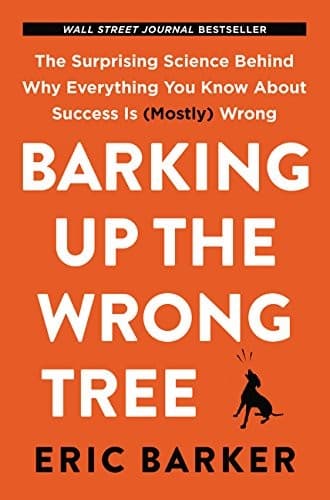
- The book’s central claim is that success is highly contextual: traits taught as universally good are often only good on average, while traits usually seen as flaws can become decisive advantages in the right environment.
- Barker repeatedly argues against simple averages and for looking at variance, fit, and opportunity cost; the goal is not to become “better” in the abstract, but to find the pond where your actual strengths pay off.
- Many chapters turn into a consistent warning: whether the topic is grit, networking, creativity, leadership, or work-life balance, the real question is usually which kind of person in which kind of situation succeeds.
Success Is Often a Matter of the Right Trait in the Right Context
- The book uses Jure Robič to illustrate an “intensifier”: what looks like insanity on average became an extreme advantage in Race Across America because it let him ignore pain.
- Ashlyn Blocker and congenital insensitivity to pain show the same pattern in reverse: a seeming superpower is also dangerous, because the trait that helps performance can destroy ordinary safety.
- Barker contrasts filtered and unfiltered leaders, drawing on Gautam Mukunda; filtered leaders are conventional and interchangeable, while unfiltered leaders can be disruptive, dangerous, or historically transformative.
- Winston Churchill is the model of a filtered failure who became indispensable because his paranoia and stubbornness matched the crisis Britain faced.
- The book’s broader framework for this is the dandelion/orchid idea and differential susceptibility: some people are resilient, while “orchids” are unusually sensitive to both bad and good environments.
- Genetics is presented as context-dependent, with variants such as DRD4-7R, CHRM2, and 5-HTTLPR sometimes predicting problems in harsh settings and excellence in supportive ones.
- Barker extends this logic to creativity and eccentricity: “hopeful monsters” like Michael Phelps or highly unusual geniuses can look maladapted until the environment reveals the advantage.
- The same pattern appears in work and leadership: traits like ADD, neuroticism, psychopathy, impulsivity, or arrogance may hurt average performance but help in specific high-variance roles.
Grit, Stories, and Strategic Quitting
- The grit chapter centers on Alfredo “Dr. Q” Quiñones-Hinojosa, whose rise from undocumented farmworker to Johns Hopkins brain surgeon is explained less by talent than by persistence sustained through story.
- Barker treats grit as partly narrative: Alfredo’s comic-book hero Kalimán gave him a model of discipline, justice, and earned power.
- Positive self-talk and optimism are presented as practical tools, not fluff; Navy SEAL research found mental training improved BUD/S pass rates, and optimistic salespeople dramatically outsold pessimists.
- The book ties grit to explanatory style from Seligman: optimists see setbacks as temporary, specific, and external, while pessimists read them as permanent, pervasive, and self-caused.
- Yet Barker insists that quitting can be intelligent when a path is low-value or misfit; the point is not endless persistence but deciding what deserves persistence.
- Meaning matters when raw optimism is not enough: Viktor Frankl’s Auschwitz example shows that having a “why” can make suffering bearable.
- Stories are treated as cognitive tools that simplify a messy world; they are often not literally true, but they are useful because they create direction, identity, and action.
- The book also links story-making to identity change: “story editing” can shift performance by reframing failure from “I can’t” to “I need to learn the ropes.”
- Barker’s favorite metaphor for grit is the game: Joe Simpson survived Siula Grande by turning chaos into winnable mini-goals.
- Good games are WNGF: Winnable, Novel, Goal-oriented, and Feedback-rich; many jobs fail this test because they are repetitive, unclear, and low-feedback.
- The practical implication is not “never quit,” but rather grit the few things that matter and quit the rest; small bets and experiments help discover what is worth committing to.
Social Capital, Reciprocity, and the Limits of Niceness
- Paul Erdös exemplifies the “supernode” Giver: his own output was extraordinary, but his deeper legacy was the network of mathematicians he amplified.
- Barker argues that extroversion often pays because it creates visibility, weak ties, and perceived leadership; opportunity frequently comes through peripheral acquaintances rather than close friends.
- But extroversion has costs, and introverts can excel through concentrated solitary work; Isaac Newton and many elite athletes, violinists, and chess players show the value of focus over sociability.
- The book’s balanced conclusion is that most people are ambiverts and should switch modes by situation: network when connection matters, and withdraw when deep work matters.
- Networking is reframed as friendship plus follow-through, not sleazy self-promotion; listening, asking about others, and helping without immediate extraction build durable ties.
- A large part of success comes from reciprocity: the book cites tit for tat as the simplest robust cooperation rule—be nice first, retaliate when necessary, and forgive noise.
- Takers can win briefly but poison systems; the book’s examples from gangs, prisons, and pirates show that even criminal groups need trust, rules, and repeated dealings to function.
- Givers are both the best and the worst performers in many datasets: they can be exploited when overgiving, but they also dominate at the top when they set boundaries and make their help visible.
- Barker’s most important moderation is that trust should not be unlimited; the sweet spot is closer to 8/10 trust than 10/10, because cooperation requires both generosity and protection.
- Practical advice at the end of this section includes choosing the right pond, cooperating first, making work visible, and forgiving because real life is noisy.
What To Take Away
- Success is less about universal virtues than fit: a trait that fails in one setting may become your edge in another.
- The book repeatedly replaces “be better” with know thyself, then pick the right pond.
- Grit and quitting are complements, not opposites: persistence should be reserved for meaningful, winnable pursuits.
- The deepest recurring theme is that achievement depends on context, reciprocity, and self-knowledge, not on any one heroic trait.
Generated with GPT-5.4 Mini · prompt 2026-05-11-v6