Core Idea
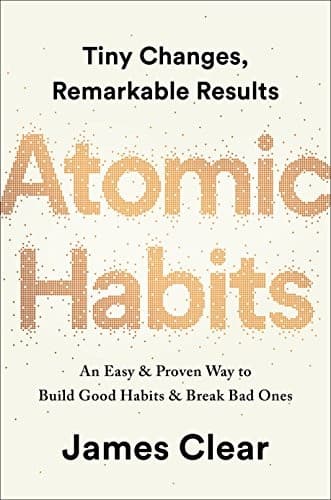
- Atomic habits are tiny behaviors that seem insignificant in the moment but compound into major life outcomes over time.
- Clear’s central claim is that you do not rise to the level of your goals; you fall to the level of your systems, and those systems are built from repeated habits.
- The book argues that durable change comes less from motivation or willpower than from reshaping identity, environment, and the habit loop.
How Habits Work
- Clear’s habit model has four stages: cue, craving, response, reward; together they explain how habits are triggered, performed, and reinforced.
- A cue predicts a reward, a craving is the desire for a change in state, a response is the habit itself, and a reward both satisfies the craving and teaches the brain what to repeat.
- Habits are the brain’s way of solving recurring problems efficiently: once a behavior works, it becomes automatic and saves mental effort.
- The book’s core behavior-change map is the Four Laws of Behavior Change: for good habits, make them obvious, attractive, easy, and satisfying; for bad habits, make them invisible, unattractive, difficult, and unsatisfying.
- Clear emphasizes that many habits are invisible because they are so automatic; first you must notice what you are actually doing.
- The Habits Scorecard is a self-audit tool: list daily behaviors and label them as helping, hurting, or neutral relative to your long-term aims and desired identity.
- Pointing-and-Calling, borrowed from Japanese railways, shows the power of deliberately naming actions before doing them to interrupt automatic routines.
The Four Laws in Practice
- To make habits obvious, use implementation intentions: “When X happens, I will do Y,” and habit stacking: “After I do current habit, I will do new habit.”
- Clear stresses that the best cues are specific, immediate, and actionable; vague triggers like “after lunch” often fail because they are too fuzzy to notice.
- Environment is a major driver of behavior: a hospital cafeteria study showed that simply moving drinks changed sales, proving that choice architecture shapes action more than intention does.
- He argues that the easiest way to change behavior is often to redesign the room, desk, kitchen, phone, or schedule so that the right cue is visible and the wrong cue is hidden.
- The same principle applies to bad habits: reduce exposure to triggers rather than relying on heroic self-control, because old cues are powerful and can reawaken dormant habits.
- To make habits attractive, Clear uses temptation bundling and social influence: pair something you need to do with something you want to do, and recognize that we imitate the close, the many, and the powerful.
- He explains cravings as predictions about how a behavior will change your state; modern habits often tap deep motives like approval, bonding, status, certainty, or relief.
- To make habits easy, the book favors reducing friction, using the Two-Minute Rule, and starting with the smallest version of the behavior so that showing up is easier than resisting.
- Clear distinguishes motion from action: planning and learning feel productive, but only actual behavior changes outcomes; repetition is what turns a behavior into a habit.
- To make habits satisfying, create immediate reinforcement with tracking, visible progress, small rewards, and the rule never miss twice, because immediate payoff is what the brain repeats.
- Habit trackers matter because they turn progress into a visible streak and provide proof of identity; but Clear warns about Goodhart’s Law, where a measure becomes the wrong target.
- For bad habits, he recommends making them immediately painful through accountability, habit contracts, penalties, and social cost, since delayed consequences rarely compete with immediate temptation.
Identity, Growth, and Limits
- Clear’s deeper argument is that real change is identity-based: habits are votes for the kind of person you want to become.
- Instead of only chasing outcomes like weight loss or productivity, he urges readers to ask what identity would naturally produce those outcomes, then prove it through small wins.
- Identity cuts both ways: it can empower change, but it can also trap people in rigid self-descriptions such as “I’m not a morning person” or “I’m bad at math.”
- Habits and identity form a feedback loop: repeated actions build evidence, evidence shapes beliefs, and beliefs shape future actions.
- The book repeatedly warns that habits have a downside once they become automatic: they can hide mistakes, reduce sensitivity to feedback, and encourage complacency.
- For that reason, Clear pairs habit-building with reflection and review so that automation does not become stagnation; mastery requires returning periodically to deliberate practice.
- He also argues that identity should stay flexible and small, because over-attachment to a label makes growth harder and can turn improvement into a threat.
- Genetics matter in the sense of fit, not fate: people differ in the habits and fields that feel natural, so the goal is to find where effort and temperament align.
- Motivation is strongest when tasks are at the Goldilocks level—neither too easy nor too hard—and boredom, not failure, is often the main enemy of sustained progress.
- The broader thesis is cumulative: there is no single magical habit, but many small improvements stacked together can cross a tipping point and transform results.
What To Take Away
- The book’s main promise is not quick transformation but a reliable method for making tiny behaviors compound into identity, capability, and results.
- The strongest leverage points are cue design, environment, and immediate reinforcement, because they shape behavior before willpower is needed.
- Clear’s repeated caution is that goals matter less than the systems that produce them, and systems matter less than the person those systems gradually make.
- Atomic habits work because change is usually delayed, invisible, and nonlinear; the discipline is to keep improving the system before the payoff appears.
Generated with GPT-5.4 Mini · prompt 2026-05-11-v6