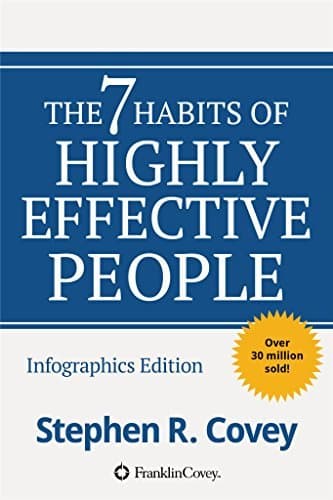
Core Idea
- Covey argues for an inside-out path to effectiveness: change your paradigms, character, and motives first, because outward techniques fail if the underlying “map” is wrong.
- The book contrasts the shallow Personality Ethic with the deeper Character Ethic, claiming lasting success comes from living by principles rather than image, shortcuts, or manipulation.
- The central test of effectiveness is P/PC balance: produce results while preserving and strengthening the capacity that produces them.
The Foundation: Principles, Paradigms, and Effectiveness
- A paradigm is a frame of reference or map, and “the way we see the problem is the problem” when our map is distorted.
- Covey uses examples like the old/young woman picture and the subway widow to show that the same facts can produce different realities depending on one’s paradigm.
- Principles are universal natural laws of human effectiveness, unlike shifting practices or personal values; examples include fairness, integrity, human dignity, service, growth, patience, and quality.
- A principle-centered life stabilizes the four life-support factors: security, guidance, wisdom, and power.
- Centers based on spouse, family, money, work, possessions, pleasure, friends, enemies, church, or self make those life-support factors fragile because they depend on conditions or approval.
- Covey insists people are free to choose actions, but not consequences; principle-centered wisdom means working with reality rather than against it.
- The P/PC idea, illustrated by the goose that lays golden eggs, warns that overfocusing on output destroys the asset, whether that asset is a machine, a financial base, or a relationship.
The Private Victory: Self-Mastery Before Interdependence
- Habit 1: Be Proactive means response-ability: between stimulus and response there is a space where we choose according to values rather than impulses or conditions.
- Proactive language—“I choose,” “I will,” “I prefer”—signals ownership, while reactive language—“I can’t,” “He makes me mad,” “If only”—signals determinism.
- Covey’s Circle of Concern vs. Circle of Influence separates what worries us from what we can actually affect; proactive people work inside influence and expand it.
- He divides problems into direct control, indirect control, and no control, and says the proper first step is changing self, influencing others differently, or accepting what cannot be changed.
- Habit 2: Begin with the End in Mind is about first creation: imagining the desired life, funeral, or legacy before building it in action.
- Covey distinguishes leadership as deciding what is right from management as doing things right; without the first creation, the second can be efficient but headed the wrong way.
- A personal mission statement functions like a constitution, grounding roles and goals in principles and providing a stable core amid changing circumstances.
- Habit 2 relies on the whole brain: self-awareness, imagination, and conscience help “rescript” inherited scripts into chosen ones.
- Covey repeatedly uses visualization and affirmation as tools for living one’s chosen script, but warns they must be anchored in character, not used as Personality Ethic tricks.
- Habit 3: Put First Things First is the daily fruit of Habits 1 and 2: self-management, integrity, and disciplined execution of priorities.
- The Urgent/Important matrix is the key mechanism: Quadrant I is crisis, III is urgency without importance, IV is neither, and Quadrant II—important but not urgent—is where prevention, planning, relationships, and renewal live.
- Effective people “feed opportunities and starve problems” by investing in Quadrant II, saying no to lesser demands, and planning by week rather than by crisis.
- Covey’s stewardship delegation contrasts with “gofer” delegation: the former defines results, guidelines, resources, accountability, and consequences while leaving method to the responsible person.
The Public Victory: Trust, Win/Win, Understanding, and Synergy
- Covey says you cannot solve relationship problems with techniques alone because “you can’t talk your way out of problems you behave yourself into.”
- The Emotional Bank Account is his metaphor for trust: deposits include understanding, keeping commitments, clarifying expectations, loyalty to those not present, integrity, and sincere apology.
- Habit 4, Think Win/Win, is interpersonal leadership based on mutual benefit rather than domination, appeasement, or zero-sum thinking.
- Covey contrasts Win/Lose, Lose/Win, Lose/Lose, Win, and Win/Win or No Deal, arguing that interdependent relationships require Win/Win or a clean no-deal separation.
- Win/Win rests on three character traits: integrity, maturity as courage plus consideration, and an abundance mentality that believes there is enough for everyone.
- Win/Win agreements are performance agreements, not method contracts: they specify desired results, guidelines, resources, accountability, and consequences.
- The agreement and the surrounding systems must align with the paradigm, or organizations will reward competition while preaching cooperation.
- Habit 5, Seek First to Understand, Then to Be Understood, is the “habit of empathic listening.”
- Covey argues most people listen autobiographically—evaluating, probing, advising, or interpreting—rather than listening to understand the other person’s frame of reference.
- Empathic listening gives psychological air and is itself a major trust deposit because people feel understood before they feel persuaded.
- Habit 6, Synergize, means that the whole becomes greater than the sum of the parts when people value differences instead of fearing them.
- Synergy depends on high trust, openness, and the search for a Third Alternative that is better than your way or my way.
- Covey uses examples from families, classrooms, businesses, and conflict resolution to show that genuine synergy can transform stuck, adversarial situations into creative solutions.
Renewal and the Larger Claim
- Habit 7: Sharpen the Saw is balanced self-renewal across four dimensions: physical, spiritual, mental, and social/emotional.
- The “daily private victory” of exercise, reflection, prayer, reading, and planning preserves the capacity to live the other habits.
- Renewal is upward and cumulative: learning, commitment, and action reinforce one another in a recurring spiral.
- Covey treats the habits as universal principles found across cultures and religions, not as a mere set of motivational techniques.
- He also emphasizes that humility is essential because principles are in control, not the self.
- The highest outcome of the habits is unity—with oneself, family, friends, coworkers, and one’s own conscience.
- Covey presents himself as a seeker of principles, not a guru, and frames the seven habits as a practical language for character, trust, and interdependence.
What To Take Away
- The book’s core claim is that effectiveness begins with character and principle, not image management or quick fixes.
- The seven habits form a sequence: private victory creates self-mastery, which makes public victory and synergy possible.
- Trust is not a soft extra; it is the operating system for relationships, delegation, negotiation, and organizational culture.
- The deepest success is not merely productivity but congruence: living so that values, commitments, relationships, and results reinforce one another.
Generated with GPT-5.4 Mini · prompt 2026-05-11-v6