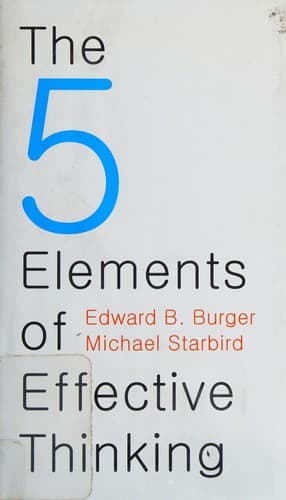
Core Idea
- Effective thinking is a learnable skill, not innate talent—anyone can master the five habits used by world-class thinkers
- How you think matters more than how hard you work or your natural ability
- These five elements apply universally: academics, business, art, leadership, personal problems
The 5 Elements: What to Practice
1. Understand Deeply
- Strip away clutter; obsess over fundamentals without references
- Spot gaps in your knowledge—they show where to grow
- See what's actually there, not what you assume
2. Make Mistakes Intentionally
- Fail fast on purpose; mistakes are signals pointing toward solutions
- Generate imperfect first drafts immediately, then refine
- Ask "Why is this wrong?" to extract lessons every error teaches
3. Ask Questions
- Generate your own questions; curiosity matters more than answers
- Question the questions—solve the real problem, not the surface one
- Teach others to expose gaps in your own understanding
4. Follow the Flow of Ideas
- Understand where ideas came from (look backward)
- Extend ideas forward; every solution is a starting point, not an ending
- Build on what works; iterate even after something "succeeds"
5. Engage Change
- Embrace being a work-in-progress—continuous evolution is the goal
- Do different tasks, not harder ones; better thinking makes hard things easy
- Make learning and growth permanent habits
Practical Tactics
- Don't stare at blank screens: Dump bad ideas fast; refine what exists
- Master one basic thing: Spend 30 minutes deepening one fundamental skill
- Expect failure as progress: Assume 9 failures before success on attempt 10
- Exaggerate problems to extremes: Expose real defects by taking them to absurdity
Action Plan
- Pick one element this week (start with Earth: understand deeply)
- Apply it to one real problem—work, school, or personal challenge
- Keep a mistake log: Record three errors and the lesson from each
- Ask three hard questions about something you thought you understood
- Iterate your solutions even after they work; don't stop improving
Generated with Claude Sonnet 4.6 · prompt legacy-pre-v6 · model inferred from repository history